
43 state attorneys general tell the CFTC to withdraw its sports event-contract swap rule
Attorneys general from 43 states and the District of Columbia filed a formal comment with the Commodity Futures Trading Commission on November 18, 2026, asking the agency to withdraw a proposed rule that would treat sports-related event contracts as “swaps,” and to state that those contracts fall outside the Commission’s authority. The 25-page letter is on docket No. CFTC-2026-21377, 91 Federal Register 66,022. The signatories, including Alaska's acting attorney general, number 44 officials in all. These are arguments in a rulemaking comment, not court rulings.
 7 Min Read
Overview
- Attorneys general from 43 states and the District of Columbia — 44 officials, including Alaska's acting attorney general — filed a 25-page comment on November 18, 2026, asking the CFTC to withdraw a proposed rule treating sports-related event contracts as swaps.
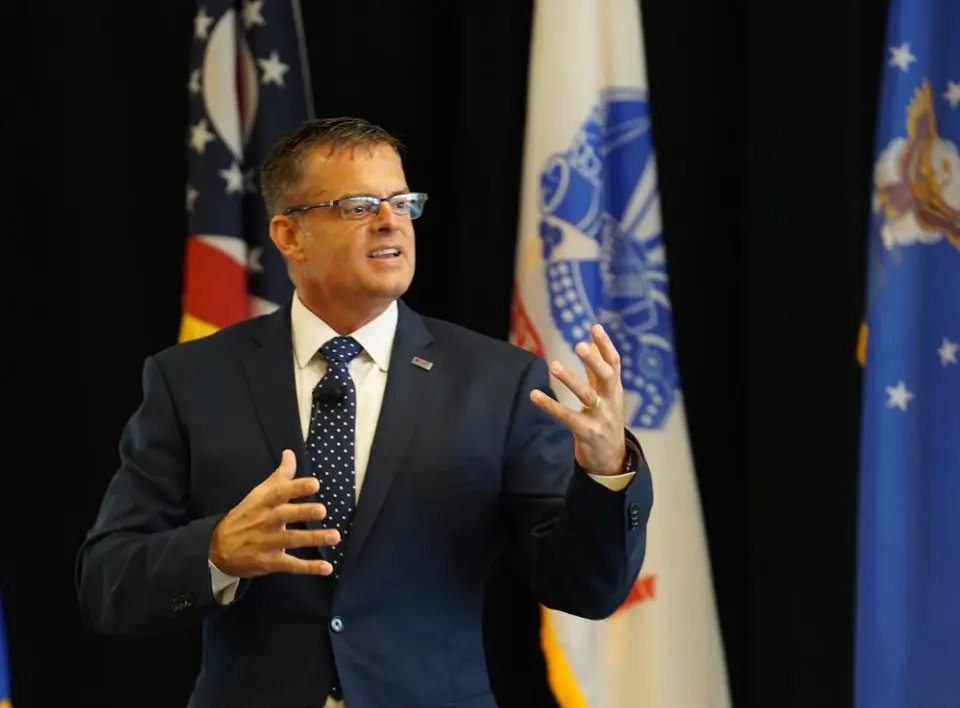
- The letter is addressed to CFTC Secretary Christopher Kirkpatrick on docket No. CFTC-2026-21377, 91 Federal Register 66,022 (October 19, 2026). Ohio Attorney General Andy Wilson co-led the filing with seven other state attorneys general.
- The states argue that the CFTC lacks statutory authority and a quorum to issue the rule, and that, in their view, Sixth and Ninth Circuit decisions mean the proposal cannot apply in those circuits. Those are the letter's legal arguments, not findings of this article.
- The comment asks the Commission to start afresh and clarify that sports-gambling event contracts are not swaps under the Commodity Exchange Act.
Attorneys general from 43 states and the District of Columbia filed a formal comment with the Commodity Futures Trading Commission on November 18, 2026, asking the agency to withdraw a proposed rule that would treat sports-related event contracts as “swaps,” and to state that those contracts fall outside the Commission’s authority.
The 25-page letter, addressed to CFTC Secretary Christopher Kirkpatrick, is dated November 18 and is submitted on docket No. CFTC-2026-21377, the notice published at 91 Federal Register 66,022 (October 19, 2026). Ohio Attorney General Andy Wilson, who co-led the filing, announced it the same day. Maryland and Nevada also issued official statements.
The comment is a follow-up to a July 2026 letter, also co-led by Ohio, in which 44 attorneys general urged the CFTC to recognise state authority over sports-related prediction markets, Wilson’s office said. English-language trade publications reported the November filing from those announcements; the discussion below is taken from the letter itself and from the official releases.
What the proposed rule would do, as the states describe it
The letter says the proposal would expand the Commodity Exchange Act definition of “swap” to cover all “event contracts, including those based on sports-, politics-, cultural-, and weather-related events,” citing 91 Fed. Reg. at 66,023. It records three justifications offered in the notice: that the existing statutory definition already reaches sports gambling; that the CFTC may “further define” the term jointly with the Securities and Exchange Commission under 15 U.S.C. §8302(d)(1); and that 15 U.S.C. §8321 also supports the proposal. The states say none of those grounds is sufficient and ask the Commission to withdraw the rule.
A footnote states that, although the letter focuses on sports bets, “several of the signatories to this letter similarly object to the inclusion of politics, elections, weather, and culture contracts within the definition for the same reasons outlined here.”
On the statutory definition, the letter argues that sports-gambling event contracts are not “commonly known to the trade as a swap” under 7 U.S.C. §1a(47)(A)(iv). It says that after the swap definition was added to the Act in 2010, “no one attempted to call sports bets swaps for 15 years.” As an example used in the Commission’s notice — a contract on the New York Knicks to win the NBA Finals — the states write that such a bet does not exchange cash flows or liabilities of financial instruments and is generally used as entertainment rather than to hedge market risk.
Court decisions the letter says the rule cannot override
The states open their legal discussion with a list of federal decisions in which, they say, prediction markets and the CFTC have “done poorly” in arguing that sports event contracts are swaps. The citations include KalshiEX LLC v. Schuler, 192 F.4th 664 (6th Cir. 2026), KalshiEX LLC v. Assad, 190 F.4th 1098 (9th Cir. 2026), and a Fourth Circuit opinion in KalshiEX LLC v. Martin dated November 18, 2026, together with district-court rulings in Iowa, Connecticut, Michigan, Utah and New York, among others.
In a separate section, the letter says the proposal “cannot go into effect in the Sixth and Ninth Circuits because both courts have ruled that the CEA does not give the CFTC authority to regulate sports-gambling event contracts.” Unanimous panels in Schuler and Assad, it says, held that the Act unambiguously does not reach sports gambling, so the proposed rule “cannot have any application within the jurisdiction of those courts.”
The comment also argues that the Commission has not analysed how a non-uniform policy — regulating sports-gambling event contracts in some parts of the country but not in the Sixth and Ninth Circuits — would meet the cost-benefit criteria in 7 U.S.C. §19(a)(1). It lists pending cases that, depending on their outcome, “may be barred from application in much wider swaths of the country”: KalshiEX, LLC v. Williams, No. 26-1835 (2d Cir.); United States v. Wisconsin, No. 26-2636 (7th Cir.); KalshiEX, LLC v. Bird, No. 26-2874 (8th Cir.); KalshiEX, LLC v. Cox, No. 26-4100 (10th Cir.); and Massachusetts v. KalshiEX, LLC, No. SJC-13906 (Supreme Judicial Court of Massachusetts). “It appears the CFTC is attempting to override the courts,” the letter says. “An agency cannot do that.”
AskSpinner tracks those matters in its Kalshi and prediction-market lawsuits tracker.
The quorum argument
The states further contend that the Commission currently lacks authority to issue any regulation because it does not have a quorum.
The letter says the CFTC has only one commissioner, Chairman Michael S. Selig. It cites 7 U.S.C. §12a(5), which gives “the Commission” the power to promulgate rules, and 7 U.S.C. §2(a)(2)(A), which provides that the Commission “shall be composed of five Commissioners.” It then relies on 7 U.S.C. §2(a)(3), which states that “a vacancy in the Commission shall not impair the right of the remaining Commissioners to exercise all the powers of the Commission.” In the states’ reading, the plural “Commissioners” and the definite article “the” mean that more than one commissioner must remain: “The CFTC needs a quorum of at least two, and perhaps as many as four, commissioners.” Chairman Selig, the letter says, “does not have the authority to promulgate a rule until the President nominates and the Senate confirms additional commissioners.” Finalising the proposal without a quorum would, they argue, exceed statutory authority under 5 U.S.C. §706(2)(C) of the Administrative Procedure Act.
Wilson’s office, in its release, also said the rule could encourage traditional sportsbooks to reorganise as prediction markets and thereby sidestep state licensing, age limits and problem-gambling protections. The letter asks the Commission to “start afresh with its rulemaking and clarify that sports-gambling event contracts are not ‘swaps’ under the CEA.”
Who signed
The letter is co-led, as the Ohio release and the signature pages state, by the attorneys general of Ohio (Andy Wilson), Kentucky (Russell Coleman), Maryland (Anthony G. Brown), Nevada (Aaron D. Ford), New Jersey (Jennifer Davenport), New York (Letitia James), Tennessee (Jonathan Skrmetti) and Utah (Derek Brown).
The remaining signature pages name the attorneys general of Alabama, Alaska (Cori Mills, acting), Arizona, Arkansas, California, Colorado, Connecticut, Delaware, Hawai‘i, Idaho, Illinois, Iowa, Kansas, Louisiana, Maine, Massachusetts, Michigan, Minnesota, Mississippi, Missouri, Nebraska, New Mexico, North Carolina, Oklahoma, Oregon, Pennsylvania, Rhode Island, South Carolina, South Dakota, Vermont, Virginia, Washington, West Virginia, Wisconsin and Wyoming, together with District of Columbia Attorney General Brian L. Schwalb. That is 43 states and the District of Columbia.
Cite This Article
Topics In This Story
Related Countries

The Newsroom covers the gambling industry, game providers, casino services and the public information that helps readers understand them. Its explainers focus on clear definitions, the scope of available evidence and practical questions for readers.
More From This AuthorRelated Topics
Kalshi and Prediction Market Litigation with US States and Tribes
Court cases between prediction market operators, US states, tribal nations and federal regulators over whether sports event contracts fall under state gambling law, from Utah and New York to Louisiana and the Seventh Circuit.