
When faith forbids gambling — and the state still issues licences
An original 21-jurisdiction table and analysis of how religions that forbid or condemn gambling coexist with licensed casinos, dual tracks, foreigners-only rules and state lotteries.
 16 Min Read
Overview
- UAE created GCGRA in 2023 and licensed Wynn Al Marjan in 2024 despite Qur’anic maysir bans.
- AskSpinner’s 21-row table pairs Pew 2020 religion shares with primary gambling laws.
- Recurring designs: foreigners-only casinos, Muslim dual tracks, state lotteries without casinos.
- CBCP 2025 letter urges a total online-gambling ban while PAGCOR still licenses brands.
- High religiosity does not predict a single legal outcome across Muslim- or Buddhist-majority states.
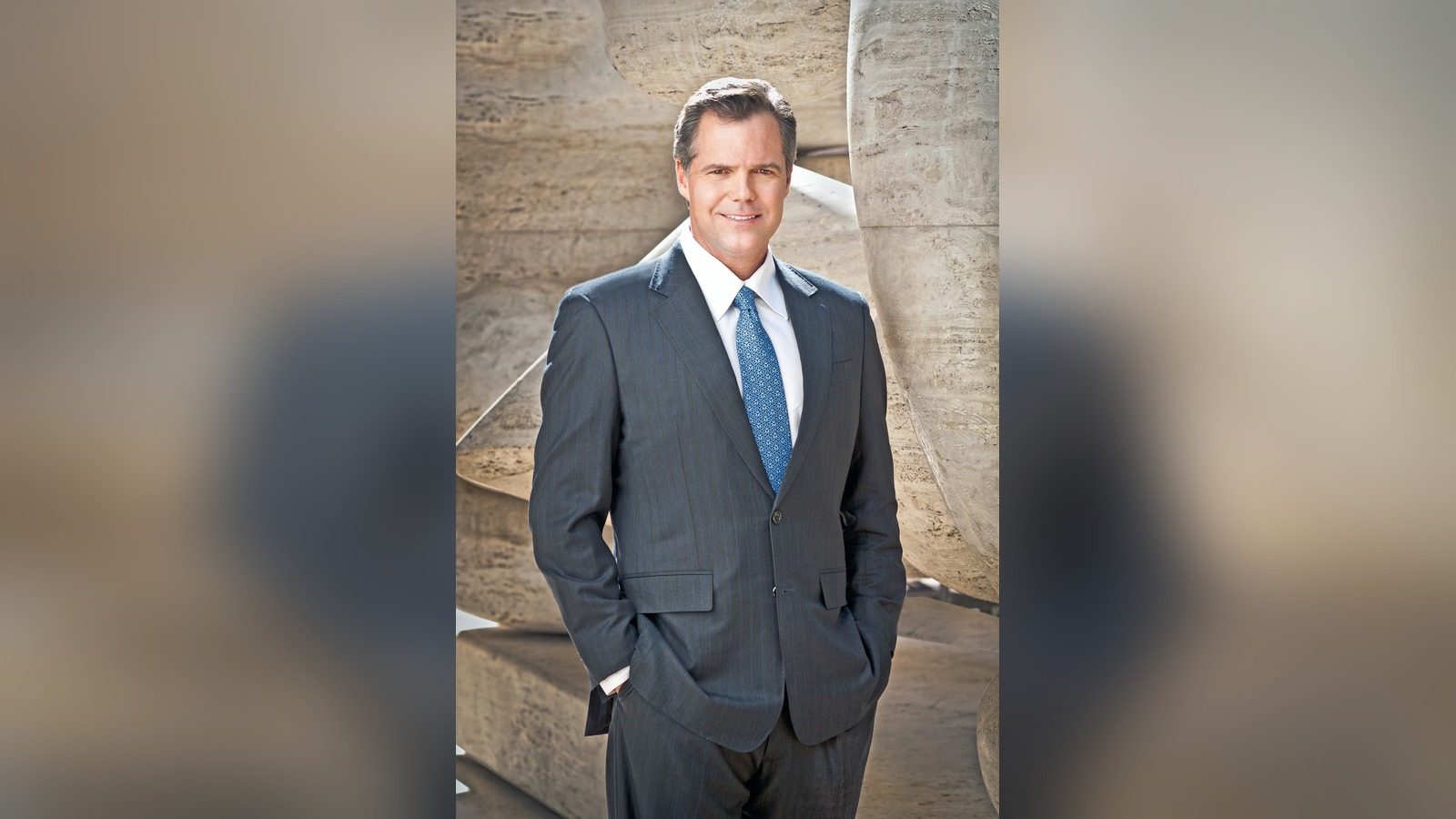
In September 2023 the United Arab Emirates — a federation whose population Pew Research Center estimated in 2020 as 72.9% Muslim — announced a federal commercial gaming regulator. The General Commercial Gaming Regulatory Authority (GCGRA) named industry veteran Jim Murren as board chair and longtime U.S. regulator Kevin Mullally as CEO. In October 2024 the same authority listed Island 3 AMI FZ-LLC, doing business as Wynn Al Marjan, as its first land-based gaming facility licensee, after already licensing a national lottery operator. The Qur’an calls gambling (maysir) a “defilement from the work of Satan” and tells believers to avoid it (5:90–91; earlier 2:219). The UAE is not alone in living with that tension.
AskSpinner built an original 21-row legal-status table — released as a downloadable CSV — pairing Pew 2020 religious composition with doctrinal citations and primary gambling laws. The pattern that emerges is not “religion always bans” or “money always wins.” It is a set of recurring institutional designs: foreigners-only casinos, dual tracks that bar Muslims while licensing non-Muslims, state lotteries that survive casino bans, and churches that condemn commercial gambling while running charitable bingo.
What major traditions teach
Islam. The Qur’an treats intoxicants and gambling together. Surah al-Baqarah 2:219 says there is “great sin” and some benefit in wine and gambling, “but their sin is greater than their benefit.” Surah al-Ma’idah 5:90–91 escalates to a clear avoidance command, tying maysir to enmity and distraction from prayer. Classical and contemporary fiqh treat commercial gambling as prohibited (haram).
Catholicism. The Catechism of the Catholic Church §2413 is more conditional than a flat ban: “Games of chance (card games, etc.) or wagers are not in themselves contrary to justice. They become morally unacceptable when they deprive someone of what is necessary to provide for his needs and those of others. The passion for gambling risks becoming an enslavement.” That formula leaves room for state lotteries and church raffles — and for pastoral letters that still call online gambling a crisis, as the Philippine bishops did in 2025.
Evangelical and Methodist Protestantism. The Southern Baptist Convention’s 2017 resolution “On the Sin of Gambling” condemns gambling “in all its forms,” urges governments to end state-sponsored gambling, and tells Southern Baptists not to participate. The United Methodist Church Book of Resolutions opposes casino expansion, lotteries and internet gambling, and instructs congregations not to use raffles, bingo or other games of chance for fundraising — a stricter institutional line than the Catholic catechism.
Buddhism. In the Sigālovāda Sutta (DN 31), the Buddha lists compulsive gambling among six ways of squandering wealth. The dangers named there — resentment from winning, mourning losses, ruined savings, loss of credibility, contempt from friends, and unfitness for marriage — read like a modern responsible-gambling pamphlet.
Hinduism. The Rigveda’s “Gambler’s Hymn” (10.34, Griffith translation) personifies dice as forces that destroy household and honour, ending with an appeal to quit gambling and till the land. Later dharma literature, including strands of the Manusmṛti tradition, also treats professional gambling as socially corrosive — though historical royal courts sometimes sponsored dice and racing.
Judaism. Mishnah Sanhedrin 3:3 disqualifies dice-players (and certain other occupations) from serving as witnesses or judges when gambling is their livelihood — a procedural stigma rather than a modern criminal code, but a durable signal that classical rabbinic law treated professional gambling as suspect.
None of these traditions is identical. Islam’s scriptural ban is the most categorical. Catholic teaching distinguishes moderate play from addiction. Evangelical resolutions often reject even state lotteries. Buddhist and Hindu sources emphasise ruin of household wealth. Jewish law focuses on the gambler’s fitness as a witness. The policy question is what states do when those teachings dominate public identity.
The contradictions, country by country
AskSpinner’s table groups jurisdictions by regime type. Religion shares below are Pew Research Center 2020 estimates from the Center’s Religious Composition by Country, 2010–2020 appendix.
Opening the door in the Gulf: UAE. Islam 72.9%. GCGRA (2023) + lottery and Wynn Al Marjan facility licences (2024). Construction continues toward a planned early-2027 opening. How Emirati citizens and Muslim residents will be treated at the cage is not spelled out on the public licensee pages reviewed for this article — a gap we flag in the dataset.
Dual track: Malaysia. Islam 64.1%. The Common Gaming Houses Act 1953 and Betting Act 1953 suppress unlicensed gaming while the Finance Ministry licenses a casino (Resorts World Genting), racing and pools. Muslims have been barred from the Genting casino since June 1983 under syariah enforcement; Kelantan and Terengganu banned gambling outlets earlier, with Kedah and Perlis later stopping new licences under PAS-led governments. Secular law and religious law run on parallel rails.
Foreigners only: Egypt, Cambodia (and similar patterns in Tunisia/Morocco/Laos). Egypt (Islam 95.2%) voids private gambling contracts in Civil Code articles 739–740, yet Law No. 8 of 2022, article 24, allows gambling games in designated hotel facilities “except for non-Egyptians,” under Tourism Ministry conditions. Cambodia (Buddhism 97.1%) enacted the 2020 Law on the Management of Integrated Resorts and Commercial Gambling and bars nationals from casino play. Morocco (99.7% Muslim) and Tunisia (99.3% Muslim) have long run tourist casinos; Laos (Buddhism 64.2%) hosts foreigner-oriented casinos in special zones. For Morocco, Tunisia and Laos, AskSpinner marks primary Gazette citations as gaps pending PDF verification.
Church versus state operator: Philippines. Christianity 91.5% (overwhelmingly Catholic). PAGCOR licenses domestic casinos and online brands even as the Catholic Bishops’ Conference of the Philippines, in a July 2025 pastoral statement signed by Cardinal Pablo Virgilio David, called online gambling a “moral and social crisis,” cited Catechism §2413, and urged the government to declare online gambling illegal. The same market’s celebrity marketing machine — BingoPlus, ArenaPlus, Casino Plus and others — was mapped in AskSpinner’s companion piece on Philippine gambling’s celebrity endorsers. Doctrine leaves limited room; the bishops are asking for a harder stop than the catechism’s minimum.
Casinos banned, state tickets allowed: Turkey. Islam 97.1%. Private casinos were shut in 1998; Milli Piyango and İddaa/Spor Toto remain state chance and sports-betting monopolies under betting statutes such as Law 7258. The state keeps the product categories it can moralise as public finance.
Lottery-only Buddhism with a stalled casino bill: Thailand. Buddhism 94.4%. The Government Lottery Office and horse racing are legal; most other gambling is not. Cabinet withdrew the Entertainment Complex (integrated-resort) draft from the House on 8 July 2025, according to the Thai government public relations notice. Coalition talks in 2026 reopened a political path, but as of late summer 2026 no new draft had been tabled — so the “casino Thailand” story remains prospective, not law.
Consistent bans (controls). Indonesia (Islam 87.0%), Saudi Arabia (92.7%), Brunei (82.2%), Pakistan (96.5%) and Iran (99.8%) maintain commercial gambling prohibitions aligned with Islamic doctrine. They matter as controls: high Muslim shares do not automatically produce dual tracks or tourist casinos. Enforcement quality and illegal online supply vary — Indonesia’s judol crackdowns show demand does not vanish with a ban.
State monopoly under Jewish law’s shadow: Israel. Judaism 77.0%. Private casinos are illegal; Mifal HaPais and ISBB/Toto Winner operate as state monopolies. Mishnah Sanhedrin’s witness rule still colours rabbinic debate about whether buying a lottery ticket is different from professional gambling.
Evangelical politics versus legalisation: Brazil. Christianity 80.7%, with a large evangelical caucus. Law 14.790/2023 regulated fixed-odds sports betting despite evangelical efforts to narrow or block the text; 2026 provisional measures later reopened the fight over bans and taxes. Religion shaped the bargaining, not a permanent veto.
U.S. subnational bans and church bingo. Nationally, Pew 2020 put Christians at 64.0% of the U.S. population. Utah’s constitution blocks lotteries; Hawaii has no commercial casino or state lottery. Texas Constitution article III §47, by contrast, authorises charitable bingo for churches and other listed organisations after local option — the clearest example in the table of religious institutions as licensed operators rather than only as opponents. Global celebrity gambling marketing, from Kevin Hart’s live-casino appearances to Philippine brand ambassadors, sits in the same tension AskSpinner traced in the Hart–Pragmatic Play endorsement wave.
Original data table (summary)
Full dataset: Download the CSV (21 jurisdictions; README). Columns: country; dominant religion % (Pew 2020); doctrinal stance; legal gambling forms; whether citizens / Muslims may play; key law & year; source links; regime type; notes.
| Country | Dominant religion (Pew 2020) | Regime type | Citizens / restricted group |
|---|---|---|---|
| UAE | Islam 72.9% | Contradiction opening | Access rules for Emiratis/Muslims not clear on public licence pages (gap) |
| Malaysia | Islam 64.1% | Dual track | Muslims barred at Genting; non-Muslims may play licensed products |
| Egypt | Islam 95.2% | Foreigners only | Egyptians barred (Law 8/2022 art. 24) |
| Morocco | Islam 99.7% | Foreigners-only (partial cite) | Tourist casino practice; statute gap |
| Tunisia | Islam 99.3% | Foreigners-only (partial cite) | Tourist casino practice; statute gap |
| Lebanon | Islam 67.8% / Christian 27.9% | State-linked casino | Adults may access Casino du Liban (house rules) |
| Cambodia | Buddhism 97.1% | Foreigners only | Nationals barred (2020 IR law) |
| Laos | Buddhism 64.2% | Foreigners-only (partial cite) | Citizens barred in SEZ casinos (gap) |
| Thailand | Buddhism 94.4% | Lottery legal; IR bill not law | Lottery/racing yes; casinos still illegal |
| Philippines | Christian 91.5% | Church vs state operator | Adults may play PAGCOR products |
| Turkey | Islam 97.1% | Casino ban / state lottery OK | State lottery & İddaa yes |
| Indonesia | Islam 87.0% | Consistent ban (control) | No |
| Saudi Arabia | Islam 92.7% | Consistent ban (control) | No |
| Brunei | Islam 82.2% | Consistent ban (control) | No |
| Pakistan | Islam 96.5% | Consistent ban (control) | No |
| Iran | Islam 99.8% | Consistent ban (control) | No |
| Israel | Judaism 77.0% | State monopoly | State lottery/Toto yes |
| Brazil | Christian 80.7% | Religious lobby vs legalisation | Licensed bets (rules evolving) |
| US–Utah | High LDS/Christian culture | Subnational ban | No commercial gambling |
| US–Hawaii | — | Subnational ban | No commercial gambling |
| US–Texas bingo | Christian majority | Religious-institution exception | Charitable bingo where authorised |
The contradiction, examined
The table shows what states do. The harder question is how a polity whose dominant religion condemns gambling justifies licensing it — and what that justification implies.
1. Legal workarounds. Four design patterns recur.
Citizenship / passport walls. Egypt’s Law No. 8 of 2022, article 24, allows gambling in designated hotel facilities only for non-Egyptians. Cambodia’s 2020 integrated-resort law bars nationals from casino play. The product remains gambling; the citizen is written out of the customer set.
Religion-based eligibility. Malaysia runs secular licences (Common Gaming Houses Act 1953, Betting Act 1953, Finance Ministry permits) beside syariah courts that treat maysir as prohibited. Muslims have been barred from the Genting casino since June 1983, with syariah penalties for breach — a dual track in which the state collects revenue from non-Muslims while enforcing a religious identity rule on Muslims.
Relabeling and narrowed categories. The UAE’s federal body is the General Commercial Gaming Regulatory Authority, not a “gambling” commission — a lexical choice that softens the Qur’anic word while the licence list includes lottery and land-based gaming facilities. Turkey shut private casinos in 1998 yet kept Milli Piyango and İddaa/Spor Toto as state chance and sports-betting monopolies: the activity continues under public-finance branding. Thailand’s Government Lottery Office occupies a similar niche while the Entertainment Complex bill that would have licensed casino floors was withdrawn in July 2025. Iran, by contrast, remains a consistent commercial ban in this dataset — AskSpinner does not claim a parallel state-lottery carve-out there without a primary statute.
State monopoly as harm control. Israel’s Mifal HaPais / ISBB model and Turkey’s state tickets are often defended as channeling demand into a supervised product. That argument is real policy language; it is also a way to keep the revenue while claiming to suppress private dens.
2. The economic motive — with sourced figures only. Tourism and fiscal transfer explain more of the carve-outs than theology does. Wynn Resorts has disclosed that the Al Marjan Island integrated resort’s construction cost estimate rose to about \$5.7 billion, with Wynn’s cash contribution to the joint venture above \$1.06 billion by mid-2026 and a targeted September 2027 opening — the largest U.S. single-project FDI narrative attached to UAE commercial gaming. Developer Marjan’s own project page likewise states a US\$5.7 billion total investment and frames the resort as a tourism and diversification catalyst for Ras Al Khaimah. In the Philippines, PAGCOR’s official 2024 results put total revenues at Php112 billion, contributions to nation-building at Php68.20 billion, and the 50% government share remitted toward the National Treasury line at Php46.32 billion, with a further Php12.67 billion cash dividend remittance announced in 2025 against 2024 earnings — numbers that make the CBCP’s moral critique collide with a GOCC that funds health, sports and socio-civic budgets. Cambodia’s foreigners-only IR model is likewise sold as FDI and visitor spend; AskSpinner does not invent a national GGR figure here without an official series.
3. Religious authorities: challenge or accommodate? Responses are not uniform.
In Egypt, Dar al-Ifta and Al-Azhar’s fatwa apparatus continue to classify qimar/maysir as prohibited and socially corrosive, even as Law 8/2022 keeps hotel casinos for foreigners — a standing doctrinal challenge that does not unwind the tourism statute. Malaysia’s Federal Territories Mufti’s office publishes warnings on the dangers of gambling (Bayan Linnas), and Islamic-affairs politicians have said they would prefer no Genting at all; the dual-track licences remain. The Philippine CBCP’s July 2025 pastoral letter, signed by Cardinal Pablo Virgilio David, goes further than Catechism §2413’s conditional language and asks the state to declare online gambling illegal — an open confrontation with PAGCOR’s domestic licensing machine. For the UAE, AskSpinner found no published fatwa from a federal Dar al-Ifta equivalent that either blesses or formally voids GCGRA licensing; the regulatory silence of religious bureaux is itself part of the political settlement, and we mark it as a source gap rather than inventing clerical consent.
4. The ring-fencing logic — and the state’s reply. If gambling is sinful because of the harm in the act, a rule that bans only citizens or only Muslims while serving the same games to foreigners or non-Muslims treats the wrong as attached to the player’s identity, not only to the wager. That is an analytical reading of the design, not a claim about any one official’s private theology. Egypt’s and Cambodia’s passport walls, and Malaysia’s Muslim entry ban, all encode that ring-fence. States and regulators answer with a different frame: keep the activity away from the protected community, starve illegal dens by offering a supervised tourist product, and capture tax or tourism spend that would otherwise leak abroad. Both frames can be true at once — moral ring-fencing and harm-reduction rhetoric — which is why the contradiction feels stable rather than accidental.
5. Religions’ own inconsistencies. The mirror image sits inside religious institutions. Catholic Catechism §2413 leaves room for games of chance that do not strip necessities; parish raffles and bingo flourish under that gap. Evangelical and Methodist resolutions often reject even church fundraising by chance, drawing a harder line. Texas Constitution article III §47 authorises charitable bingo for churches after local option, turning congregations into licensed operators in a state that otherwise polices “eight-liners” and game rooms. The UK Gambling Act 2005’s society-lottery and incidental-lottery rules do the same for British charities and churches. A tradition that condemns commercial gambling while running a raffle is managing legitimacy the same way a state that condemns maysir while licensing a tourist casino is — by narrowing who may play, what the product is called, or where the proceeds go.
None of this proves hypocrisy as a personal failing. It shows institutions solving for revenue, pluralism and doctrine at the same time. The AskSpinner table is useful precisely because it makes those trade-offs comparable instead of treating each carve-out as an exception that “doesn’t count.”
When the house of worship runs the game
As noted above, religious opposition to commercial gambling coexists with religious fundraising that looks like gambling — the institutional mirror of the state carve-outs. The UK Gambling Act 2005 exempts certain incidental lotteries and regulates small society lotteries used by churches and charities. Texas constitutionalises church bingo. Methodist resolutions try to close that loophole inside the denomination; Catholic practice often keeps parish raffles. The legal category “charitable gaming” is how many Christian-majority jurisdictions reconcile doctrine with the bake-sale raffle.
What the numbers do — and do not — show
Pew shares and legal status do not form a clean correlation that “more religious means more banned.” Muslim-majority states appear in every regime type in the table: consistent bans (Saudi Arabia, Iran), dual tracks (Malaysia), foreigners-only (Egypt), state lottery without casinos (Turkey), and a new federal licensing regime (UAE). Buddhist-majority Cambodia exports casinos to foreigners while Thailand keeps a lottery and stalls integrated resorts. Catholic-majority Philippines runs a large licensed market under active episcopal protest.
What does recur is institutional design aimed at managing religious legitimacy: keep citizens out, keep Muslims out, keep only the state lottery, or keep the product but fight over advertising and celebrity endorsements. Illegal and offshore supply fills gaps where bans are real — a pattern visible in Southeast Asian enforcement reporting and in Gulf residents’ travel to other hubs — but AskSpinner does not invent a single global “black market GDP” figure; official seizure and blocking statistics remain national and non-comparable.
Outlook
Three pressures will keep this map moving. First, tourism and fiscal policy continue to tempt openings in places where doctrine is strict — the UAE experiment will be watched from Riyadh to Jakarta. Second, online distribution and prediction markets pierce territorial bans faster than land casinos ever did, forcing religious lobbies to focus on payments, advertising and influencer rules rather than only on bricks-and-mortar licences. Third, religious actors remain veto players even where they lose the legalisation vote: Brazil’s evangelical caucus, the CBCP, PAS state governments in Malaysia, and U.S. state constitutional bans show that “legal” is not the end of the argument.
Faith traditions supply the moral vocabulary. Legislatures and regulators supply the carve-outs. The AskSpinner table is a living dataset for tracking which carve-out each jurisdiction chose — and which ones still have no honest answer for their own citizens.
If you or someone you know is struggling with gambling, free confidential support is available from Gambling Therapy.
---
Cover photo: Peter Harasty / User:Jbratton01 / Wikimedia Commons, CC BY-SA 3.0 (cropped). Original photograph.
If you hold rights to images used in this article and have concerns, please contact us at support@askspinner.com.
Cite This Article
Topics In This Story
Related Countries





Andrea Rivera explores the evolving world of iGaming through the companies trying new things and the markets taking shape around them. An editor at AskSpinner News, Andrea combines research with storytelling, bringing information and perspective to industry analysis without losing the story that makes it worth reading.
More From This Author