Only Seven Licences, Yet 80% of Online Gambling Remains on Illegal Sites: Buenos Aires Province’s Regulation and New Legislative Push
Buenos Aires Province’s regulator says 80% of online gambling is illegal. The article reviews licensing, player safeguards and a proposed comprehensive bill.
 7 Min Read
Overview
- Buenos Aires Province’s regulator says 80% of online gambling is illegal. The article reviews licensing, player safeguards and a proposed comprehensive bill.
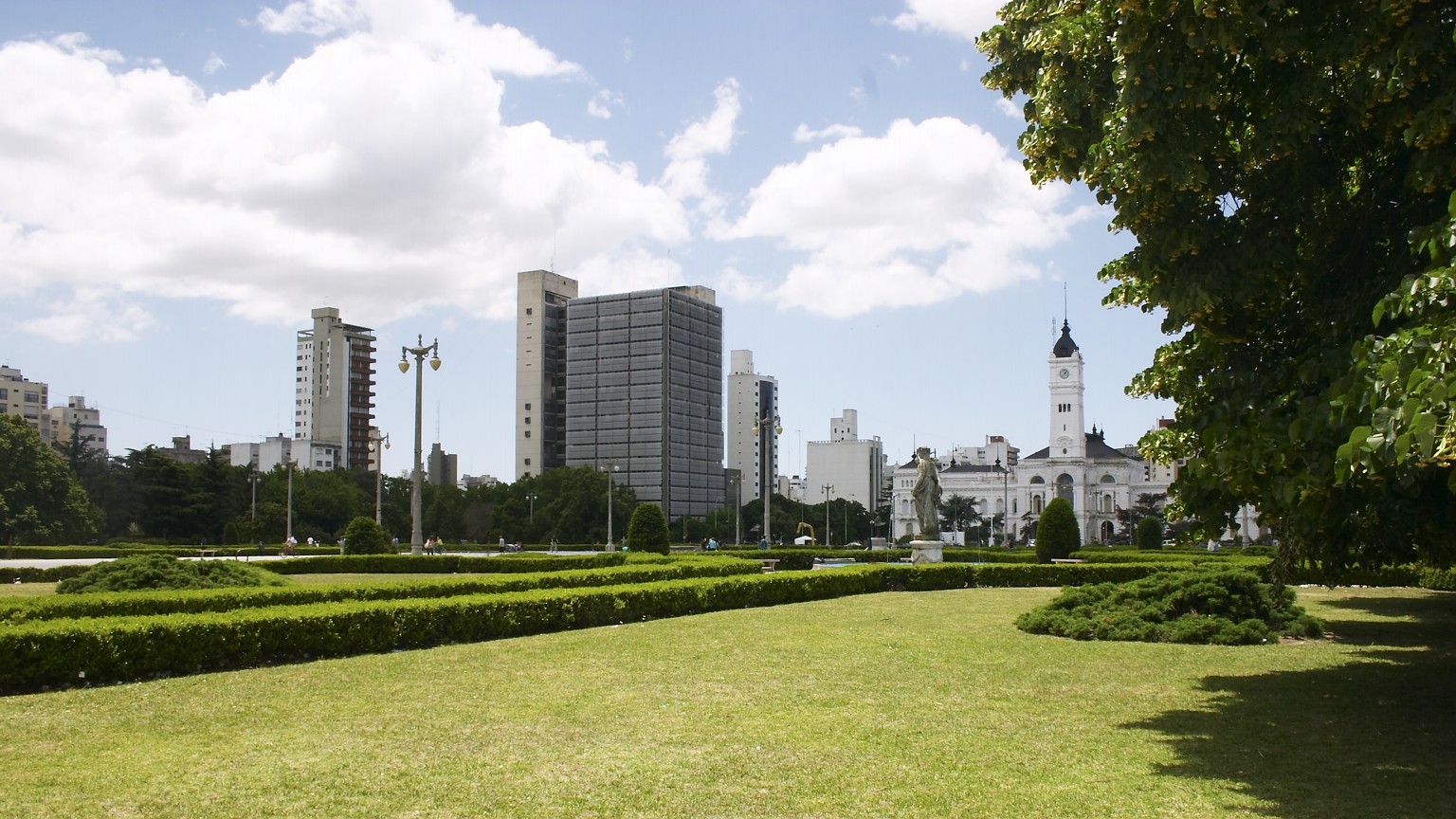
File photo: Plaza Moreno in La Plata, Buenos Aires Province, Argentina, photographed 2005-12-10. Geographic context for the provincial regulatory report; not the federal capital, a provincial legislative sitting or a gambling premises. Photo: Barcex / Wikimedia Commons, CC BY-SA 2.5. Image source.
Argentina’s Buenos Aires Province has regulated online gambling through provincial law since 2019, issuing only seven licences, with all legal websites ending in “.bet.ar.” Yet Atanasof, head of the province’s Lottery and Casino Institute (IPLyC), told a provincial legislative committee on October 20 that “80% of online gambling takes place on illegal websites.” After seven years, the province has built a licensing system but has failed to keep most players in the legal market. The comprehensive bill being discussed in the provincial Chamber of Deputies also shifts the focus from licensing to protecting minors and preventing and treating addiction.
1. Rules Written into a Budget Law
The province’s online gambling regime was not established through standalone legislation. Instead, it was included in the 2019 Fiscal Law (Ley 15.079), passed on December 3, 2018. Articles 146 to 173 form a dedicated chapter on online gambling, with implementing provisions introduced through Decree 181/19 in 2019.
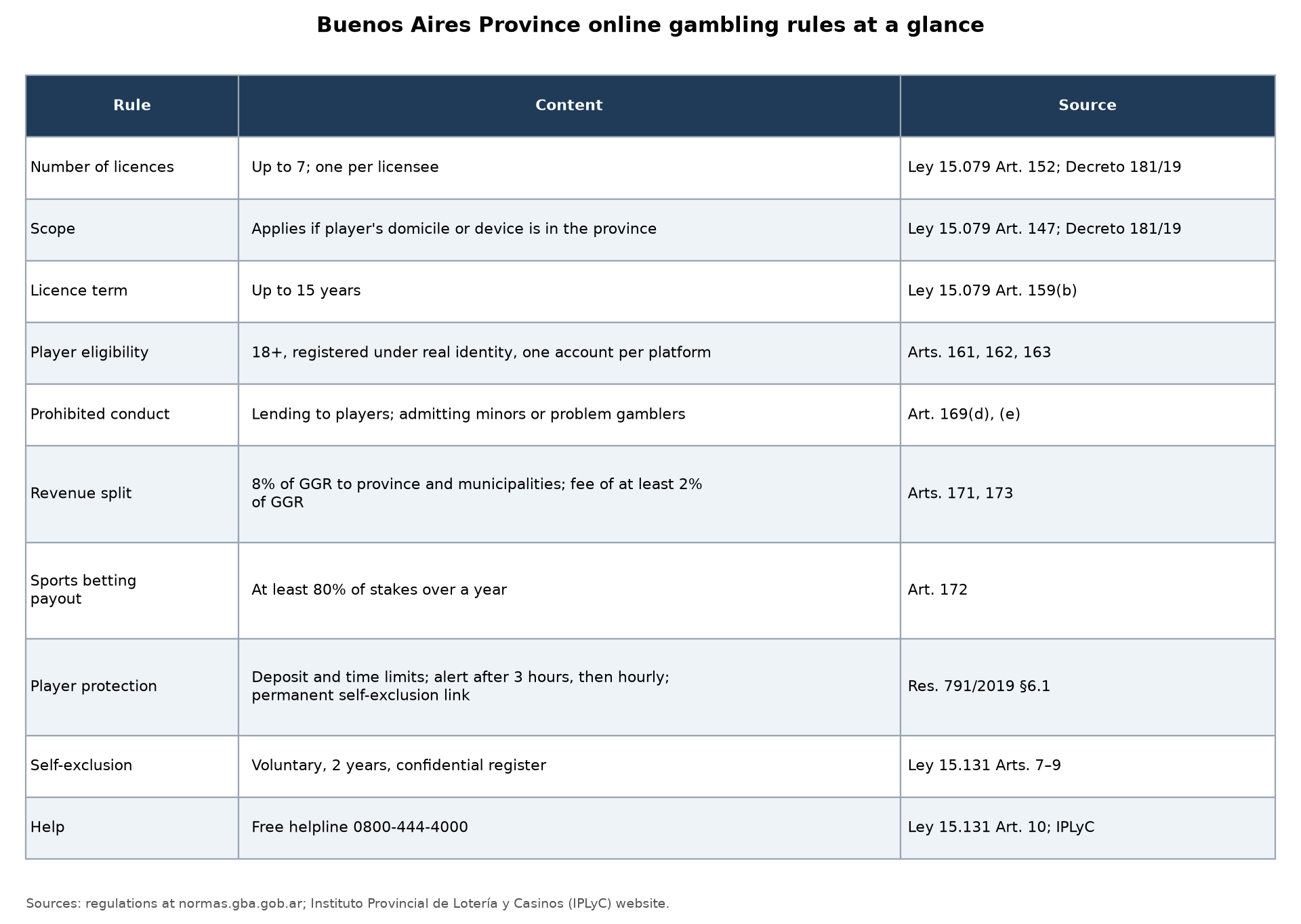
Chart: Compiled by this publication from the original legislative text.
Several key features:
- Scope (Article 147): If games can be accessed or bets placed within the province, they fall under provincial jurisdiction. The implementing decree further provides that the rules apply if the player’s residence or the device used is located in the province. Overseas websites cannot evade them by arguing that their servers are outside the province.
- Licences (Articles 152, 153 and 159): A maximum of seven, with each licensee allowed to hold only one. There is a public licence register, and licences may last no more than 15 years. All unlicensed operations are deemed “prohibited.”
- Advertising (Article 160): All unauthorized gambling advertising is prohibited. Media outlets, advertising agencies and platforms must verify that an advertiser holds authorization before publishing an advertisement. IPLyC must publish the list of licensees on its official website for verification.
- Players (Articles 161 to 163): Players must be at least 18, register under their real identities, and hold no more than one account on each platform.
- Violations (Article 169): These include lending money to players and allowing minors and pathological gamblers to gamble.
- Fiscal provisions (Articles 171 to 173): Eight per cent of gross profit goes to the province and municipalities for education and social assistance; licence fees must be at least 2% of gross profit; the annual payout ratio for sports betting must be no lower than 80%.
On August 20 this year, IPLyC again reminded the public that there were only seven authorized platforms, all with domains ending in “.bet.ar.” At the time, officials also dealt with a fake website impersonating a licensed platform and opened a channel on the official website for reporting illegal sites.
2. Player Protection: Rules Stricter Than Licensing
Section 6.1 of Resolution 791/2019 is what governs day-to-day operations. Licensed platforms must:
- Require players to set deposit and time limits at registration and on every login, calculated separately per session, per day and per month;
- Display a reminder after a player has played continuously for three hours, then once every hour thereafter;
- Display a summary of wins and losses at the end of each session;
- Keep a self-exclusion option permanently available on the page and block the account immediately upon a player’s request;
- Identify high-risk players through behavioural indicators.
Law 15.131 separately establishes a self-exclusion register administered by IPLyC:
- Applications can be made only voluntarily by the individuals concerned (Article 7);
- Exclusion lasts two years, after which a person may apply again (Article 8);
- The register is confidential (Article 9);
- All legal gambling premises and websites must display the warning “El juego compulsivo es perjudicial para la salud” (“Compulsive gambling is harmful to health”) and a helpline number (Article 10).
The province’s problem gambling prevention and treatment programme began in 2005 and currently has 10 treatment centres. Its free helpline is 0800-444-4000.
3. Why 80% Remains in the Illegal Market
Atanasof told the committee that licensed platforms had adopted biometric verification and connected to data from the National Registry of Persons (RENAPER). The stricter the compliance requirements, the more cumbersome registration becomes for players. Illegal websites do not verify identities or set limits, and often offer higher odds and bonuses. This is the structural problem with the seven-licence system: legal platforms bear the full cost of compliance, illegal platforms face none of these constraints, and the province’s enforcement powers do not reach overseas servers.
The “80%” figure comes from the regulator’s head speaking orally, and IPLyC has not published its calculation method. But because it comes from the regulator himself, it amounts to an official acknowledgment that the licensing system has failed to achieve the legislative aim in Article 146 of “eradicating illegal gambling.”
This is consistent with experience in some European markets: the number of licences and the intensity of compliance requirements do not, by themselves, determine the legal market’s share. What matters is whether payment and advertising channels for illegal websites can be cut off at the same time. Article 160 already regulates advertising, but provincial law imposes no specific obligations on payment channels.
4. A New Legislative Push: The Focus Shifts to Minors
According to an official press release from the provincial Chamber of Deputies, deputies Tignanelli and Olivetto have proposed a comprehensive bill that would establish two funds: one for mental health and the prevention and treatment of online gambling addiction, and another for public-interest and sports organizations. Citing a survey by the Secretariat for Comprehensive Drug Policies (SEDRONAR), the press release states that 26.2% of secondary-school students had placed a bet in the preceding year.
Media reports identify the bill as D-3634/26-27 and say it includes facial biometric verification and the establishment of a specialized prosecutorial body. However, the Chamber of Deputies’ press release does not give the bill number or details of its provisions. Until the official text is published, this article does not treat those details as established facts.
5. Practical Implications
Players: To judge whether a website is legal, check two things: whether its domain ends in “.bet.ar” and whether it appears on IPLyC’s official list. Self-exclusion, deposit limits and identity protection do not apply on illegal websites.
Operators: All seven licences have already been issued, leaving no room for new entrants. Advertising is governed by Article 160, and media outlets will require proof of authorization.
Payment and advertising providers: Publishing advertisements or providing promotion for illegal websites constitutes a violation under Article 160.
Enforcement: Provincial regulators can block and report sites, but pursuing overseas operators requires cooperation at the national level. This is a problem that even the new bill may not be able to solve.
6. What Remains Unclear
- The calculation method and data sources behind the “80%” figure.
- The comprehensive bill’s official text, number and legislative timetable.
- The number of people on the self-exclusion register and how it is implemented. IPLyC has not yet published regular figures.
If you need help: Buenos Aires Province’s free helpline is 0800-444-4000. The official information page is https://loteria.gba.gob.ar/juego-compulsivo .
Sources
- Articles 146 to 173 of Ley 15.079 (Buenos Aires Province’s 2019 Fiscal Law), normas.gba.gob.ar
- Decreto 181/2019; Section 6.1 of IPLyC Resolución 791/2019
- Ley 15.131 (compulsive gambling prevention and treatment and the self-exclusion register)
- News on the IPLyC website, August 20 and October 20, 2026; the “Juego compulsivo” information page
- Buenos Aires Province Chamber of Deputies (HCD) press release, October 2026
Cite This Article
Topics In This Story
Related Countries

Daniel Tan is an editor at AskSpinner News who believes industry writing can be informed, approachable and engaging. Daniel turns complex subjects into accessible articles and reports, giving readers a welcoming way into unfamiliar topics and room to build their understanding as they read.
More From This Author