“Casino Filipino Is Bleeding Heavily”: PAGCOR Chairman Wants to Sell 35 Casinos
PAGCOR chairman Alejandro Tengco outlines a proposed sale of 35 Casino Filipino casinos, with approvals still pending and an exit targeted for 2027.
 4 Min Read
Overview
- PAGCOR chairman Alejandro Tengco outlines a proposed sale of 35 Casino Filipino casinos, with approvals still pending and an exit targeted for 2027.
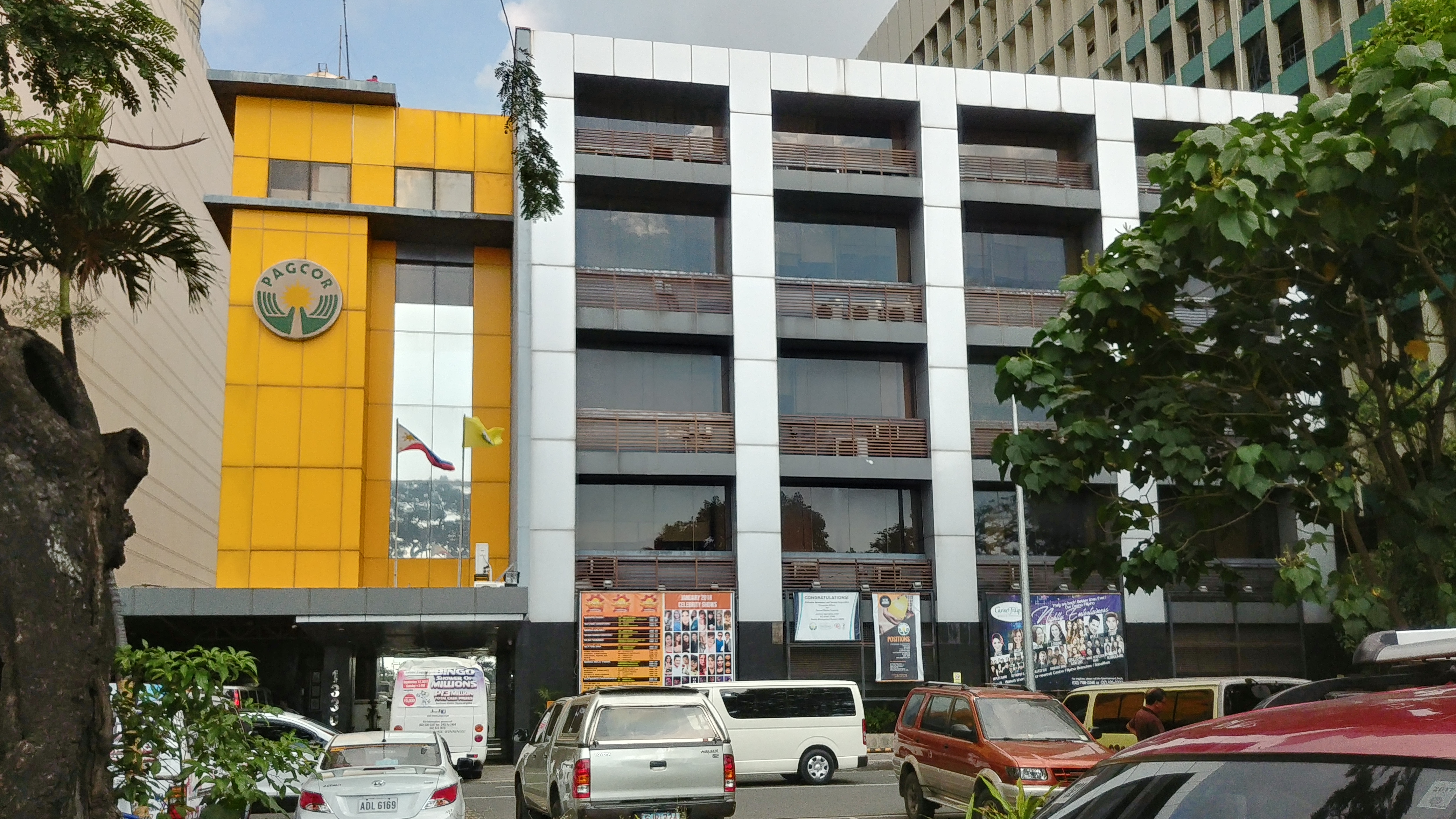
Cover photo: PAGCOR building, Manila, photographed on 18 January 2018. Copyright: Lawrence Ruiz / Wikimedia Commons, CC BY-SA 4.0. File photo illustrating PAGCOR, the operator discussed in this article; not a photograph of the reported 2026 sale process. Original photo reproduced without alteration; website thumbnails may crop it.
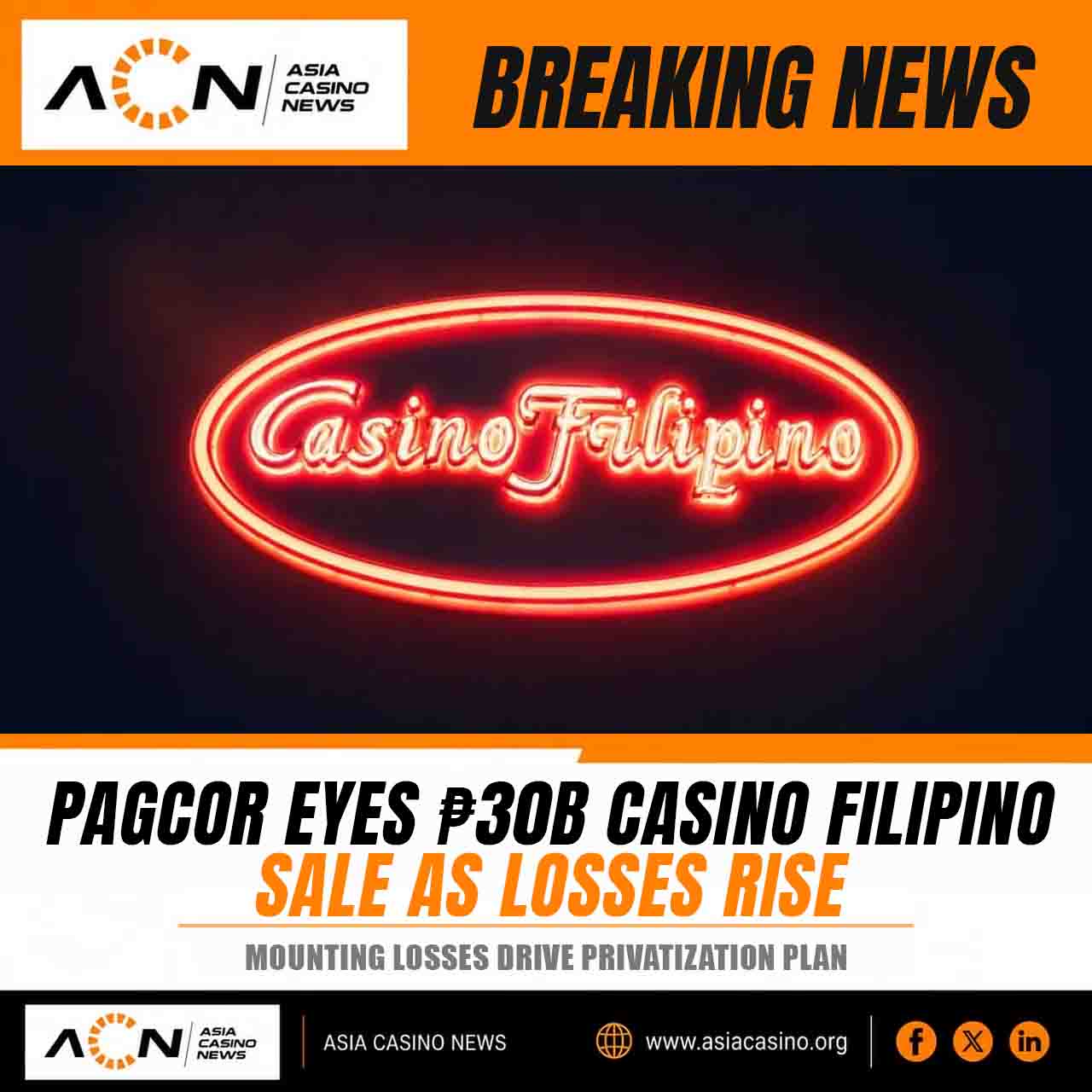
Image accompanying industry outlet Asia Casino News’s report on the planned sale of Casino Filipino. Image source: Asia Casino News
“Casino Filipino is bleeding heavily.”
Alejandro Tengco, chairman and chief executive officer of the Philippine Amusement and Gaming Corporation (PAGCOR), made that remark to reporters on the sidelines of the opening of the Kaban Boracay casino in Boracay. According to an October 13 report by Philippine business outlet Context.ph, he said: “In 2026, I expect a loss of 7 billion pesos, and that is the minimum. In 2025, we lost about 6 billion.”
The way to stop the bleeding is to sell all 35 Casino Filipino casinos that PAGCOR operates on its own or jointly. Of these, 12 are wholly owned by PAGCOR and 23 operate under revenue-sharing arrangements, in cities including Cebu, Davao, Angeles, Tagaytay and Malabon. Tengco’s preliminary valuation is 20 billion to 30 billion pesos. He said major industry players, including casino operators in Manila’s Entertainment City, had expressed interest.
Two Hurdles Remain Before a Sale
The prerequisite for a sale is “decoupling”: separating PAGCOR’s regulatory functions from its commercial operations. Tengco said he expected the Governance Commission for Government-Owned or -Controlled Corporations (GCG) to submit the proposal to the Office of the President during October. Only after President Marcos approves it will PAGCOR hire a financial adviser to determine the final valuation. According to The Philippine Star (Philstar), his target for exiting is the third or fourth quarter of 2027.
According to East Asia Reports, PAGCOR has already launched a tender for a one-year advisory engagement with a budget of 363.33 million pesos, covering financial advice, valuation, financial and legal due diligence, and transaction support. The tender terms state that an award is conditional on an executive order approving the decoupling and written approval from the Office of the Government Corporate Counsel. In other words, preparations have begun, but the privatization itself has not yet been approved.
A preliminary transaction structure is also taking shape: the existing operators of the 23 revenue-sharing casinos have a right of first refusal, while the 12 wholly owned casinos will be put out to tender. Proceeds from selling the casinos will be used to cover the cost of decoupling, including employee severance payments estimated at around 20 billion pesos, currently covered by PAGCOR’s retirement trust fund.
Profit Shrinks by More Than 70% in a Year
The urgency of the transaction needs to be seen in the context of PAGCOR’s accounts. In an interview the following day, Tengco said full-year net profit for 2026 could fall below 5 billion pesos, compared with 17.46 billion in 2025. In addition to Casino Filipino’s losses, PAGCOR lost a Supreme Court case involving the Philippine Sports Commission (PSC) and now has to “take 5% off the top line,” adding nearly 4 billion pesos in annual expenditure.
After decoupling, PAGCOR will collect only a 25% license fee on casinos’ gross gaming revenue, at least 10 percentage points lower than its current revenue share, but it will no longer have to shoulder staff pay and operating costs. Kaban Boracay is already piloting another model: the operator pays PAGCOR 35% of gross gaming revenue and covers staff wages itself. Tengco said this model could be extended to other casinos.
Correction
An earlier version in this series stated that “PAGCOR operates a dozen or so casinos” and that “the exit target is the end of 2027.” These statements were incorrect. According to Tengco himself, 35 casinos are involved (12 wholly owned and 23 under revenue-sharing arrangements), and the exit target is the third or fourth quarter of 2027. The statement that “the sale requires government approval” was broadly accurate; specifically, the GCG makes a recommendation and the president approves it.
Sources
- Context.ph (Tengco interview, October 13): https://context.ph/2026/10/13/pagcor-plans-p20b-casino-sale-amid-overhaul/
- Context.ph (profit forecast, October 14): https://context.ph/2026/10/14/pagcor-profit-seen-plunging-below-p5-billion-in-2026/
- Philstar: https://www.philstar.com/business/2026/10/14/2562962/pagcor-targets-casino-exit-2027
- East Asia Reports (advisory tender): https://www.eastasiareports.com/zh-cn/fast-news/pagcor-casino-filipino-advisory-tender
- Asia Casino News: https://x.com/officialACNews/status/2110317346959286418
- Note: PAGCOR’s board resolution and the GCG documents have not been made public and were not obtained; the original tender documents were not independently checked on PhilGEPS; Tengco’s remarks are quoted via Context.ph.
Cite This Article
Topics In This Story
Related Countries

Patricia Cruz aims to bring a different perspective to familiar industry conversations. Through in-depth articles and thematic reports at AskSpinner News, Patricia draws attention to details worth questioning and connections that can be overlooked, using the news as a starting point for a closer look at the business of iGaming.
More From This Author