SDNY remands New York's Kalshi case to state court
Judge Vernon S. Broderick of the Southern District of New York on November 19, 2026 granted New York's motion to remand People v. KalshiEX LLC, No. 1:26-cv-06550, to New York County Supreme Court and directed immediate remand. The court denied attorneys' fees and costs, finding it could not conclude Kalshi lacked an objectively reasonable basis for seeking removal, and said that because it lacks subject-matter jurisdiction it cannot decide Kalshi's motion for a protective order. The opinion does not decide whether Kalshi's event contracts violate New York law.
 3 Min Read
Overview
- Judge Vernon S. Broderick on November 19, 2026 granted New York's motion to remand People v. KalshiEX LLC, No. 1:26-cv-06550 (S.D.N.Y.), to the Supreme Court of New York, New York County, and directed the clerk to "effect immediate remand."
- The court wrote that "[t]he Petition does not include any federal causes of action," while a footnote states that "the predicate act for the Eighth Cause of Action is the Wire Act," 18 U.S.C. § 1084(a).
- It rejected federal-officer removal under 28 U.S.C. § 1442(a)(2) because the suit does not "affect the validity of" the Commodity Exchange Act, and found that the petition "does not meet the substantiality or federal-state balance requirements" of the Gunn-Grable test.
- The court denied attorneys' fees and costs under 28 U.S.C. § 1447(c), saying it could not conclude Kalshi "lacked an objectively reasonable basis for seeking removal."
- Because the court lacks subject-matter jurisdiction, it "cannot decide" Kalshi's motion for a protective order (ECF 23, 24). The opinion does not decide whether Kalshi's event contracts violate New York law.
Judge Vernon S. Broderick of the Southern District of New York on November 19, 2026 granted New York's motion to remand People v. KalshiEX LLC, No. 1:26-cv-06550, to New York County Supreme Court. The 19-page Opinion & Order (ECF 25) directed the clerk to "effect immediate remand."
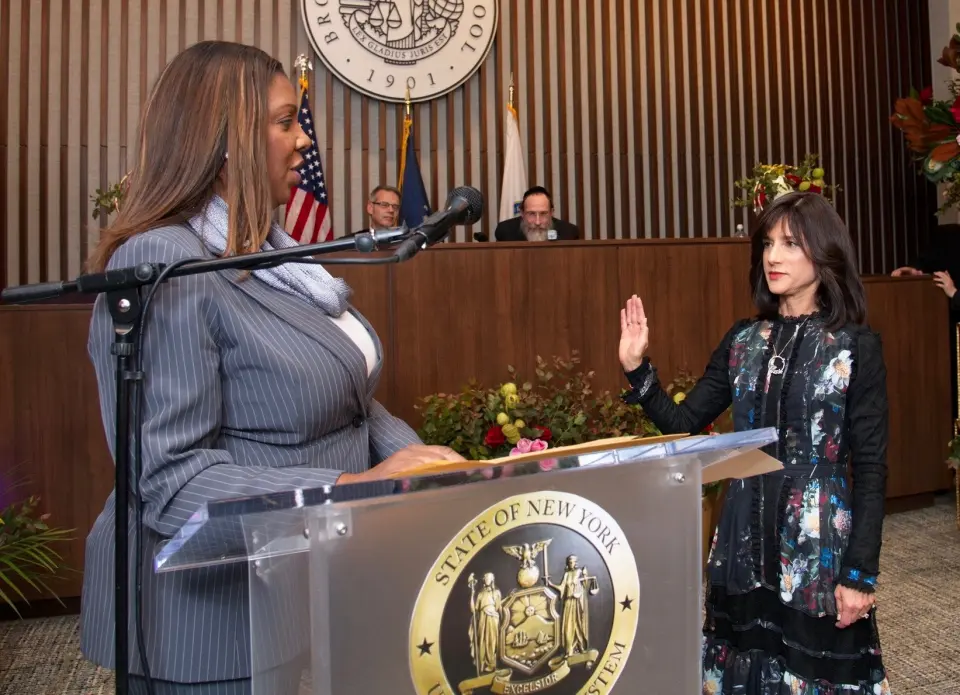
Attorney General Letitia James filed the verified petition in state court on July 31, 2026 under Executive Law § 63(12), seeking to permanently enjoin Kalshi from continuing to operate a gambling business in New York without being licensed by the New York State Gaming Commission. KalshiEX, which the opinion recites was certified as a CFTC designated contract market on November 3, 2020, removed the case the same day (ECF 1). New York moved to remand on August 7 (ECF 16).
Broderick wrote that "[t]he Petition does not include any federal causes of action," though a footnote states that "the predicate act for the Eighth Cause of Action is the Wire Act," 18 U.S.C. § 1084(a). He rejected federal-officer removal under 28 U.S.C. § 1442(a)(2) because the suit does not "affect the validity of" the Commodity Exchange Act. The opinion also notes that the CFTC has not sought to intervene in this action. Under the Gunn-Grable test, the petition "does not meet the substantiality or federal-state balance requirements" and therefore does not "arise under" federal law. Kalshi specified that preemption was "not [a] basis for removal here" (ECF 21).
The court denied attorneys' fees and costs under 28 U.S.C. § 1447(c), finding it could not conclude Kalshi "lacked an objectively reasonable basis for seeking removal." Because the court "lack[s] subject-matter jurisdiction," it "cannot decide" Kalshi's motion for a protective order (ECF 23, 24). The clerk was directed to terminate the motions at ECF 16 and ECF 23. The opinion does not decide whether Kalshi's event contracts violate New York law.
The case is listed on AskSpinner's Kalshi and prediction market lawsuits tracker. Related Second Circuit coverage: Second Circuit denies Kalshi and Coinbase injunctions in New York and Connecticut.
Cite This Article
Topics In This Story
Related Countries

The Newsroom covers the gambling industry, game providers, casino services and the public information that helps readers understand them. Its explainers focus on clear definitions, the scope of available evidence and practical questions for readers.
More From This AuthorRelated Topics
Kalshi and Prediction Market Litigation with US States and Tribes
Court cases between prediction market operators, US states, tribal nations and federal regulators over whether sports event contracts fall under state gambling law, from Utah and New York to Louisiana and the Seventh Circuit.