
Bingo Speed by BingoPlus
Bingo Speed by BingoPlus
by BingoPlus


 Local Game

 No Symbols Yet
No symbols have been added for Bingo Speed by BingoPlus yet.
Bingo Speed by BingoPlus Expert Review


Updated:
Here you can find detailed review information about Bingo Speed by BingoPlus.
Overview
Bingo Speed combines a familiar 5×5 card with a 30-ball main draw, Red-or-Blue extra balls and a conditional full-card jackpot. The price controls are easy to read. The main point to clarify before spending is how listed multipliers become cash awards, including whether line awards add together and how multiplier cards affect jackpot shares.
Bingo Speed keeps the familiar card and changes the pace
Bingo Speed is a live-hosted BingoPlus game with a 5×5 card, a 30-ball main draw and automatically marked numbers. The interesting part comes after that draw: Red or Blue can supply extra balls, while a separate set of seven Lucky Numbers determines whether the Must-Win Jackpot opens.
Before looking at the big prize figures, it helps to separate three things: what counts as a line, which extra balls apply to your card, and how the jackpot is shared.
What I liked
✅ The familiar 5×5 card is easy to follow, with numbers marked automatically.
✅ Card quantities and prices appear together, separate from the multiplier buttons.
✅ Extra balls and a seven-number jackpot trigger add something to follow beyond the main draw.
What I didn’t like
❌ The payout table needs a worked example showing the cash calculation and whether line awards add together.
❌ The extra-ball price and multiplier-card jackpot weighting are not clearly explained.
What the live view shows
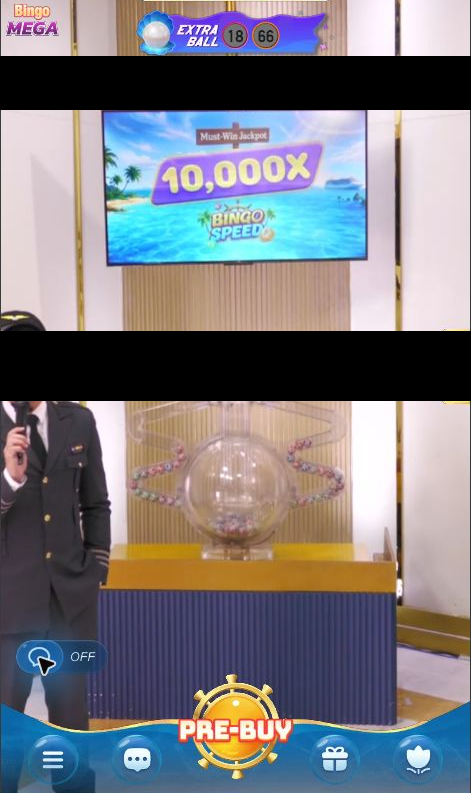
The vertical studio layout puts the presenter, ball machine and broadcast screen above a prominent PRE-BUY button. The excerpt gives a feel for that public view.
Start with the card
Each card has 24 different numbers and a FREE centre. The B/I/N/G/O columns cover 1–15, 16–30, 31–45, 46–60 and 61–75. The centre replaces one number in the N column. You can use random cards or choose DIY numbers within those ranges; the rules allow 1–999 cards per round.
Cards are bought before betting closes. The main draw uses 30 balls from the 75-number pool, and matching numbers are marked automatically. Horizontal, vertical and diagonal lines count, with up to seven completed lines per card.
Extra balls, Lucky Numbers and Auto-Play
What Red and Blue add
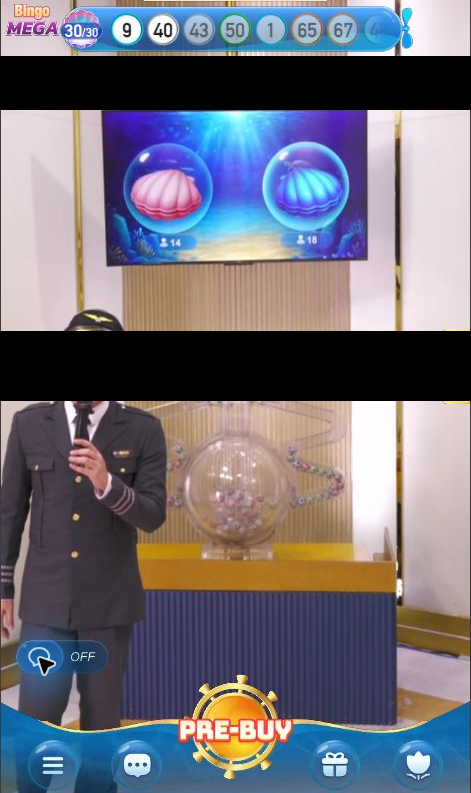
After the 30 main balls, you choose Red or Blue. A side is assigned automatically if time runs out. The extra-ball draw can produce one, two or three balls; your selected side provides the chance to complete more lines. That is why the payout table continues through 31–33 balls.
The missing detail is the price treatment. The rules reviewed here do not clearly say whether there is a separate extra-ball charge or a free entitlement, so check the selection screen before confirming anything.
Seven Lucky Numbers unlock the jackpot
All seven active Lucky Numbers must appear across the main and extra balls to trigger the Must-Win Jackpot. Active cards carry over, and the jackpot draw continues until at least one card has all 24 numbered cells marked. The Lucky Numbers reset after that jackpot round.
The reset seed is PHP200,000. If several players complete full cards, the pool is divided according to winning cards, including multiplier cards. The Help’s PHP1,000,000 example gives one winning card PHP250,000 and three winning cards PHP750,000. It does not explain the multiplier-card weighting in the same detail. Treat the studio’s 10,000× message as a promotion, not a personal prize promise.
Before switching on Auto-Play
Auto-Play can repeat up to 100 rounds while you remain online, deducting the fare each round. DIY cards keep their numbers; random cards keep the quantity but receive new numbers. Set a spending limit before using it.
The rules say cards continue to be processed during a disconnection. Incomplete rounds caused by server or system-network problems are refunded, while qualifying technical malfunctions void the affected round. The server result takes precedence if the local display differs.
Keep card quantity and multiplier separate
At 1×, the price panel checked on 7 October 2026 showed PHP5 for one additional card, PHP50 for 10, PHP125 for 25 and PHP500 for 100. The multiplier row offered 1×, 2×, 5×, 10×, 20× and 50×. Check the current panel for the price you are about to pay.
This is one of the clearer parts of the interface: quantity buttons carry their prices, while the multiplier has its own row. Choosing more cards and choosing a higher multiplier are separate decisions.
How to read the payout table
Look at both the number of balls used and the number of lines completed. Earlier lines have higher listed multipliers.
Balls used → listed multiplier
- 1 line: 4 balls: 500×; 5–9 balls: 100×; 10–14 balls: 20×; 15–19 balls: 10×; 20–24 balls: 5×; 25–30 balls: 4×; 31–33 balls: 2×.
- 2 lines: 4 balls: —; 5–9 balls: 200×; 10–14 balls: 50×; 15–19 balls: 25×; 20–24 balls: 10×; 25–30 balls: 6×; 31–33 balls: 3×.
- 3 lines: 4 balls: —; 5–9 balls: —; 10–14 balls: 100×; 15–19 balls: 50×; 20–24 balls: 25×; 25–30 balls: 12×; 31–33 balls: 6×.
- 4 lines: 4 balls: —; 5–9 balls: —; 10–14 balls: 200×; 15–19 balls: 100×; 20–24 balls: 50×; 25–30 balls: 25×; 31–33 balls: 12×.
- 5 lines: 4 balls: —; 5–9 balls: —; 10–14 balls: —; 15–19 balls: 1,000×; 20–24 balls: 200×; 25–30 balls: 100×; 31–33 balls: 50×.
- 6 lines: 4 balls: —; 5–9 balls: —; 10–14 balls: —; 15–19 balls: 10,000×; 20–24 balls: 5,000×; 25–30 balls: 2,000×; 31–33 balls: 1,000×.
- 7 lines: 4 balls: —; 5–9 balls: —; 10–14 balls: —; 15–19 balls: 10,000×; 20–24 balls: 10,000×; 25–30 balls: 5,000×; 31–33 balls: 2,000×.
A dash means no multiplier is listed. The table gives useful comparisons, but leaves the stake base and whether successive line awards add together unclear. Multiplying the biggest entry by the PHP5 card quotation would be a guess.
What we could check from the public view
We checked the in-game rules on 12 October 2026 and watched the public studio without buying cards. The price observations above come from the panel checked on 7 October 2026.
DigiPlus describes rounds of approximately one to two minutes. We did not independently time a complete round.
Our take
The structure is straightforward once you separate the line game, extra balls and jackpot. The price controls are easy to read; the payout explanation needs more detail. That is the point to clarify before spending: how the displayed multiplier becomes a cash award for the card you selected.
Bingo Speed by BingoPlus FAQs
Answers to common questions about Bingo Speed by BingoPlus.
Bingo Speed by BingoPlus Reviews
 No Player Reviews Yet
Played Bingo Speed by BingoPlus? Share your experience with other players.
 Write A Review