Schleswig-Holstein's casino sale: how a German state is privatising its casinos, and what the law requires
Germany's northernmost state is selling its casinos. Schleswig-Holstein's state holding company is running an EU-wide tender for all shares in Spielbank SH GmbH, the operator of the state's land-based casinos. The sale includes a concession to run up to five public casinos until the end of 2040.
 7 Min Read
Overview
- The state holding company GVB is selling all shares in Spielbank SH GmbH, which holds a single concession for five casinos running to 31 Dec 2040.
- A December 2024 law change set up a single "private monopoly" concession and EU procurement rules for awarding it.
- The highest price wins, but the sale needs consent from the gambling supervisor, the finance ministry, the cabinet and the Landtag finance committee.
- The government has said signing and closing in Q4 2026 is "still possible" (finance committee, 20 Aug 2026).
- North Rhine-Westphalia (NRW) sold WestSpiel to the Gauselmann Group through a similar process in 2021.
Germany's northernmost state is selling its casinos. Schleswig-Holstein's state holding company is running an EU-wide tender for all shares in Spielbank SH GmbH, the operator of the state's land-based casinos. The sale includes a concession to run up to five public casinos until the end of 2040.
The process shows how a German state can move casinos out of public ownership while keeping tight regulatory control over them.
What is being sold
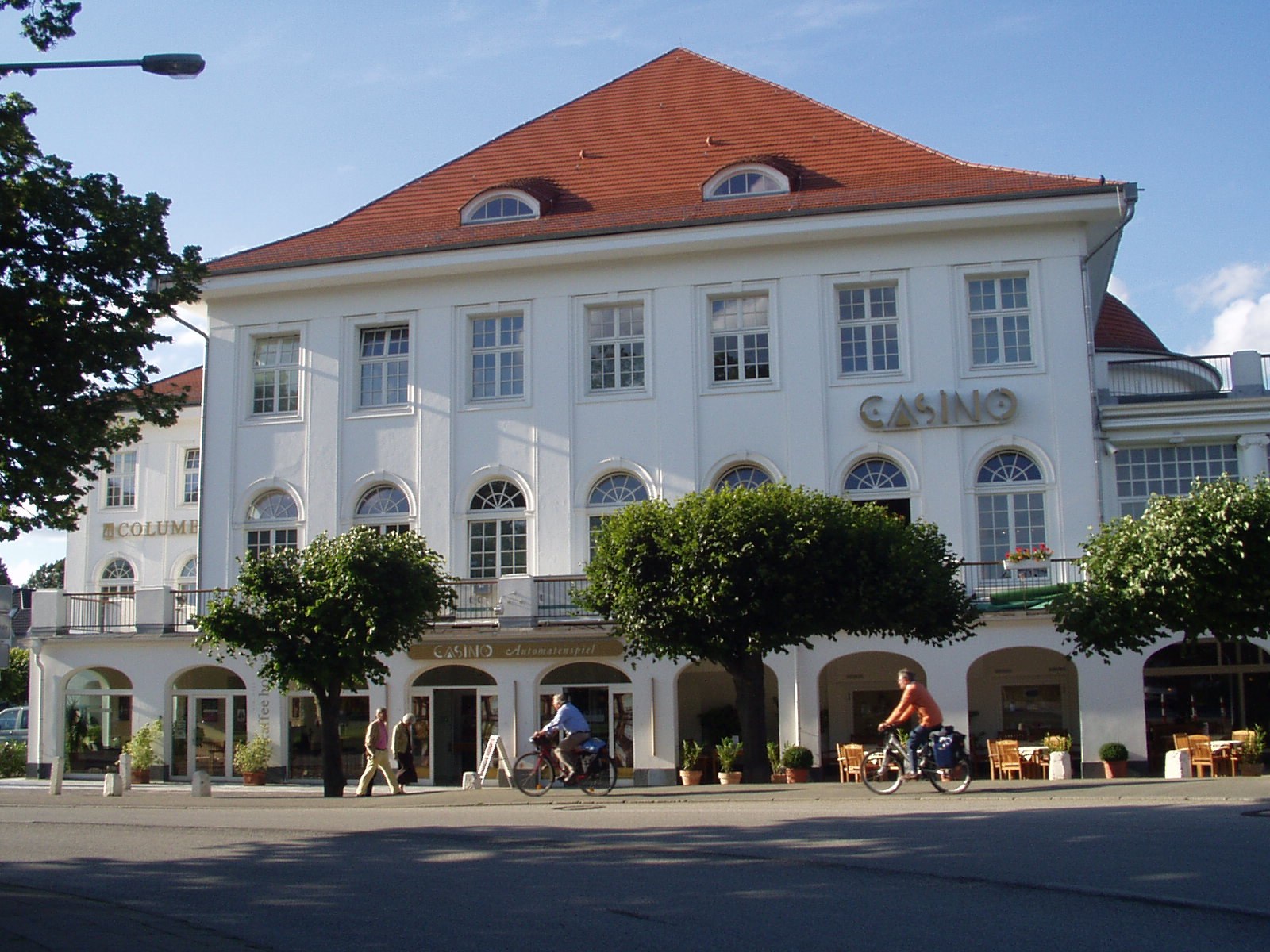
Spielbank SH GmbH has been owned since 2009 by the Gesellschaft zur Verwaltung und Finanzierung von Beteiligungen des Landes Schleswig-Holstein mbH (GVB), the state's holding company, according to a Landtag paper from February 2026 (Drucksache 20/4028). It operates casinos in Flensburg, Kiel, Lübeck and Schenefeld. The state has also designated Bargteheide, near Hamburg, as a fifth location. The Landtag reaffirmed all five locations in November 2025. dpa has reported that the group employs about 240 people and that a casino in Westerland on Sylt operated until 2021.
According to the tender notice, the state granted Spielbank SH GmbH a single concession on 31 October 2025, under the state casino law (SpielbG SH). The concession covers five public casinos for 15 years, to 31 December 2040. The buyer acquires the company, and with it the concession.
The notice gives an estimated value of €1.738 billion. This is the expected turnover of the company from 2026 to 2040, as required by procurement rules, not an asking price. The finance ministry has said in writing that a valuation has existed since June 2025, but that the seller's price expectations "cannot and may not" be disclosed before bidding.
The legal groundwork: a "private monopoly"
The sale was made possible by an amendment to the state casino law that the Landtag passed in December 2024. The finance committee recommended it with the votes of the CDU, Greens, FDP and SSW, while the SPD abstained.
Under the old law, up to five casino permits could go to different companies. The five permits issued in 2011 all went to state-owned subsidiaries, and they were due to expire on 31 July 2026. The government's bill argued that handing permits to several private operators could create competition between casinos, and that this would run against the player-protection goals of the 2021 Interstate Treaty on Gambling (GlüStV 2021). It cited the EU Court of Justice's reasoning in case C-203/08.
The amended law therefore provides for:
- One concession for all casinos. The bill describes this as a "private monopoly". It does not rule out a publicly owned holder.
- Award under EU concession procurement rules. The Fourth Part of the Competition Act (GWB) and the Concession Award Regulation (KonzVgV) apply. Selection criteria include public safety, supervisory access, financial capacity, the "extensive capture" of casino profits through levies, and effective measures against gambling harm.
- Separate operating permits for each site. They set the permitted games and the maximum numbers of tables and machines, and they lapse automatically if the concession ends.
- No transfer of the concession, except within a corporate group with ministry approval. A change of shareholders needs the consent of the gambling supervisor (§13(4) SpielbG SH).
- Re-tendering. The next concession must be re-tendered in the EU Official Journal at least two years before it expires.
The same law also changed the casino levy regime. It added an equalisation levy (Ausgleichsabgabe) modelled on Hamburg's. According to the bill, this responds to a European Commission state-aid decision of 20 June 2024 on the taxation of German casinos. Casinos still pay the casino levy and an additional levy on gross gaming revenue, and the host municipality and district receive a share.
There is also an online link. Schleswig-Holstein's law implementing the GlüStV 2021 says one of the state's online casino concessions goes to the holder of the land-based casino concession, alongside up to four other online concessions awarded by tender. A private buyer of Spielbank SH would therefore be in line for that online concession too.
How the tender works
The finance ministry described the process to the Landtag finance committee on 20 August 2026. It is a negotiated procedure with a prior call for competition, in two phases:
- Participation phase. Applications closed in mid-June 2026, and the suitability check against minimum requirements was largely complete.
- Offer and negotiation phase. A data room and a draft purchase agreement go to bidders. First offers are scored on the single criterion of "highest price", and the state may accept the best first offer outright. If it does not, it negotiates with each bidder, amends the draft for all of them, and asks for best and final offers.
The expected price is meant to reflect the present value of future casino surpluses after all costs and levies. An independent fairness opinion will test whether the winning price falls within or above a valuation range.
The award is subject to several consents:
- the interior ministry, as gambling supervisor;
- the finance ministry, based on a budgetary cost-benefit review;
- the state cabinet;
- the Landtag finance committee.
The last of these consents was added by a Landtag resolution of 21 November 2025 (Drucksache 20/3828). That resolution backs privatisation but requires the negotiated terms to come to the committee for approval. It also asks that player protection keep "a high priority" and that the workforce's basic interests be protected. Works councils at Kiel and Lübeck and the economic committee at Schenefeld are to be informed when losing bidders are notified.
On timing, the ministry had targeted signing and closing in Q4 2026. In August 2026 it told the committee that completion in the fourth quarter was "still possible".
The debate
The privatisation plan is in the governing coalition's agreement, and it has drawn criticism. The original gameshub report from November 2025 cited warnings from the services union ver.di and from casino expert Tobias Marx. Marx said the state was seeking quick cash. The report also noted the SPD's demand for more parliamentary involvement, which led to the committee-consent requirement. SPD deputy Beate Raudies has since used formal questions to press the government on the valuation, the company's reserves and the timetable.
The financial position is set out in the government's February 2026 answer. The casino companies are mainly equity-financed and have a high equity ratio. Combined equity across the five companies at 31 December 2024 was about €64 million: Schenefeld €24.3m, Flensburg €15.0m, Kiel €14.2m, Lübeck €9.4m and Sylt €1.1m. The government expects a buyer to factor those reserves into its price.
The NRW precedent
Schleswig-Holstein is following a path North Rhine-Westphalia has already taken. NRW changed its casino law, granted a new concession to its state-owned operator WestSpiel, and then sold the company through an EU-wide tender. NRW.BANK started the tender on 18 December 2020. The highest-priced offer won, and the purchase agreement with the Gauselmann Group was signed on 20 July 2021. As in Schleswig-Holstein, the interior ministry had to approve the change of shareholder after checking the buyer's reliability. Gauselmann took over four casinos, with the option to open two more. For broader context on how operators are regulated in Germany, see Germany's cross-platform deposit limits and industry-wide market figures from EGBA.
What to watch
- Whether an offer is accepted in the first round or goes on to best and final offers.
- The finance committee's vote on the negotiated terms.
- The interior ministry's reliability check of the buyer.
- Whether the Bargteheide casino opens under private ownership.
- How the online casino concession tied to the land-based licence is handled after a sale.
Cite This Article
Topics In This Story
Related Countries
Daniel Tan is an editor at AskSpinner News who believes industry writing can be informed, approachable and engaging. Daniel turns complex subjects into accessible articles and reports, giving readers a welcoming way into unfamiliar topics and room to build their understanding as they read.
More From This Author