What is gacha gambling? Paid spins, resellable prizes, and where regulators draw the line
Gacha gambling is the label for a paid mystery-prize loop that regulators and police increasingly treat as online gambling: players pay for a random spin, receive goods or digital items, and can turn those prizes back into money by reselling them. It differs from ordinary consumer gacha, where there is no cash-out path built into the scheme.
 7 Min Read
Overview
- Gacha gambling = paid random pull + prize that can be resold or cashed out.
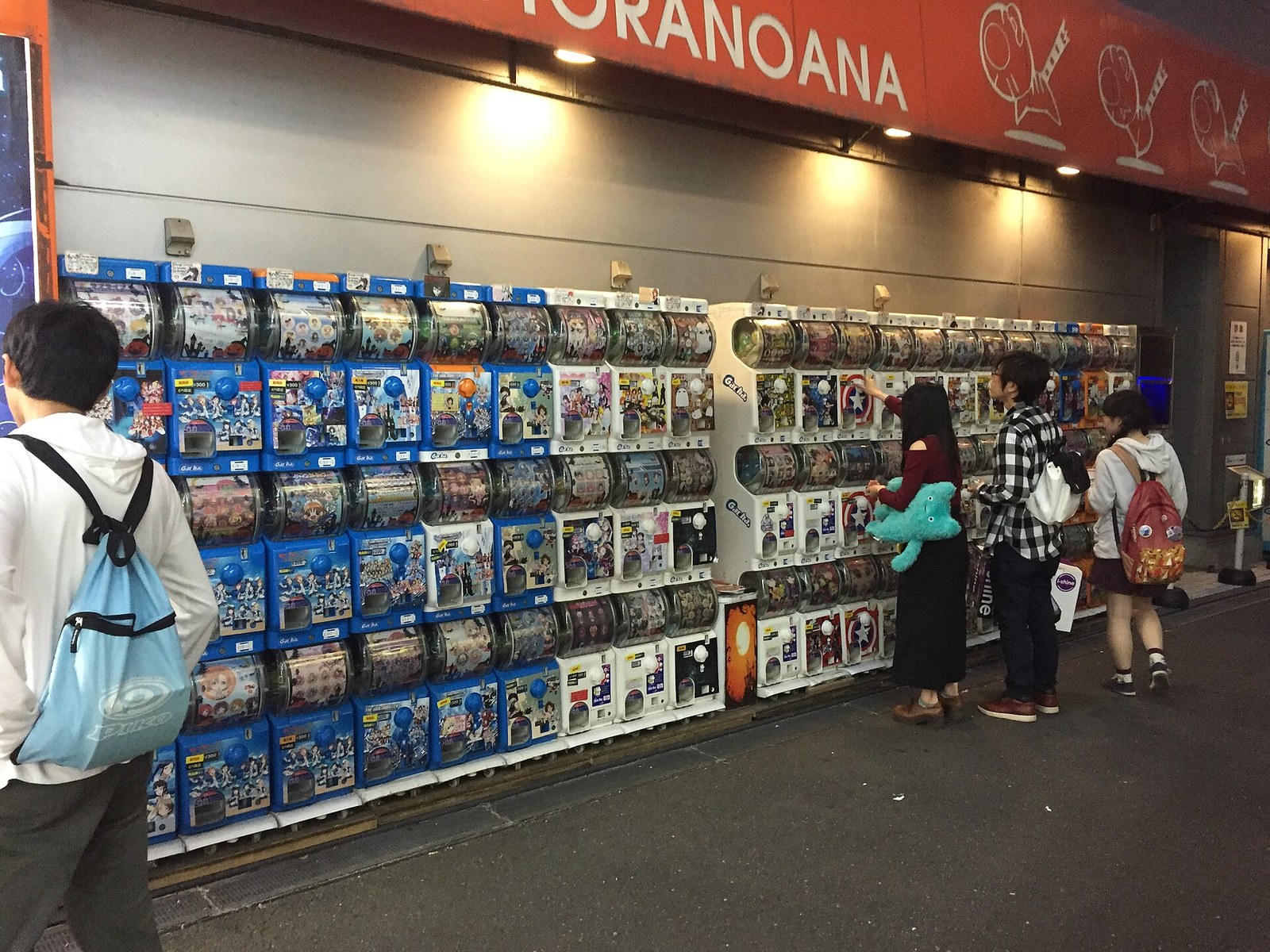
- Ordinary consumer gacha and capsule toys lack that monetisation loop.
- Indonesia’s Boxkia case shows police applying gambling law to the pay–spin–resell structure.
- Loot-box rules differ by country (Belgium vs UK vs Netherlands).
- Randomness alone is not enough; transferable economic value is the hinge.
Gacha gambling is the label for a paid mystery-prize loop that regulators and police increasingly treat as online gambling: players buy or top up a virtual currency, spend it on a random spin or pull, receive goods or digital items, and can turn those prizes back into money by reselling them. It is not the same as ordinary consumer “gacha” or capsule-toy collecting, where the random item is the product you bought and there is no cash-out path built into the scheme. AskSpinner’s coverage of Indonesia’s Boxkia case shows how that pay-to-spin-plus-resale structure is framed under gambling law.
Definition
In this guide, gacha gambling means a product that combines all of the following:
- Consideration — the player pays real money (or buys virtual currency with real money) for a chance to win.
- Chance — the outcome of each spin, pull or box open is random or substantially random from the player’s point of view.
- A prize with exchange value — the reward is goods, cards, figures or other items that can be resold or otherwise converted into money, not only kept for personal use inside a closed game.
When any of those legs is missing — especially when prizes cannot be cashed out or traded for money — the product may still look like a “gacha,” but it is usually discussed as consumer gaming, prize marketing or loot-box design, not as gambling. That boundary is why this encyclopedia entry is about the composite term gacha gambling, not about gacha mechanics in isolation.
How the alleged loop works
Enforcement descriptions of gacha-style gambling sites, including Indonesia’s Boxkia investigation, typically describe the same money cycle:
- Deposit — the player pays through bank rails, QR payments, virtual accounts, crypto or a payment service provider and receives site credits or tokens.
- Spin / pull — credits are spent on a random draw marketed like a gacha machine, spin wheel or mystery prize.
- Prize — the player receives physical or digital goods (examples cited by Indonesian police include items, action figures and cards).
- Monetise — those goods can be sold on secondary markets or otherwise turned into profit, closing the loop back to cash.
The cash-out need not be a button labelled “withdraw winnings.” If the prize is designed to be resold, police and some regulators treat the economics as wagering for money’s worth.
This guide does not explain how to open, fund or operate such a site. Payment channels are mentioned only as they appear in public enforcement statements.
Consumer gacha vs gacha gambling
| Feature | Ordinary consumer gacha / capsule toy / many blind boxes | Gacha gambling (as used here) |
|---|---|---|
| What you buy | A random collectible or in-game cosmetic as the product | A chance at a prize that can be turned into money |
| Outcome | Keep, trade as a hobby, or display | Resell / cash out is part of the economic design |
| Legal framing (typical) | Consumer / advertising / prize rules; not automatic gambling | Gambling, illegal betting or related cybercrime statutes where chance + stake + money’s worth are present |
| Japan note | Paid “gacha” and capsule toys are generally treated as product sales; separate consumer rules (e.g. complete-gacha / card-matching prize limits) apply under premium and representation law, not as a blanket gambling label | — |
Japan’s consumer agency materials on online “gacha” and card-matching focus on prize and labelling rules, not on equating every random microtransaction with casino gambling. That history is useful context: randomness alone does not make a product gacha gambling. The cashable or resellable prize is the hinge.
Near synonyms: loot boxes and mystery prizes
Loot boxes are random in-game packages, often bought with real money, that yield virtual items. Whether they are gambling depends on national law:
- Belgium’s Gaming Commission (2018 research report) found that paid loot boxes in several major titles met the legal elements of a game of chance and had to be removed or changed for the Belgian market.
- The UK Gambling Commission has said that where loot-box items stay inside the game and cannot be cashed out, the activity is unlikely to be licensable gambling under the Gambling Act’s “money or money’s worth” test; skin-betting and similar cash-out markets sit on the other side of that line. The UK government in 2022 declined to bring ordinary loot boxes under the Gambling Act and instead pressed industry consumer protections.
- The Netherlands Gambling Authority (Kansspelautoriteit) argued in 2018 that loot boxes whose contents have economic value because they can be traded can fall under the Betting and Gaming Act. Later court rulings, including the 2022 Council of State decision on FIFA packs, show that integration into a wider skill-based game can change the analysis — the map is not uniform.
Gacha gambling, as used after cases like Boxkia, sits closer to the cashable-prize end of that spectrum than to cosmetic-only loot boxes. “Mystery prize gambling” and “spin-for-prizes gambling” are descriptive synonyms; “loot box gambling” overlaps when boxes yield tradable, money-like rewards.
Case study: how Indonesian police framed Boxkia
In October 2026, Indonesia’s national police cybercrime directorate said investigators found Boxkia.com offering a game “similar to a spin game or gacha.” According to state news agency Antara and the Indonesian National Police’s INP English brief, players used virtual currency to spin for goods such as items, action figures or cards, and those goods could be resold for a profit. Deposits allegedly included BRIVA virtual accounts, USDT and QRIS; withdrawals were said to move through bank accounts via a payment service.
Police treated that structure as online gambling, not as a hobby shop. Suspects were named under Indonesia’s ITE Law provisions on online gambling and related Criminal Code articles; none had been tried when AskSpinner reported the roughly Rp2 billion monthly turnover figure. The same payment-rail concern — QRIS misuse — sits alongside Bank Indonesia’s announced checks on QRIS merchants. Separately, AskSpinner has explained why Indonesia’s heaviest online-gambling penalties sit in the ITE Law after the new Criminal Code took effect.
What investigators emphasised for classification was the mechanism: pay → random prize → resale path — not branding that said “casino.”
What enforcement looks for (high level)
Across the examples above, public statements and regulator reports keep returning to the same checklist:
- Is there a stake of money or money’s worth?
- Is the result chance-dominated for the player?
- Does the prize have transferable economic value (resale, cash-out, skin markets)?
- Is the offer licensed where the law requires a gambling licence?
Digital forensics, account freezes and payment-trail tracing appear in police briefings as evidence steps after that classification — they are investigative tools, not a playbook for operators.
Why the distinction matters
“Gacha” alone is a familiar games-industry word. Gacha gambling is narrower: it is the label that appears when enforcement applies gambling statutes to mystery-prize products whose economics match betting — a stake, chance, and a prize that can be turned into money. Keeping those ideas apart helps readers read Asian cybercrime and payment-rail stories without treating every random microtransaction as a casino product.
This article is informational. It does not promote gambling, deposits or prize-trading schemes.
Cite This Article
Topics In This Story
Related Countries

Patricia Cruz aims to bring a different perspective to familiar industry conversations. Through in-depth articles and thematic reports at AskSpinner News, Patricia draws attention to details worth questioning and connections that can be overlooked, using the news as a starting point for a closer look at the business of iGaming.
More From This Author