
What Is Slot Volatility? Payout Variation Explained
Volatility describes how widely slot payouts vary around their expected return. This guide distinguishes that spread from win frequency and explains how to read provider ratings.
 3 Min Read
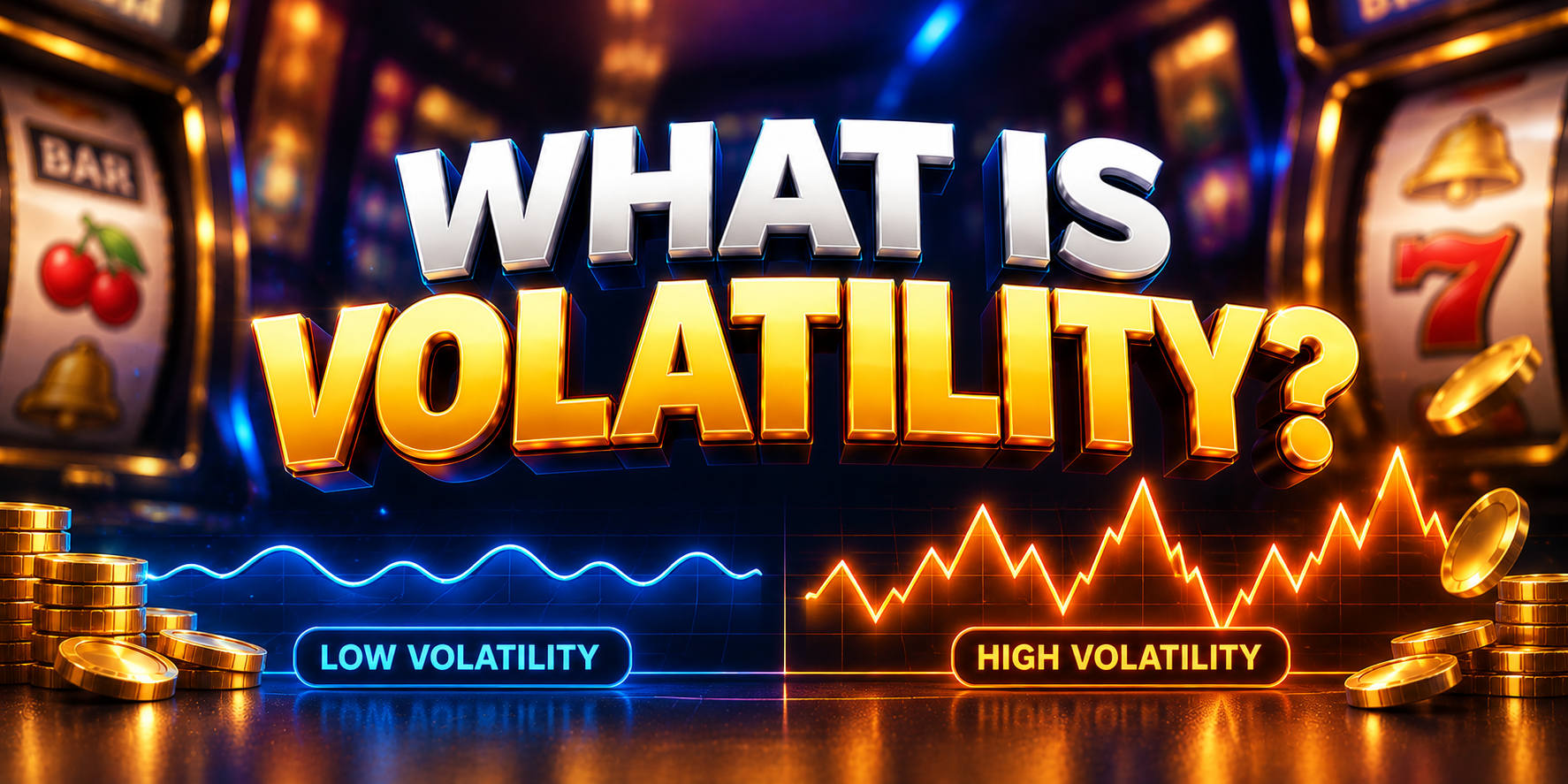
Editorial illustration, not a gameplay screenshot or observed result.
Two slots can have the same 96% theoretical RTP and still produce very different balance swings. One may distribute more of its return through modest payouts; another may place more weight on rare, large awards. Volatility describes the variation in those outcomes.
What does volatility measure?
Volatility concerns the spread of returns, including rounds that return zero. In mathematical work it is commonly represented by standard deviation, as explained in the Gambling Commission’s RTP-monitoring glossary. A wider distribution can produce larger deviations from the average over a session.
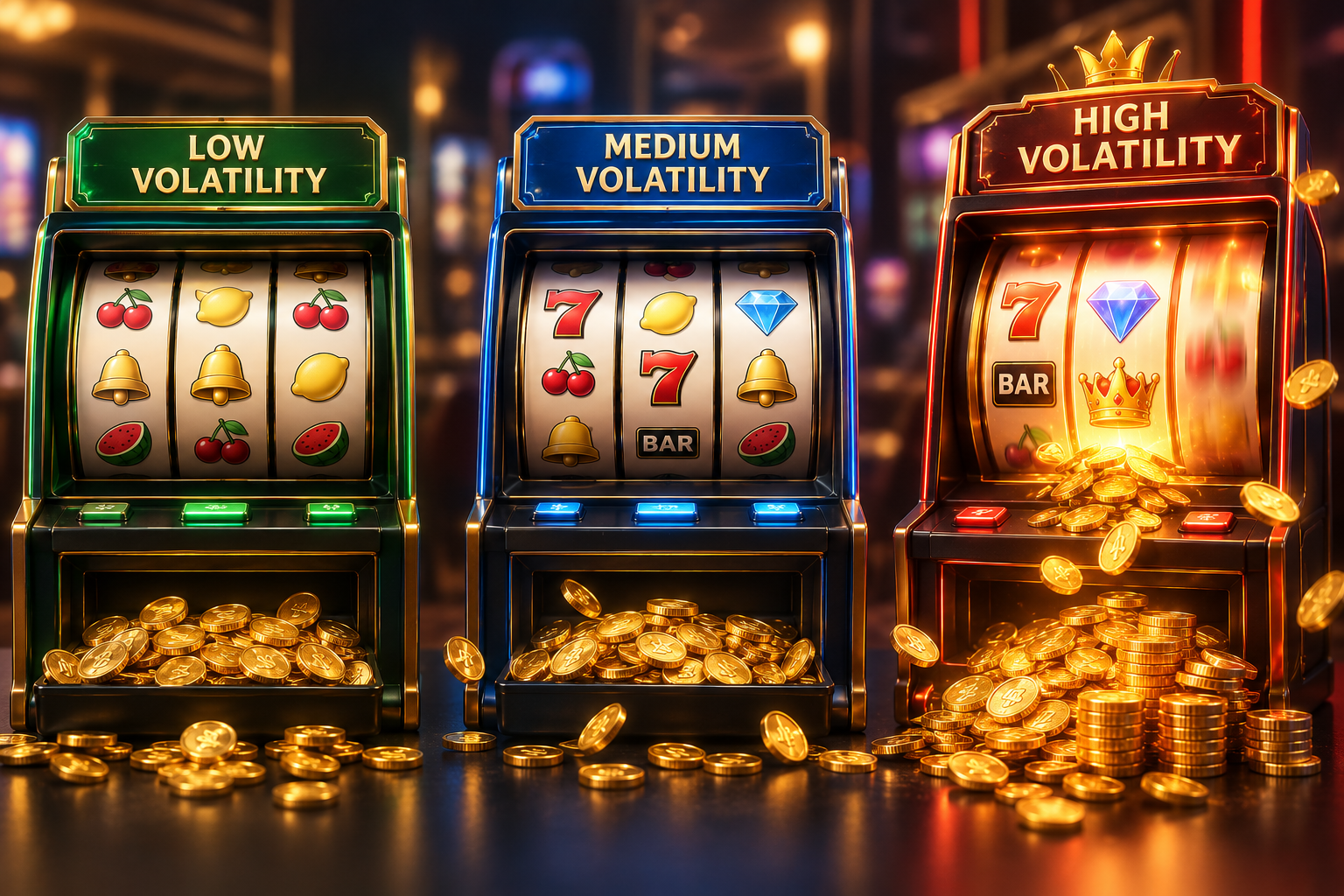
Providers often describe games as low, medium or high volatility. Lower-volatility designs commonly rely more on smaller payouts; higher-volatility designs may allocate more of their return to rare, larger prizes or features. These are tendencies, not a fixed conversion from win frequency to volatility.
A high-volatility game can still produce frequent small payouts if much of its remaining return comes from rare extremes. A lower rating also does not mean a balance will decline smoothly or that a large loss cannot occur.
How are RTP, volatility and hit frequency different?
- RTP describes the theoretical average return relative to wagers.
- Volatility describes how widely outcomes vary around that expectation.
- Hit frequency counts how often an outcome meets the provider's definition of a hit.
Two models can have the same average return but different spreads. They can also have the same percentage of paid rounds while assigning different amounts to those rounds. That is why neither RTP nor hit frequency alone determines volatility.
For example, a ₱10 wager returning ₱4 is a positive payout but a ₱6 net loss. Frequent small payouts of that kind can coexist with declining balances. These amounts are hypothetical currency examples, not measurements from a game.
Is high or low volatility better?
A volatility rating describes the payout distribution, not a better chance of making money. Higher volatility can bring sharper swings and more exposure to rare outcomes; lower volatility does not remove the house edge.
The bet size also matters. The same mathematical game played at a larger stake creates larger money swings. A large maximum-win figure says nothing by itself about how likely that award is, so it should not be used as a substitute for the full payout model.
How can you check a game's volatility?
Prefer the provider's published rating for the version and mode being played. Read the meaning of its scale rather than assuming one company's “high” equals another company's score of four or five. Some providers publish categories, some use numbers, and some do not disclose a rating.
The paytable, maximum win, hit frequency and feature rules can add context, but they do not normally supply enough information to calculate a precise volatility rating. If no verified rating is available, say so rather than assign one from a brief demo session.
Short samples can be misleading. One hundred spins might include a rare bonus or miss it entirely. The Gambling Commission’s performance-monitoring guidance explains why both the amount of play and the game's volatility matter when assessing actual returns.
What does this mean for the next spin?
Volatility does not create a timetable for a large win. In independent rounds under unchanged rules, earlier losses do not make a payout due. Features that retain symbols, multipliers or other state must be read under their own rules.
Use the rating to understand the range of possible outcomes alongside RTP, total stake and feature costs. It is a description of the game, not a recovery strategy.
Cite This Article
Topics In This Story
Patricia Cruz aims to bring a different perspective to familiar industry conversations. Through in-depth articles and thematic reports at AskSpinner News, Patricia draws attention to details worth questioning and connections that can be overlooked, using the news as a starting point for a closer look at the business of iGaming.
More From This Author