

Adrian Lim – Page 3

Game experts
Has 8 years of experience producing casino game content. He understands rules, payouts, practical play, and risk information across game types, and can write reviews, comparisons, and player guides for the full category.


Recent Activity
Wondering what this AskSpinner team member has been up to? Here's a glimpse into some of their recent work and contributions on the site.
Latest Published Content
- 7.5/ 10
Last Update:
Released:
1. A clear counting game with a longer wait for the result Gates of Olympus by Pragmatic Play is most enjoyable when one win opens space for another. The original game fills a six-column, five-row board with gems and gold ornaments, then pays for matching symbols anywhere on it. I like being able to follow the count and the running tally without tracing lines. The trade-off is patience: the growing WIN counter can look finished while a tumble is still going. What I liked ✅ Matching eight symbols anywhere is easy to understand, and the left-hand tally makes a long tumble readable. ✅ The crown, hourglass, ring and coloured gems have distinct shapes as well as colours. ✅ Spin 5 carried one $0.20 stake through five paying tumbles, with a clear $0.83 final result. ✅ The multiplier rules give the base game and free spins a connected idea: add the relevant orb values, then apply the multiplier to the win. What I didn’t like ❌ Normal speed spends time presenting each tumble; I would use it to learn the game rather than to rush through spins. ❌ The left-hand $0.25 Double Chance offer sits beside a $0.20 actual stake, so the active cost needs a deliberate check. ❌ In the two usable portrait-size captures, the game and Help text occupy a small area and are uncomfortable to read. ❌ A paying animation can still leave a loss. Spin 4 paid $0.10 against a $0.20 cost. The 50 recorded ordinary spins returned $7.02 from $10.00 staked, a $2.98 loss in free-demo credits. No free-spin feature triggered, so my judgment of its pacing stops at the base game. This is the original Gates of Olympus, announced in February 2021, with an individual multiplier ceiling of 500× and a total win cap of 5,000×. Gates of Olympus 1000 is a separate game. This silent 10-second sequence follows part of Normal-speed spin 5, assembled from sequential screenshots. It ends during the tumble at WIN $0.15; the separate settled screenshot confirms the final $0.83. Philippine search interest. Ahrefs data queried for PH on 6 October 2026 estimates 800 monthly searches for “gates of olympus”, 350 for “gates of olympus demo” and 100 for “gates of olympus slot”. These are keyword estimates, not player counts or this website’s traffic. Overlapping terms should not be added together. Try the demo on this page. Check the game title and the active BET at the bottom before starting. All dollar figures in this review are the captured demo’s USD-denominated virtual credits, not Philippine pesos or real-money results. 2. Finding the controls and reading the screen The purple temple and Zeus figure give the board a strong visual identity, but the useful design detail is the separation between the board, the award list and the money bar. During a longer tumble, the list tells you which symbol groups have paid. I watch that and the settled balance rather than treating every number change as another payout. Spin 5 after settlement: WIN $0.83, CREDIT $99,999.93 and BET $0.20. The image retains the complete captured screen. 1. Six-by-five board: Count each ordinary symbol type across the whole screen; matching symbols need not touch. 2. TUMBLE WIN: The running total above the board. Wait until the complete sequence settles. 3. BUY FREE SPINS: The inspected offer is $20 at a $0.20 base stake. It was not purchased. 4. Double Chance: The offer shows BET $0.25 with the switch OFF. It is not the active cost in this screenshot. 5. Award tally: The five listed awards belong to the same paid spin, not five new stakes. 6. CREDIT and BET: Available balance and the currently active total stake. These are the values to check before spinning. 7. Settings menu: Opens settings including the stake, ambient music, Sound FX and introductory screen. 8. Sound: Toggles sound and music. The recording contains no audio and I have not assessed its quality. 9. Information: Opens the paytable and rules, including payout counts, multiplier conditions and costs. 10. Minus and plus: Change the stake and open Bet controls. Check TOTAL BET after a change. 11. Spin: Starts a spin at the active stake. Its moving state does not mean the result has settled. 12. Autoplay and speed area: Opens the automatic-play settings; the speed options include Normal, Quick and Turbo. The opened panels are worth a look The selected Bet panel shows BET 1 × COIN VALUE $0.01 × BET MULTIPLIER 20 = TOTAL BET $0.20. The wording “20×” here is part of the stake calculation, not evidence of 20 winning lines. The Autoplay panel showed Turbo selected, Quick unselected, Skip Screens selected and a proposed batch of 100. That panel does not mean 100 spins were executed: the reviewed ledger contains 50 manually recorded spins. Left: the selected $0.20 stake. Right: the inspected speed and Autoplay options. Both panels are crops of real screenshots, with the original proportions retained. The opened settings panel. Visible switches establish that the options exist; they do not establish how the audio sounds. Portrait-size reading At the captured 360 × 800 size, the board stays horizontal within a narrow portrait image, leaving large black areas above and below. The 390 × 844 Help-open capture shows the same practical problem: small text in a compact central area. Help was opened successfully, but reading it at that size is awkward. Left: 360 × 800 game view. Right: 390 × 844 Help view. These desktop-size previews show small text; they do not establish how the game feels on a physical phone. 3. Counting a win anywhere on the board Ordinary symbols pay in three count bands: 8–9, 10–11 and 12–30. Count one appearance across all 30 positions, then use its band in the paytable. There is no leftmost-reel requirement or fixed line to follow. Different winning symbol types pay together. The current Help lists nine ordinary paying appearances, one Zeus Scatter and four coloured multiplier-orb appearances; it does not define a Wild substitution symbol. Reading the displayed paytable. The values below are the actual displayed awards at the ordinary $0.20 stake with Ante OFF. They are cash-style demo amounts, not “coins per line”. Appearance 8–9 10–11 12–30 Crown $2.00 $5.00 $10.00 Hourglass $0.50 $2.00 $5.00 Ruby ring $0.40 $1.00 $3.00 Goblet $0.30 $0.40 $2.40 Red gem $0.20 $0.30 $2.00 Purple gem $0.16 $0.24 $1.60 Yellow gem $0.10 $0.20 $1.00 Green gem $0.08 $0.18 $0.80 Blue gem $0.05 $0.15 $0.40 For example, eight blue gems pay $0.05, one quarter of the $0.20 stake. Eight rings pay $0.40, twice that stake. A small award is still a paying result, even when it does not cover the cost. Scatter is separate: the current paytable shows 4 / 5 / 6 Scatters paying $0.60 / $1.00 / $20.00 at this stake, wherever they appear. Current Help page 1 of 7, captured at BET $0.20 and Double Chance OFF. Picture names describe the visible artwork. 4. Following tumbles and understanding the multiplier After a win, the paying symbols disappear, the remaining symbols fall and new ones fill the gaps. Another qualifying group pays as part of the same spin. The sequence continues until no further winning combination forms, with the total credited after the sequence is complete. Spin 5 shows why the final counter matters The process screenshot shows $0.15 after the first two awards: eight yellow gems paid $0.10 and eight blue gems paid $0.05. The separate final screenshot records three more awards: eight red gems paid $0.20, eight rings paid $0.40 and nine green gems paid $0.08. Together, $0.10 + $0.05 + $0.20 + $0.40 + $0.08 = $0.83. This is one $0.20 spin, giving a $0.63 net gain. Left: a process frame at WIN $0.15 with the spin still running. Right: the settled $0.83 result and $99,999.93 balance. The final screenshot was taken after the video window; it is not presented as the clip’s last frame. The final board also has three Scatters. That does not trigger the base-game free spins, which require at least four. It is a useful reminder to distinguish a visible special symbol from a completed feature trigger. Orb values are added before multiplying the win The current Help allows orb values of 2×, 3×, 4×, 5×, 6×, 8×, 10×, 12×, 15×, 20×, 25×, 50×, 100×, 250× and 500×. At the end of a tumble sequence, the on-screen multiplier values are added, then applied to the sequence win. A rule illustration: a $0.40 tumble win with relevant 2× and 5× orbs becomes $0.40 × (2 + 5) = $2.80, rather than $0.40 × 2 × 5. This example explains the rule; it did not occur in the 50-spin sample. Orb colour alone has not been verified as a fixed multiplier value. Help page 2 of 7. No orb-assisted final payout was confirmed in the recorded 50 spins. Free spins carry a total multiplier Four or more Scatters award 15 free spins. During the feature, an orb’s value joins the accumulated multiplier when that spin produces a win. A later winning spin with a new multiplier uses the accumulated total. Three or more Scatters during free spins add five more spins. This is the Help rule, not a feature sequence observed in the sample. Help page 3 of 7. The free-spin feature did not trigger naturally, and neither paid Ante play nor a feature purchase was recorded. 5. The active cost, RTP and limits The ordinary stake used throughout the test was $0.20. Double Chance would raise it by 25% to $0.25 at that setting. Its Help describes a doubled chance of naturally triggering free spins through more Scatters on the reels; it does not promise a feature on the next spin. BUY FREE SPINS was offered at 100 times the current ordinary total bet, or $20 here, and is disabled with Double Chance enabled. Mode Displayed cost at this setting What was actually checked Ordinary, Ante OFF $0.20 per spin 50 completed spins Double Chance / Ante $0.25 per spin Rule and OFF-state offer only; no paid spins Buy Free Spins $20 per purchase Price and rule only; no purchase Current Help states 96.50% theoretical RTP for ordinary play, Ante and buying free spins, and a $0.20–$300 betting range. The total award is capped at 5,000× the bet; reaching it ends the round and forfeits remaining feature play. That total cap is different from the largest single orb value of 500×. Help page 4 of 7 for the captured demo. Its label says MEDIUM VOLATILITY. The supplier’s February 2021 launch article described high volatility and also mentioned 20 paylines. Those historical descriptions conflict with this Help; this review uses the current pay-anywhere rules and preserves the volatility difference rather than claiming the short sample resolves it. The sample’s 70.2% return is $7.02 divided by $10.00, not a replacement for the theoretical RTP. For a broader illustration of how stakes and outcomes can move a balance, the slot simulator is a separate learning tool; it does not reproduce this game’s unpublished mathematics or predict its next result. 6. What the 50 recorded spins actually returned The sample was captured on 6 October 2026 in the original free demo, with Ante OFF throughout. Spins 2–5 used Normal speed; spin 1 and spins 6–50 used Turbo, giving 4 Normal and 46 Turbo spins. The video spin is included in those 50. Each row represents one completely settled paid spin, with all its tumbles counted once. There were no balance resets, free-credit adjustments, feature purchases or paid Ante spins. Measure Recorded result Paid spins 50 Total cost $10.00 Total payout $7.02 Net change −$2.98 Opening → closing balance $100,000.00 → $99,997.02 Payout above zero 15 / 50, or 30% Net-profitable spins 8 / 50, or 16% Break-even spins 1 Paying spins below their cost 6 Zero-payout spins 35 Longest zero-payout run 7 spins Longest net-loss run 10 spins Largest payout Spin 45: $2.48, or 12.4× stake The distinction between a hit and a profit matters here: 15 spins paid something, but only eight increased the balance. Spin 45 contributed $2.48 of the $7.02 payout, which makes the ending especially sensitive to one result. Fifty spins are useful for explaining the recorded session, not for deciding which game pays more over the long run. The balance chart uses every settled ledger row, starting at $100,000.00 and ending at $99,997.02. There are no reset gaps to bridge. Cumulative sample return from spin 1 onward: total payout so far divided by total actual cost so far. The final point is 70.2%; 100% marks sample break-even, not the game’s theoretical RTP. Each bar is final payout minus the $0.20 cost. A $0.10 payout therefore appears as −$0.10; spin 45’s $2.48 payout appears as +$2.28. The largest recorded payout: spin 45, WIN $2.48. The screenshot supports this sample result, not the advertised maximum. 7. My verdict and which game to try first My score: 7.5/10. I enjoy the readable counting rule and the way a tumble keeps one stake in play. The five awards in spin 5 explain its appeal better than the maximum-win headline. I would start in the ordinary demo at Normal speed, learn the tally and active stake, then decide whether the rhythm suits me. The small portrait text and easily confused cost labels keep the experience from feeling effortless. The score reflects those design choices, not the session’s loss. Choice How to read a result Main feature difference Best reason to compare Gates of Olympus original Eight or more ordinary symbols anywhere Random orbs up to 500×; 5,000× total cap Learn the original count-and-tumble design Gates of Olympus 1000 Same broad six-by-five tumble format Supplier specifies orbs up to 1,000× and a 15,000× total cap Check the exact edition before choosing a demo Mahjong Ways by PG Soft Matching symbols on consecutive reels from the left, across 1,024 ways Gold-plated winning symbols become Wild; cascades use a rising multiplier ladder Try a more structured cascade with position and Wild changes The supplier’s Gates of Olympus 1000 announcement establishes those sequel limits; this review did not test the sequel. A higher maximum is not evidence of a better expected result. For a different way of following cascades, read the Mahjong Ways review. If you want a board you can read by counting across the screen, the original Gates is a sensible demo to explore here. If your main interest is accumulated bonus multipliers, this review explains the rules but cannot give a first-hand verdict on that feature’s full pace. Keep any real-money play within a limit you can afford to lose; the demo and this short record do not provide a winning strategy.
- 7.5/ 10
Last Update:
Released:
1. A candy slot that is easiest to understand at ordinary speed Sweet Bonanza makes a friendly first impression: bright fruit, distinctive candy shapes and a board that pays by counting matching symbols anywhere. I like how little line-tracing it asks of the player. The more important adjustment is learning to wait for a tumble to finish, then compare its final payout with the cost of the spin. A large WIN label can still describe a losing result. My provisional score is 7.5/10 for the recorded ordinary-game experience. The readable symbols and visible tumble sequence work well; the competing stake labels and tiny portrait text need more care. If you enjoy following a falling-symbol board, the original is worth exploring in demo. If you want multipliers during ordinary spins, its free-spin-only bombs are an important limitation. What I liked ✅ Fruit and candy have distinct outlines as well as colours, making the six-column board easy to scan. ✅ Pay-anywhere counting removes the need to trace fixed winning lines. ✅ The recorded Normal spin clearly shows the board changing before its final payout reaches the wallet. ✅ The opened Help gives count bands and cash amounts at the selected stake, making the paytable practical to check. What I didn’t like ❌ The large $0.25 Double Chance quote competes visually with the active $0.20 BET at the bottom. ❌ Several small payouts still lost money on the spin, despite the prominent WIN feedback. ❌ Portrait size simulation leaves large black margins and very small stake and Help text. ❌ Multiplier bombs belong to free spins; none appeared in the 50-spin ordinary sample, which also did not trigger the bonus. This review covers Sweet Bonanza by Pragmatic Play, the original game identified as vs20fruitsw. Sweet Bonanza 1000, 2500, Super Scatter and the live CandyLand game are separate products. Pragmatic Play's launch announcement places the original in June 2019. The rules below come from the seven Help pages captured in the reviewed demo on 6 October 2026. Philippine search interest. Ahrefs estimated 3,700 monthly searches in the Philippines for “sweet bonanza” and 1,700 for “sweet bonanza demo”, queried on 6 October 2026. These are keyword-search estimates, not player counts or visits to this page, and they should not be added together. The same search landscape includes sequels, so check the exact title before comparing rules. When using the demo, confirm that its title is Sweet Bonanza and read the active BET before starting. Demo credits do not establish real-money results or the availability of a particular casino in the Philippines. This 13-second, silent clip follows recorded spin 4 at Normal speed and ends with WIN $0.37 and CREDIT $99,999.65. It uses 32 real sequential captures, held at their recorded timing; it is not a native 30-fps screen recording. The first 0.993 seconds were not captured. 2. The screen and the controls that matter The six-column, five-row board sits against a pastel candy landscape. Hearts, square and oval sweets, fruit and pink lollipops are easy to distinguish on the desktop capture. The main action is concentrated in the middle, while the BUY and Double Chance panels sit to the left. The bottom bar carries the wallet, current stake and spin controls. The complete recorded interface after spin 4: CREDIT $99,999.65, BET $0.20, final WIN $0.37 and Double Chance OFF. The numbers identify these areas: 1. Board: count matching ordinary symbols across all 30 positions; they do not need to touch. 2. WIN: the payout counter for the current sequence. During a tumble it can still be changing. 3. CREDIT: the demo wallet. Use its settled value when checking the result. 4. BET: the active total ordinary stake, $0.20 in this sample. 5. BUY FEATURE: the quoted $20 purchase entry at this stake; no purchase was made. 6. Double Chance: the optional $0.25 quote and OFF status. It is separate from the active ordinary BET. 7. Minus: decreases the stake and opens the stake panel. 8. Plus: increases the stake and opens the stake panel. 9. Spin control: starts the spin; its appearance changes during play and returns to the ready arrow. 10. Autoplay and speed: opens the automatic-play panel with Normal, Quick and Turbo-related controls. 11. Menu: opens settings such as the introductory screen, ambient audio, sound effects and history. 12. Sound: the audio toggle; its presence does not establish how the game sounds. 13. Information: opens the rules and payout pages. Reading the opened panels The stake panel shows BET MULTIPLIER 20x, BET 1 and COIN VALUE $0.01, producing TOTAL BET $0.20. Here 20x is a stake-setting multiplier, not a claim that the game has 20 fixed paylines. Normal was selected for spins 3 and 4; Turbo was used for the other 48. The panel's displayed autoplay quantity of 100 was a setting on screen, not evidence that 100 spins were run. The ledger contains 50 individually recorded spins. This settings capture was taken before the $0.20 sample was configured. It documents the opened menu, rather than a sample stake or an executed history check. The Help describes separate Ambient and Sound FX switches. No listening test was recorded, and the process clip has no audio, so I have not rated the soundtrack or sound synchronisation. Portrait and landscape size checks Both source images are 390×844 pixels. In this desktop size simulation, the landscape-shaped game shrinks into the middle of the portrait viewport. Black space above and below leaves the bottom figures and Help text small. This is a real captured layout limitation, not a physical-phone performance measurement. The corresponding 844×390 desktop simulation gives the game and Help more usable width. The key bottom controls remain visible in the captured layouts, and I find landscape easier to read here. Touch accuracy, mobile browser behaviour and Philippine network performance were not tested. The screenshots retain their original proportions rather than stretching the portrait game to fill a wide frame. 3. Counting symbols and reading a payout Ordinary wins need at least eight matching symbols anywhere on the 6×5 board. The three count bands are 8–9, 10–11 and 12 or more. There is no leftmost-reel requirement and no requirement for a connected cluster. Multiple paying symbol types contribute to the total when they qualify. After a win, the paying symbols disappear, the remaining symbols fall, and new ones fill the gaps. Another qualifying result continues the tumble. The whole sequence belongs to one paid spin; replacement symbols do not create another stake in the ledger. The current Help does not list a Wild symbol. Cash awards at the recorded $0.20 total ordinary stake. These are the Help's displayed dollar amounts, already scaled to that stake. Do not multiply them by $0.20 again. The compact table makes the relative values easier to compare; the separate symbol cards retain each symbol's full conditions. Symbol 8–9 10–11 12+ Red heart candy $2.00 $5.00 $10.00 Purple square candy $0.50 $2.00 $5.00 Green pentagon candy $0.40 $1.00 $3.00 Blue oval candy $0.30 $0.40 $2.40 Red apple $0.20 $0.30 $2.00 Purple plum $0.16 $0.24 $1.60 Watermelon $0.10 $0.20 $1.00 Purple grapes $0.08 $0.18 $0.80 Yellow banana $0.05 $0.15 $0.40 The pink lollipop is a Scatter with its own count bands. Four, five or six pay $0.60, $1.00 or $20.00 at this stake, equal to 3×, 5× or 100× the ordinary total bet. Four or more also start the free-spin feature. One lollipop is not an ordinary paying candy, and the multiplier bomb is not a Wild or a separate cash-paying symbol. The recorded spin 2 is a useful check on what WIN means. It paid $0.08 after a $0.20 stake: $99,999.80 − $0.20 + $0.08 = $99,999.68. That is a $0.12 net loss despite a nonzero payout. Spin 9 paid $1.35 on the same stake, a $1.15 net gain. Neither result changes the next spin's cost. 4. Tumbles first, multiplier bombs in free spins A recorded ordinary tumble The left image is a real frame from spin 4. Its WIN counter reads $0.36 while the wallet still shows $99,999.28, the post-stake amount. The small banner identifies a nine-banana award of $0.05 within that sequence. The counter is still in progress; the banner and interim WIN should not be added as if they were separate final awards. The right image is the independently saved settled result: WIN $0.37, CREDIT $99,999.65 and the ready spin arrow. The whole-spin arithmetic is $99,999.48 − $0.20 + $0.37 = $99,999.65. Only $0.37 enters the payout column once. The change from $0.36 to $0.37 in these pictures is counter presentation, not evidence of a standalone one-cent symbol award. Free spins and the rainbow bombs Four or more Scatters start 10 free spins. During the feature, three or more Scatters add five more. The Help says special reels are used in free spins. Its rainbow bombs can appear only during free spins, with possible values of 2×, 3×, 4×, 5×, 6×, 8×, 10×, 12×, 15×, 20×, 25×, 50× or 100×. Bombs stay on screen until that tumble sequence ends. Their values are added, then the sum multiplies the sequence's total win. For example, a 2× and a 5× bomb would make a 7× multiplier under this rule, not 10×. This is a rule illustration, not a result from the sample. No natural free-spin feature triggered in the 50 recorded ordinary spins, so there is no measured bonus pace, retrigger experience or bomb-assisted payout here. Double Chance and the purchase entry Double Chance changes the stake multiplier from 20x to 25x. At the ordinary $0.20 setting, its quoted cost is $0.25, a 25% increase. The Help says this doubles the natural free-spin trigger chance by placing more Scatters on the reels, and disables the feature purchase. It does not give an absolute trigger probability, and this review has no paid Ante sample to test the claim. At the ordinary setting, BUY FEATURE quotes $20, consistent with the Help's 100× ordinary total bet purchase price. This was an inspected entry and quote. No feature was bought, Double Chance remained OFF, and no $0.25 stakes were taken. An attractive purchase button says nothing about what a bought bonus will return. 5. Costs and RTP need their own checks The recorded currency was USD-denominated free-demo credit, not Philippine pesos. All 50 spins cost $0.20 each. The Help lists a $0.20–$300.00 betting range; the sample verifies the minimum ordinary stake only, not every possible setting or other operators' limits. Item Evidence in this review Cost or value Ordinary spin 50 settled spins $0.20 each Double Chance Quote and Help only $0.25 at this base setting Feature purchase Quote and Help only $20, or 100× $0.20 Entire recorded sample 50 ordinary stakes $10.00 Current Help RTP Range, not an identified active setting 96.49%–96.6% The actual Help says the game's maximum theoretical RTP is 96.6% and its minimum is 96.49%. It does not identify which single value the reviewed demo uses. The 77.5% observed in the sample is simply $7.75 divided by $10.00. Fifty spins cannot verify a long-run RTP or establish that a different stake or spin speed improves it. There is also a source conflict worth keeping visible. This Help labels the game LOW VOLATILITY, while the supplier's 2019 launch announcement described it as high volatility. I report the captured label for this build without turning it into a promise of gentle balance swings. The sample is too short to settle the disagreement. Maximum-win claims need the same care. The interface advertises “WIN OVER 21,100X BET”, while the historical launch announcement mentions potential wins up to 21,175×. The seven captured Help pages do not establish a clear total-payout cap. Neither number is treated here as an independently verified cap for the reviewed build. The 100× maximum individual bomb and the 50× top ordinary-symbol band are different quantities again. For a broader view of how a fixed stake can affect a finite session, the slot simulator can illustrate balance variation under its own assumptions. It does not reproduce Sweet Bonanza's undisclosed reel mathematics or predict the next result. Set a limit before any real-money play and do not increase stakes to recover a loss. 6. What happened in the fifty recorded spins The sample was recorded on 6 October 2026 in one demo wallet, with Double Chance OFF throughout. Spins 3 and 4 ran at Normal speed and the other 48 at Turbo. The desktop environment was Windows 11 with Chrome 154.0.8037.98; that browser version is not a game build number. The first input marker was 01:13:55 UTC and the last confirmed settlement was 01:28:08 UTC. Each spin has pre- and post-result evidence. Payouts were read from settled results, with the wallet equation used as a cross-check. The fourth spin’s process clip is already included in the 50, so it does not add an extra result. Measure Recorded result Ordinary paid spins 50 Total cost $10.00 Total final payout $7.75 Net change −$2.25 Sample return 77.5% Spins with a nonzero payout 22 of 50, or 44% Net-profitable spins 9 Break-even spins 2 Payouts below the stake but above zero 11 Zero-payout spins 28 Longest zero-payout run 5, spins 29–33 Largest final payout $1.35 on spin 9, or 6.75× cost Natural free spins / purchases / Ante spins 0 / 0 / 0 Nine profitable spins plus two break-even spins means 11 covered the stake. It does not mean 11 made a net profit. The distinction matters when a colourful payout message accompanies a small award. Settled balance after each recorded spin, including the initial wallet value. Spin 9 briefly took the wallet to $100,000.05; the final value was $99,997.75. The narrow plotted range makes small changes readable; the large demo bankroll itself is not a performance metric. Cumulative sample return is payout to that point divided by cost to that point. It changes sharply in a short run and ends at 77.5%. This curve is not a measurement of theoretical RTP. Each bar is the final payout minus $0.20. The two break-even spins sit at zero; small paying losses stay below zero. The chart keeps the difference between getting an award and making a profit visible. Spin 9 was the sample's largest final payout: $1.35 from a $0.20 cost. Its settled wallet of $100,000.05 follows the $99,998.90 starting balance for that spin. This isolated result does not rank the game against another slot's short sample. 7. Who I would recommend it to The original Sweet Bonanza suits a player who likes visually clear tumble counting and wants to understand one paid spin from start to settled wallet. I would begin with ordinary demo play at Normal speed, watch the active bottom BET, and learn the difference between the running counter and the final result. The wide layout is the easier of the two captured desktop simulations to read. The most useful comparison is about when the mechanics appear, rather than which title happened to pay more in 50 spins. These rule-based comparisons use each title's matching Help or supplier product description; only Sweet Bonanza's ordinary sample is evaluated here. Game Ordinary board and count Multiplier location and individual range Initial free spins Sweet Bonanza original 6×5, 8+ matching anywhere Free spins only, 2×–100× 10 Starlight Princess original 6×5, 8+ matching anywhere Base and free spins, 2×–500× 15 Sweet Bonanza 1000 6×5, 8+ matching anywhere Bonus bombs up to 1,000× 10 Sweet Bonanza 2500 6×5, 8+ matching anywhere Bonus bombs up to 2,500× 10 Starlight Princess is the relevant alternative if seeing multipliers in ordinary play matters more than the candy theme. The Sweet Bonanza sequels keep the same broad count-and-tumble idea but change the bonus ceiling; they need their own reviews and should not lend their specifications to this original. The 1000 product description and 2500 product description are used here as rule sources, not external demo recommendations. For a different counting system, Mahjong Ways by PG Soft uses left-to-right Ways, with ordinary cascade multipliers of 1×, 2×, 3× and 5×. It is a useful comparison if you prefer following adjacent reels and a visible multiplier progression rather than counting the entire board. My 7.5/10 judgment rests on the readable board, useful Help and the actual ordinary tumble, balanced against the stake-label hierarchy and portrait readability. There is enough here to judge the base interface, but no basis to score free-spin excitement, purchased-feature value or sound quality. Use demo play to decide whether the ordinary rhythm appeals to you before treating the advertised bonus potential as the main attraction.
 7.5/ 10
Last Update:
Released:
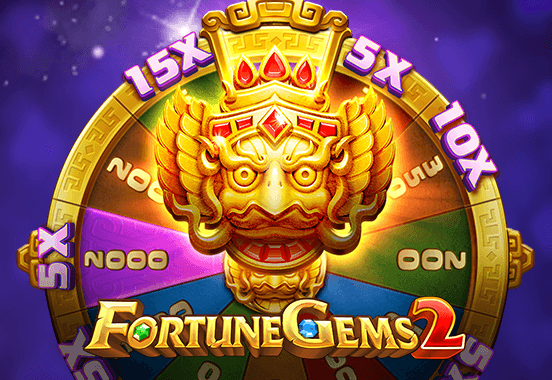
A familiar gem grid with another result to watch Fortune Gems 2 keeps the compact grid that makes the series easy to follow, then adds a new possibility to the special reel. When WHEEL lands in its centre, attention shifts from the gems to the large wheel on the left. There are still only three main reels, three rows and five paylines to understand, but a spin can now develop beyond a line win and a numerical multiplier. The appeal of the sequel rests largely on that extra reveal, along with whether the changes in EX mode justify its higher cost for the experience you want. What I liked ✅ Basic rules: A 3×3 grid and five lines make WILD substitution and central multipliers straightforward to explain ✅ Wheel design: Ordinary wheel awards can add to a line award; EX adds a random-multiplier stage ✅ Win feedback: Highlighted symbols and enlarged WILDs draw attention to the line being shown ✅ EX mode: The surcharge, numerical-reel change and wheel upgrade have explicit rules ✅ Narrow layout: Key figures remain visible as wheel and grid stack vertically ✅ Game information: The in-game help explains stake limits, award calculations and payout caps What I didn’t like ❌ Basic rules: Three visible special-reel positions require the player to identify the active centre ❌ Wheel design: Prize and multiplier probabilities are not disclosed; prominent high prizes are not evidence of frequent wins ❌ Win feedback: Base awards, counting animations and final WIN can be confused ❌ EX mode: Every spin costs 50% more, while awards still use the normal base stake ❌ Narrow layout: The wheel occupies considerable height and help text looks small ❌ Game information: RTP and maximum-win information are not consistent across official materials JILI lists the game as a December 2023 release, with five paylines, Lucky Wheel and a MED volatility classification. MED is the provider's category. Our review uses JILI's official free demo, build V_189_141, played on 2–3 October 2026 (UTC+8). We recorded 50 ordinary spins followed by 50 EX spins. All amounts below are demo credits. The session illustrates the rules, settlement sequence and short-term results; it cannot establish long-term returns or which mode offers better value. For the Philippines, Ahrefs data retrieved on 2 October 2026 estimated approximately 1,700 monthly Google searches for the exact query “fortune gems 2”. That is an average over its latest known 12 months, rather than a count of players or a measure of market share. The ten-second clip below gives a quick sense of the game's reward presentation. Two red gems and a WILD form the top line, the central 2× multiplier comes into play, and a BIG WIN counter follows. Enlarged gold WILDs and animated numbers provide much of the spectacle; the underlying grid remains small. Video note: the video container does not measure gameplay frame rate. The clip is silent. The closing 1.70 is an unfinished counter; the same spin's final payout is 4.80, shown below. Bold artwork, with the useful numbers along the bottom Gold borders, engraved stonework and bright red, blue and green gems dominate the screen. Ruins and vegetation give the setting a treasure-hunting feel, while the letter symbols are relatively subdued. A winning WILD enlarges and the relevant symbols light up, making the line currently being highlighted easy to spot. That clarity comes with a busy reward presentation: the central award plaque, floating multiplier and bottom WIN counter do not always reach their final values together. The horizontal layout separates the wheel, the 3×3 grid and the special reel. Although the special reel shows three positions, only the result inside its central gold frame applies. Balance, Bet and WIN sit underneath. Learning those three readouts is more useful on a first visit than treating every large number in an animation as a settled prize. The Bet area controls the stake, with EX at the lower left of the main grid. Spin, Auto and the speed controls sit toward the bottom right. The help describes Turbo and double-tap Super Turbo as speed settings, not ways to improve the chance of winning. Auto provides a spin count and stopping conditions related to balance and single-spin awards; the player still has to choose those limits. In desktop-browser portrait-size checks, the wheel moves above the main grid and the stake, WIN and balance remain visible below. The essential information survives the rearrangement, although the wheel takes up considerable vertical space and the help text looks small. These were desktop-browser layout checks, not physical-phone or touch tests. Audio quality and Philippine network performance were not tested. Five paylines keep the basic game manageable The main grid has three reels and three rows, plus a separate special reel. Its five paylines consist of three horizontal lines and two diagonals. Combinations pay from the leftmost reel across adjacent reels on an eligible line. Each line pays its highest winning combination, and wins on different lines are added together. Three matching symbols stacked in one vertical column therefore do not form a payline by themselves. WILD substitutes for winning symbols on the main grid and also has its own three-symbol award. Spin 23 makes its role easy to see: a green gem at the bottom left, a central WILD and a green gem at the top right form payline 5. At the normal base stake of 0.60, that line pays 1.44 before the special-reel multiplier. The central 1× leaves the final award at 1.44. The conspicuous vertical column of WILDs is not a separate winning line. The paytable changes with the normal base stake. In the help captured at 0.60, each displayed symbol award is the base amount for three symbols on one line. “3 X” identifies a three-symbol combination; it is not an instruction to multiply the displayed award by three again. The page's symbol section covers the individual images and roles. To work through a spin, identify the valid lines, add their base awards, then read the special reel's central result. How the green wheel and EX red wheel pay A numerical multiplier needs a line award Ordinary mode has 1, 2, 3, 5, 10 and 15× numerical multipliers. Only the central special-reel position applies. It multiplies the combined base awards from the main grid; the upper and lower positions do not multiply them again. In recorded spin 18, a central 10× produced a final WIN of 0 because the main grid had no winning line. A multiplier does not create a payout on its own. Green WHEEL extends the same spin A green WHEEL in the centre of the special reel triggers the ordinary Lucky Wheel. A WHEEL in the upper position is insufficient, as spin 15 demonstrated. The listed wheel prizes are 1, 3, 5, 8, 10, 15, 20, 30, 50, 100, 200 and 1000× the normal base stake. The probability of each prize is not disclosed. The trigger is not three Scatter symbols collected on the main grid. Spin 14 produced both line and wheel awards. Two Q lines contributed 1.20, the wheel added 6.00, and the final payout was 7.20. This is the sequel's clearest example of a reward developing in stages: the grid has already delivered a result when the wheel takes over. The sequence still belongs to one spin, with no additional stake charged to start the wheel. EX changes the special results and the cost EX adds 50% to the normal base stake on every spin. It removes the numerical 1× from the special reel and upgrades green WHEEL to red WHEEL. A red-wheel prize also receives a random multiplier of 1, 2, 3, 5, 10 or 15×. That second list still contains 1×: removing it from the numerical reel does not make every EX wheel award at least double. The help also says EX increases the chance of higher numerical multipliers, without specifying the size of that increase. The cost is more definite. A normal base stake of 0.60 becomes an actual charge of 0.90 per EX spin. Awards continue to use the paytable for the normal base stake; the extra charge does not automatically increase an identical line award by 50%. Spin 57 triggered the red wheel. The main grid paid 0, the wheel paid 9.00, and the final WIN was 9.00. The random-multiplier label on the selected wheel segment was not clearly readable, so this example retains the visible trigger and settled award without assigning it an inferred multiplier. Spin 95 explains the EX line calculation particularly well. The top and middle rows are all K symbols, while the bottom row is Q, A, WILD. That gives three K lines: the middle row, top row and descending diagonal ending in WILD. Each pays a base 0.96, for a combined 2.88. The central 2× makes the final payout 5.76; the 3× above it and 5× below it do not enter the calculation. The demo interface, menus and complete help inspected for this review did not present a separate Buy Bonus option. EX is a continuing per-spin surcharge while enabled, rather than a one-time payment that directly buys a feature. RTP information and the price of an EX spin RTP is a theoretical long-run parameter, separate from the payout ratio of a short session. TaDa's official Fortune Gems 2 game sheet lists 97.00%, while the TaDa product-page text gives 94.38%. The complete help in the tested JILI demo does not specify its actual RTP configuration. The 97% figure therefore has an official source, without establishing that it is the configuration used by this V_189_141 demo. Maximum-win information differs as well. The JILI product page lists 10,000×, while the demo help states a maximum multiplier of 15,000× and maximum payout of 3,000,000, with EX required to unlock the highest multiplier. The difference is unexplained. Neither figure should be presented as a single confirmed limit for every version, or as a prize due after a fixed number of spins. For the immediate cost of play, the extra stake is easier to compare. At a normal base stake of 0.60 Ordinary mode EX mode Actual cost per spin 0.60 0.90 Actual cost for 50 spins 30.00 45.00 Normal base stake used by the paytable 0.60 0.60 Additional cost over ordinary mode None 0.30 per spin; 15.00 over 50 spins The help gives a normal stake range of 0.20–200 and an EX maximum of 300, in the game's applicable units. That does not verify a particular real-money operator's currency or limits. The EX surcharge applies to losing spins as well as winning ones. WIN is the payout, before subtracting the stake. Ordinary spin 36 paid 2.88 on a cost of 0.60, leaving a net result of 2.28. EX spin 95 paid 5.76 on a cost of 0.90, leaving 4.86. The slot simulator for exploring short-term results can help distinguish stakes, payouts and net results; it does not predict this game's next spin. What happened in the 100-spin sample The session consisted of 50 ordinary spins at an actual stake of 0.60 each, followed by 50 EX spins at 0.90 each. Total stakes were 75.00 and payouts were 83.16, leaving a net increase from spins of 8.16. “Sample return” below means payouts divided by actual stakes for those recorded spins. Mode Recorded spins Actual stakes Payouts Net from spins Spins with a payout Sample return Ordinary 50 30.00 13.92 −16.08 4 46.40% EX 50 45.00 69.24 +24.24 11 153.87% Total 100 75.00 83.16 +8.16 15 110.88% Two balance changes came from demo resets The displayed balance started at 2,000.00 and ended at 2,025.14. The full 25.14 increase was not a gambling result: re-entering the demo twice restored 9.96 and 7.02 credits, a separate total of 16.98. Removing those adjustments leaves the 8.16 net result from spins. The balance chart breaks its line at both resets so that restored demo credits are not drawn as winnings. The cumulative ratio finished at 110.88% The cumulative payout ratio stayed at zero for the first 13 spins, then rose sharply with the wheel award on spin 14. Subsequent stakes and payouts moved it again. Spin 80's 18.00 award produced another substantial increase, illustrating how a few larger payouts can change a short sample. Reset credits are excluded from both the numerator and denominator; the final 110.88% comes from 83.16 ÷ 75.00. Most recorded spins paid nothing Fifteen spins produced a payout, and every one of those awards exceeded that spin's cost. The other 85 paid zero and produced a net loss. The largest payout was 18.00 on EX spin 80, or 17.10 after its stake. One ordinary green-wheel event occurred on spin 14 and one EX red-wheel event on spin 57. Those counts describe this session; the long-term wheel-trigger probabilities remain unknown. EX did better in this sample. However, the two small groups were played sequentially and included demo re-entry. The records explain actual charges and how awards affected the balance; they do not establish that enabling EX offers a long-term advantage. Who will appreciate the sequel's extra wheel Fortune Gems 2 preserves an accessible core: follow five paylines, then check the special reel's centre. The wheel adds a pause and another reveal, best illustrated by spin 14's line award followed by a separate wheel award within the same round. Players who prefer a small grid but want more variety than numerical multipliers alone are the clearest audience for that change. Its presentation also creates its main usability compromise. Enlarged WILDs, base-award plaques, multiplier effects and the BIG WIN counter make wins noticeable, but players need to separate intermediate figures from the final WIN. EX is easy to switch on. Understanding its recurring 50% charge and unchanged normal-stake paytable takes more attention, especially when the red wheel and larger multipliers dominate the screen. The useful comparison with the original Fortune Gems game and review is its mechanics, rather than a ranking based on separate demo-session returns. Feature Original Fortune Gems Fortune Gems 2 Basic layout Three main reels, three rows, a fourth special reel and five paylines Retains that basic structure Central numerical multiplier Six ordinary-mode multipliers, with the centre applying Keeps the framework and adds WHEEL as a possible central result Basic EX rules 50% surcharge, numerical 1× removed, awards based on the normal stake Keeps those rules and upgrades green WHEEL to red WHEEL Lucky Wheel No Lucky Wheel feature section in the original help compared here Central WHEEL triggers a 12-prize wheel; EX adds a random multiplier to its prize Maximum multiplier in the compared help 375× 15,000×; the product page separately lists 10,000× Main experience difference Awards focus on grid combinations and the central multiplier Adds a wheel trigger, prize reveal and EX wheel-multiplier stage Game design and experience score: 7.5/10. The five-line grid remains approachable and the wheel gives the sequel a distinctive addition. Busy award displays, the attention needed to understand EX costs and inconsistent official specifications hold it back. This score assesses design and information presentation, without awarding points for the sample's 8.16 gain or EX return. Ordinary mode already demonstrates the paylines, special reel and green wheel for anyone exploring what changed from the original. EX is worth understanding as an additional set of paid rules. Knowing the actual cost of each spin is more useful than treating a large award as a signal that another one is due. Treat real-money play as paid entertainment, never as income. Set a spending limit before play and use the actual spin charge, including EX, when tracking it. This review covers demo mechanics and recorded results; it does not assess an operator's licensing, deposits or withdrawals. Sources: JILI Fortune Gems 2 product information, JILI official demo and in-game rules, TaDa official game sheet, and the recorded demo sample shown above. Comparison with the original uses its official in-game rules.
 7.5/ 10
Last Update:
Released:
1 Where the original Fortune Gems fits Fortune Gems puts most of its action into a single calculation: the value of a three-symbol line multiplied by the number in the center of the right-hand reel. What I liked ✅ Reading a result: The compact board’s five fixed paths and visible line highlights make combinations traceable. ✅ Multiplier display: A gold frame identifies the active center value, and the multiplier reveal supplies the suspense. ✅ Extra Bet explanation: The displayed bet makes the 50% price increase visible ✅ Win presentation: The final WIN field provides the round payout ✅ Feature scope: Core play revolves around lines, Wild substitution and a multiplier What I didn’t like ❌ Reading a result: Three matching symbols must still occupy one valid path ❌ Multiplier display: Visible neighboring values do not count; even a 15× multiplier pays nothing when the main grid misses. ❌ Extra Bet explanation: The unchanged normal-stake payout basis requires reading the full rules ❌ Win presentation: Line plaques and counting animations can be intermediate amounts; payout is not net profit ❌ Feature scope: Players looking for a separate free-spin or Buy Bonus round will not find one in the inspected build This is the original JILI Fortune Gems, game 109, tested in build V_189_340. Its five paylines, Wild substitutions and Extra Bet option keep the focus on the base game. There is no separate free-spin or Buy Bonus round in the inspected build. The main choice is whether to pay the EX surcharge for a different multiplier distribution. All test amounts below are demo credits; the display did not identify them as pesos. On a peso-denominated version, use its displayed stake and limits when applying these calculations. Normal-speed gameplay, recorded on 14 October 2026 in the original Fortune Gems, build v_192_340. This silent 18-second native recording shows only the second ordinary spin of that separate capture session: a 1-credit bet, zero payout and a demo balance moving from 1,999 to 1,998. It is separate from both 100-spin samples in build V_189_340 discussed below; it does not add spins to those samples or demonstrate Extra Bet. The Fortune Gems demo on AskSpinner lets you check the five paths and compare the bet display with EX off and on. Philippines Search Interest Approximately 3,700 searches per month. Ahrefs estimates this average monthly Google search volume in the Philippines for the keyword “fortune gems”, using its latest known 12 months of data. It indicates how often the term is searched, not how many people play the game. Method: Ahrefs Keywords Explorer, country PH, Google, keyword “fortune gems”, volume field; queried 2 October 2026. The exact start and end of the averaging period were not returned. Searches may include similarly named apps or other games in the series, so the estimate does not isolate the original Fortune Gems. See Ahrefs’ search-volume field definition for the measurement basis. 2 Reading the temple screen and its controls The artwork places the reels inside a carved stone structure, with distant temple towers, greenery and a warm sunset behind it. Gold frames and brightly coloured gems stand out against the brown reel surfaces, while the card letters use a more subdued metallic treatment. The three matching reels dominate the screen, with the red-backed multiplier strip set apart on the right. Individual symbols and their values are covered in the Atlas on this page. Fortune Gems’ carved-stone reels, sunset temples and brightly framed gems. This is the starting demo screen, not a winning result. The gold frame around the middle position of the multiplier strip identifies the active value. The numbers above and below remain visible, but they are not additional multipliers to add or multiply together. Small numbered markers at the left identify the five paylines, and red line highlights show winning paths during the payout sequence. A highlighted line shows exactly which positions contributed to the payout. Across the bottom, Balance shows the available credits, Bet shows the selected spin cost, and WIN shows the round’s payout. Bet has adjacent minus and plus controls and a selector for the available values. The large circular button at the lower right starts a spin. Beside it are the automatic-spin control and the lightning-bolt speed control. The EX switch is at the lower left of the reels, with a question-mark explanation; switching EX on changes the displayed cost. The gear button opens the options menu, where the inspected demo exposed automatic-spin settings, information and sound controls. Automatic-spin settings offer a round count and additional stopping conditions for a single award or upper and lower balances. The original test completed two 50-spin automatic batches; the later per-round sample used manual spins. The optional thresholds were not tested. Turbo and Super Turbo were used, without a controlled speed comparison, and no usable account-history ledger was obtained. Manual spins kept the selected stake within a session. Re-entering the demo restored the normal 0.60 stake, switched EX off and returned the speed setting to its default. Those settings therefore needed checking again before play continued. In the narrow portrait layout, the reels sit lower and Spin moves to the center beneath them; the larger background area leaves some lower controls relatively small. The layout checks do not establish real-handset or touch performance. The most easily misread part of the presentation is the win animation. In supplemental spin 82, the central BIG WIN counter was still showing 11.84 while the bottom WIN field had settled at 36.00. The celebration even continued over spin 83, whose own payout was zero. Use the current round’s WIN and settled balance, rather than a moving celebration counter, to read the result. 3 How the five winning lines are counted The main board has three reels and three rows. A paying combination needs three matching symbols from left to right on one of five fixed paths: the middle, top or bottom row, or either full diagonal. Matching pictures scattered around the board do not pay unless their positions complete one of those paths. The right-hand multiplier strip is separate from that matching grid. Supplemental spin 69 highlights all five J paylines, with Wild completing the bottom row. The 1.20 shown is the combined base award; the central 2× produces a final payout of 2.40 demo credits. This frame is still in the payout sequence. Wild can substitute for a paying symbol. Supplemental spin 22 completed a green-gem line with a Wild in the middle. At the normal stake of 0.60 credits, the line award was 1.44; the central 5× produced 7.20. The visible 10× above and 1× below the frame played no part in the calculation. When more than one line wins, add their base awards before applying the multiplier. In supplemental EX spin 71, A symbols completed the bottom row and the descending diagonal. Each line paid 1.20 at the normal 0.60 stake, giving (1.20 + 1.20) × 15 = 36.00 credits. Both lines belong to one round, even when the game highlights them separately. A paying spin can still reduce the balance. Supplemental spin 12 used Wild to complete a J line, paying 0.24 with a 1× multiplier after a 0.60 stake. Its net result was −0.36. WIN reports the payout; subtract the actual spin cost to find the gain or loss. 4 The multiplier reel and the real effect of Extra Bet Ordinary mode uses six possible multiplier values: 1×, 2×, 3×, 5×, 10× and 15×. Only the one in the center frame applies. It multiplies the payout earned by the main grid; it does not pay by itself. Supplemental EX spin 55 landed a central 15× with WIN 0.00: the grid had no qualifying line. Three red gems stacked on the first reel did not form a left-to-right payline. Extra Bet adds 50% to the normal stake and removes 1× from the multiplier reel. The help also says that higher multiplier symbols become more likely, without publishing the underlying probabilities or the size of the increase. At the test’s normal stake of 0.60, enabling EX raised the displayed spin cost to 0.90. Switching the setting itself left the balance unchanged: the higher amount is charged when the next spin is played. The first screenshot below shows EX on, with a displayed cost of 0.90 demo credits. The second screenshot shows ordinary mode at 0.60 credits. Both screens show Balance 1,999.76 and WIN 0.00: switching EX changed the next spin’s cost without starting another spin. EX retains the normal stake’s paytable. Paying 0.90 does not make each base line award 50% larger than it was at 0.60. The A lines in spin 71 still started at 1.20 each, and a J line still started at 0.24. The extra charge buys the changed multiplier setup. The last EX round in the original sample illustrates the consequence. Wild–J–J formed the top line and paid 0.24 × 2 = 0.48 credits. Against the 0.90 charge, that left a loss of 0.42. The minimum 2× applies to the line award, not to the money spent. EX applies to regular spins. It does not purchase entry to a bonus round, and the inspected help and menus contain no Scatter-triggered free spins or Buy Bonus option. 5 RTP volatility and the cost of a session This page lists 97% RTP. Provider materials describe multiple configurations, while the captured help for build V_189_340 does not identify the active one. The tests therefore do not independently confirm 97% for that build; check the game information supplied with the version you play. RTP concerns long-run payouts relative to stakes, not the percentage of a starting balance a session will return. A losing run does not make a recovery due. The AskSpinner Slot Simulator is a companion to this discussion; the results in the next section come from Fortune Gems itself, not the simulator. JILI’s official entry for the original Fortune Gems classifies volatility as Low–Medium and lists a maximum win of 375×. This is the provider’s classification; our short samples cannot measure the game’s underlying volatility. Low–Medium still allows substantial losses in a short session. The 375× overall payout limit is also different from the 15× maximum value on the special reel: the latter multiplies the underlying line awards. In the inspected configuration, the help lists normal stakes from 0.20 to 200 credits and an EX maximum cost of 300. Its maximum payout of 75,000 matches 375 times the highest normal stake of 200. Those limits apply to the inspected demo configuration. For a fixed normal stake, EX consumes 50% more credits per spin. At 0.60, fifty ordinary spins cost 30.00 credits, while fifty EX spins cost 45.00. That extra 15.00 is committed regardless of the results. Use the actual deductions when setting a session budget; the unchanged payout basis can otherwise make EX look cheaper than it is. Sources: JILI’s Fortune Gems specifications and the captured in-game rules and payout information. 6 What two demo samples show We recorded two separate 100-spin samples on 2 October 2026, each with fifty ordinary spins followed by fifty EX spins in the original Fortune Gems, build V_189_340. Both used a normal stake of 0.60 credits and an actual EX cost of 0.90. The first sample has verified batch totals. A second, supplemental sample records every spin’s cost, settled payout and before-and-after balance; that is the source of the three charts. Supplemental sample with complete per round records All amounts are demo credits. Measure Ordinary Extra Bet Combined Completed spins 50 50 100 Actual cost per spin 0.60 0.90 Mixed Total spin cost 30.00 45.00 75.00 Settled payouts 35.76 82.80 118.56 Net result from spins +5.76 +37.80 +43.56 Observed sample return 119.20% 184.00% 158.08% Observed sample return is total settled payouts divided by actual spin costs. The combined result is 118.56 ÷ 75.00 = 158.08%. It uses both modes’ actual costs, including the EX surcharge; it is not the simple average of their two percentages. Reading the balance chart The balance chart shows the settled wallet amount after each spin, with breaks where the demo restarted. After spin 42, the balance reset from 2,006.00 to 2,000.00. After spin 83, it reset from 2,051.66 to 2,000.00. These were separate demo-session adjustments of −6.00 and −51.66, not losses on spins 43 and 84. That distinction explains why the wallet ended below its starting point even though the recorded spins returned more than they cost. It moved from 2,000.00 to 1,985.90: the +43.56 net result from spins minus 57.66 in resets equals the −14.10 wallet change. Connecting the balance across those resets, or charging them to individual spins, would misrepresent what happened. Figure 4. Supplemental sample only: fifty ordinary spins at 0.60 credits and fifty EX spins at 0.90. Gaps after spins 42 and 83 mark demo resets of −6.00 and −51.66. The +43.56 net result from spins and −57.66 reset adjustments reconcile to the −14.10 wallet change. The balance axis shows the observed range. Reading the cumulative return chart Figure 5. The curve accumulates payouts and actual spin costs from spin 1; the EX-coloured section still includes the first fifty ordinary spins. Its final 158.08% is the combined sample return, not EX’s separate 184.00%. Demo resets are excluded. The 100% line marks sample break-even, not theoretical RTP. The cumulative-return chart carries every recorded payout and stake forward from spin 1. Its colour changes when EX begins at spin 51, but the calculation does not restart. The orange endpoint of 158.08% includes the preceding fifty ordinary spins. EX considered separately returned 184.00%, as shown in the table; that is a different denominator from the cumulative curve. The chart’s 100% reference line means sample break-even, not theoretical RTP. Two payouts did much of the work. Spins 71 and 82 each returned 36.00, together accounting for 60.73% of the sample’s 118.56 payout total. The first came from two A lines multiplied by 15; the second from all five green-gem lines multiplied by 5. Their jumps are prominent on both the balance and return charts. Reading the per spin net result chart Only twelve of the hundred spins paid anything. Eleven finished above their own cost; the other was spin 12’s 0.24 payout against a 0.60 stake. The remaining 88 paid zero, producing 89 net-losing spins overall and no break-even rounds. Each 36.00 EX payout created a net gain of 35.10 after its 0.90 charge. The chart makes the concentration clear: the sample finished ahead on spin results despite most individual rounds losing credits. Keeping the earlier sample in view The original sample produced a markedly different result at the same stated stakes. Its payouts are derived from verified starting and ending balances plus total spin costs, rather than a complete per-round ledger. Two independent samples compared Sample and mode Spins Cost Payout Net spin result Observed sample return Original ordinary 50 30.00 15.36 −14.64 51.20% Original EX 50 45.00 7.68 −37.32 17.07% Original total 100 75.00 23.04 −51.96 30.72% Supplemental ordinary 50 30.00 35.76 +5.76 119.20% Supplemental EX 50 45.00 82.80 +37.80 184.00% Supplemental total 100 75.00 118.56 +43.56 158.08% The original wallet fell from 2,000.00 to 1,948.04. Its 30.72% sample return and the later 158.08% are both part of the record. Neither validates or disproves the listed theoretical RTP, and the reversal between the two EX batches cannot establish an advantage for that mode. These are short, sequential observations. The charts cover only the supplemental hundred spins; there is no reconstructed 200-spin curve. 7 The verdict and how Fortune Gems compares The small grid is Fortune Gems’ strongest design choice. Five fixed paths are easy to trace, and the framed multiplier leaves little doubt about which value applies. The weak point is the award presentation: the counting animations attract attention while the more important cost and final payout sit in the bottom bar. Ordinary and EX share the same line rules and normal-stake paytable. Their differences are concentrated in price and the multiplier reel. Ordinary mode compared with Extra Bet Question Ordinary mode Extra Bet Cost at a normal 0.60 stake 0.60 credits 0.90 credits Available multiplier values 1×, 2×, 3×, 5×, 10×, 15× 2×, 3×, 5×, 10×, 15× Basis of line payouts Normal stake Normal stake, excluding EX surcharge Can a spin return zero? Yes Yes Can a paying result return less than its cost? Yes, observed 0.24 from 0.60 Yes, observed 0.48 from 0.90 Separate bonus round purchased? No purchase involved No; EX supplements the regular spin Long-run value established by this test? No No Fortune Gems 2 is the closer comparison if you want to retain the original’s compact format while adding a wheel feature. Super Ace changes the structure more substantially, with a larger board, ways-based wins and consecutive winning eliminations. The following comparison uses the providers’ published descriptions; only the original Fortune Gems was played for this review. Fortune Gems compared with Fortune Gems 2 and Super Ace Feature Fortune Gems Fortune Gems 2 Super Ace Winning format 3×3 grid; five fixed paylines 3×3 grid; five paylines Five columns and four rows; 1,024 ways Core mechanic The active central reel multiplier applies to winning line payouts A wheel symbol in the center of the special reel triggers Lucky Wheel Consecutive winning eliminations build multipliers; eliminated Golden Cards become Golden Jokers Bonus structure No separate bonus round in the inspected build Lucky Wheel adds a wheel feature Free Games use doubled multipliers Extra-cost option EX adds 50%, removes 1× and keeps the normal-stake payout basis EX adds 50%, removes 1× and upgrades the wheel An extra-cost option was not verified in the reviewed sources Practical difference Focuses on reading a line payout and its multiplier Keeps a similar small-grid format while adding a wheel event to follow Requires following elimination sequences and changing multipliers across a larger board The Fortune Gems 2 sources describe an EX wheel upgrade, but do not establish a higher wheel-trigger probability. Super Ace’s extra-cost options remain unverified. Comparison sources: JILI’s original Fortune Gems specifications, TaDa’s Fortune Gems overview, JILI’s Fortune Gems 2 features, TaDa’s Fortune Gems 2 wheel description and JILI’s Super Ace features. For the original game, ordinary mode keeps the charge lower at the same normal stake. EX removes 1×, but costs 50% more without increasing base line awards. The available probability information and these short tests do not establish whether that premium buys better long-run value. Fortune Gems is a compact choice for someone who wants to follow individual line results without learning a branching bonus system. Its appeal rests on the multiplier reveal; its chief caveat is the EX surcharge. The 0.48 return from a 0.90 EX spin captures the trade-off better than the “at least 2×” label does. Treat the game as paid entertainment, not an income source. The findings cover demo mechanics, interface layout and recorded outcomes. Real-handset usability, sound quality, forced-disconnection recovery and casino deposit or withdrawal services were not assessed.
 Local7.1/ 10
Last Update:
Bingo Speed keeps the familiar card and changes the pace Bingo Speed is a live-hosted BingoPlus game with a 5×5 card, a 30-ball main draw and automatically marked numbers. The interesting part comes after that draw: Red or Blue can supply extra balls, while a separate set of seven Lucky Numbers determines whether the Must-Win Jackpot opens. Before looking at the big prize figures, it helps to separate three things: what counts as a line, which extra balls apply to your card, and how the jackpot is shared. What I liked ✅ The familiar 5×5 card is easy to follow, with numbers marked automatically. ✅ Card quantities and prices appear together, separate from the multiplier buttons. ✅ Extra balls and a seven-number jackpot trigger add something to follow beyond the main draw. What I didn’t like ❌ The payout table needs a worked example showing the cash calculation and whether line awards add together. ❌ The extra-ball price and multiplier-card jackpot weighting are not clearly explained. What the live view shows The vertical studio layout puts the presenter, ball machine and broadcast screen above a prominent PRE-BUY button. The excerpt gives a feel for that public view. Bingo Speed public studio excerpt, 12 October 2026. Silent screenshot-sequence reconstruction, with black privacy strips keeping the visible areas in their original positions. This is not native screen recording and does not show a complete timed round. Start with the card Each card has 24 different numbers and a FREE centre. The B/I/N/G/O columns cover 1–15, 16–30, 31–45, 46–60 and 61–75. The centre replaces one number in the N column. You can use random cards or choose DIY numbers within those ranges; the rules allow 1–999 cards per round. Cards are bought before betting closes. The main draw uses 30 balls from the 75-number pool, and matching numbers are marked automatically. Horizontal, vertical and diagonal lines count, with up to seven completed lines per card. Extra balls, Lucky Numbers and Auto-Play What Red and Blue add After the 30 main balls, you choose Red or Blue. A side is assigned automatically if time runs out. The extra-ball draw can produce one, two or three balls; your selected side provides the chance to complete more lines. That is why the payout table continues through 31–33 balls. The missing detail is the price treatment. The rules reviewed here do not clearly say whether there is a separate extra-ball charge or a free entitlement, so check the selection screen before confirming anything. Seven Lucky Numbers unlock the jackpot All seven active Lucky Numbers must appear across the main and extra balls to trigger the Must-Win Jackpot. Active cards carry over, and the jackpot draw continues until at least one card has all 24 numbered cells marked. The Lucky Numbers reset after that jackpot round. The reset seed is PHP200,000. If several players complete full cards, the pool is divided according to winning cards, including multiplier cards. The Help’s PHP1,000,000 example gives one winning card PHP250,000 and three winning cards PHP750,000. It does not explain the multiplier-card weighting in the same detail. Treat the studio’s 10,000× message as a promotion, not a personal prize promise. Before switching on Auto-Play Auto-Play can repeat up to 100 rounds while you remain online, deducting the fare each round. DIY cards keep their numbers; random cards keep the quantity but receive new numbers. Set a spending limit before using it. The rules say cards continue to be processed during a disconnection. Incomplete rounds caused by server or system-network problems are refunded, while qualifying technical malfunctions void the affected round. The server result takes precedence if the local display differs. Keep card quantity and multiplier separate At 1×, the price panel checked on 7 October 2026 showed PHP5 for one additional card, PHP50 for 10, PHP125 for 25 and PHP500 for 100. The multiplier row offered 1×, 2×, 5×, 10×, 20× and 50×. Check the current panel for the price you are about to pay. This is one of the clearer parts of the interface: quantity buttons carry their prices, while the multiplier has its own row. Choosing more cards and choosing a higher multiplier are separate decisions. How to read the payout table Look at both the number of balls used and the number of lines completed. Earlier lines have higher listed multipliers. Balls used → listed multiplier • 1 line: 4 balls: 500×; 5–9 balls: 100×; 10–14 balls: 20×; 15–19 balls: 10×; 20–24 balls: 5×; 25–30 balls: 4×; 31–33 balls: 2×. • 2 lines: 4 balls: —; 5–9 balls: 200×; 10–14 balls: 50×; 15–19 balls: 25×; 20–24 balls: 10×; 25–30 balls: 6×; 31–33 balls: 3×. • 3 lines: 4 balls: —; 5–9 balls: —; 10–14 balls: 100×; 15–19 balls: 50×; 20–24 balls: 25×; 25–30 balls: 12×; 31–33 balls: 6×. • 4 lines: 4 balls: —; 5–9 balls: —; 10–14 balls: 200×; 15–19 balls: 100×; 20–24 balls: 50×; 25–30 balls: 25×; 31–33 balls: 12×. • 5 lines: 4 balls: —; 5–9 balls: —; 10–14 balls: —; 15–19 balls: 1,000×; 20–24 balls: 200×; 25–30 balls: 100×; 31–33 balls: 50×. • 6 lines: 4 balls: —; 5–9 balls: —; 10–14 balls: —; 15–19 balls: 10,000×; 20–24 balls: 5,000×; 25–30 balls: 2,000×; 31–33 balls: 1,000×. • 7 lines: 4 balls: —; 5–9 balls: —; 10–14 balls: —; 15–19 balls: 10,000×; 20–24 balls: 10,000×; 25–30 balls: 5,000×; 31–33 balls: 2,000×. A dash means no multiplier is listed. The table gives useful comparisons, but leaves the stake base and whether successive line awards add together unclear. Multiplying the biggest entry by the PHP5 card quotation would be a guess. What we could check from the public view We checked the in-game rules on 12 October 2026 and watched the public studio without buying cards. The price observations above come from the panel checked on 7 October 2026. DigiPlus describes rounds of approximately one to two minutes. We did not independently time a complete round. Our take The structure is straightforward once you separate the line game, extra balls and jackpot. The price controls are easy to read; the payout explanation needs more detail. That is the point to clarify before spending: how the displayed multiplier becomes a cash award for the card you selected.
 7.5/ 10
Last Update:
Released:
Jelly Express makes its strongest case in the ordinary game. A train Wild can put a multiplier on a winning group of sweets, then the board tumbles and keeps the same spin going. I like being able to follow that chain without waiting for a bonus. The trade-off is a surprisingly busy set of options: ordinary Wilds, Super Free Spins and two Super Spin bets do not share the same rules or price. What I liked ✅ The ordinary game has meaningful Wild-multiplier action. The recorded 5× sequence shows exactly how USD 0.20 becomes a USD 1.00 component award. ✅ Distinct candy shapes, a separate award list and a readable Normal-speed tumble make the running total easier to follow. ✅ The free-spin menu offers a concrete choice between more spins and higher possible multipliers, with five fixed options plus Mystery. What I didn’t like ❌ Similar “Super” names hide very different costs and multiplier lifetimes. At a USD 0.20 base bet, Super Spin 2 is quoted at USD 50 per spin. ❌ The portrait-size desktop simulation shrank the landscape game into the middle of the screen; the balance, buttons and Help text became small. ❌ The bright WIN display can overstate how well a session feels. Twelve of the 17 paying spins in our sample still returned less than their cost. 1. A candy train with action before the bonus This is Jelly Express by Pragmatic Play, using a six-column, five-row Pay Anywhere grid. It counts matching symbols across the board rather than along a fixed line. Train Wilds, tumbles and a choice of free-spin packages are its defining features. The supplier’s product page identifies this game, and its March 2026 release announcement introduces it as a new slot. Our 6 October 2026 free-demo session used USD 0.20 ordinary spins. All 50 completed spins are included, with no purchased feature or activated Special Bet. The current eight-page Help is the rules reference for this review; no internal build number was visible. A useful detail: the product-page summary appears to describe six choices plus Mystery, while the captured Help lists five fixed choices plus Mystery, six in total. The six-item Help list is the one explained below. Philippine search interest. Ahrefs, queried for PH on 6 October 2026, returned estimated monthly searches of 80 for “jelly express demo”, 70 for “jelly express” and 20 for “jelly express pragmatic play”. These are estimates from the latest known 12-month window, not player counts, and overlapping variants should not be added together. The supplier name keeps the page focused on the correct game. Recorded ordinary spin 46 at Normal speed. This silent 19-second screenshot-based excerpt shows the sequence that ended with a USD 1.50 award. 2. Reading the board and its controls The candy railway is bright, with character symbols in frames and simpler sweets that are easy to tell apart. The central grid is the playing area. Buy Feature and Special Bets have their own large buttons on the left; individual awards appear on the right. The bottom WIN is the spin’s running or completed award, while CREDIT is the wallet balance. They are not interchangeable. Complete actual interface before spin 1: CREDIT USD 100,000.00 and BET USD 0.20. Numbers correspond to the guide below. 1. Grid: count matching symbols across all 30 positions. 2. Buy Feature: opens the two paid bonus-entry options. 3. Special Bets: opens Ante, Super Spin 1 and Super Spin 2. 4. Award list: shows the separate components of the current spin. 5. CREDIT: settled wallet balance; a running win may not yet be included. 6. BET: current total stake; check it before starting. 7. Spin: starts a paid ordinary spin at the active stake. 8. Autoplay: opens the automatic-spin controls; not used for this sample. 9. Speed: cycles Normal, Quick and Turbo. 10. Menu: opens system settings. 11. Information: opens Help and the paytable. 12. Minus: changes the stake and opens the bet menu. 13. Plus: changes the stake and opens the bet menu. 14. Sound: toggles sound and music; the switch state is not a listening test. Stake, settings and Autoplay The open bet panel showed Bet 1 × Coin Value USD 0.01 × the ordinary bet multiplier 20 = Total Bet USD 0.20. Use the displayed total, not the “Bet 1” label alone, to judge cost. System settings exposed Total Bet, Battery Saver, Ambient Music, Sound FX, Intro Screen and Slots Promotions. The Help says Autoplay starts through a chosen spin count and Skip Screens shortens feature opening and closing screens. We have its Help text, not a recorded execution of that menu. Actual open bet menu: the ordinary total is USD 0.20. Actual system settings; music and sound switches were on, but no audible audio was assessed. Captured Help page 8 explains Autoplay and Skip Screens; this is rule evidence. Portrait and landscape readability At 390 × 844, the desktop viewport simulation kept the game landscape, with large black areas above and below it. The bottom amounts and Help text were small. At 844 × 390, the board, spin button and footer were more readable, and settings opened with Total Bet USD 0.20. These were desktop Chrome size checks, not physical-phone, touch or Philippine-network tests. Restoring the desktop left the final balance at USD 99,994.29 and added no spins. 390 × 844 portrait-size simulation, preserved at its original aspect ratio. 844 × 390 landscape-size simulation; the whole game uses more of the available screen. 3. Eight matching symbols pay anywhere Nine ordinary symbols share three count bands: 8–9, 10–11 and 12–30. They can be scattered across the grid; no connected cluster or left-to-right line is required. Multiple winning groups add, but only the highest applicable award pays for each group. Wild substitutes for every symbol except Scatter; three Scatters trigger the free-spin feature. Nine ordinary symbols, Scatter and train Wild, cropped from this game’s actual Help. The symbol names describe their appearance. The symbol atlas records the current Help’s cash awards at USD 0.20, before any applicable Wild multiplier. Do not multiply those amounts by USD 0.20 again or treat them as fixed amounts at every stake. For example, eight red bears have a displayed base award of USD 0.20; the captured 5× Wild result lifts that component to USD 1.00. One paid spin can contain several tumbles After a win, the winning symbols disappear, remaining symbols fall and new ones fill the gaps. The game keeps checking until no new winning group remains. All these stages belong to the same paid spin, with one stake deducted. The full award is added to CREDIT after that base spin’s tumbles finish. Watching each animation as a separate spin would inflate both the spin count and the apparent hit rate. Spin 4 is a useful zero-award example. Its pre-spin screen still showed the previous spin’s WIN 0.08, but the settled current WIN was blank. CREDIT moved from USD 99,999.48 to 99,999.28 after the USD 0.20 cost. That earlier 0.08 does not belong to spin 4. A blank current award was read as no payout from the settled screen, not as an OCR reading of “0.00”. Spin 4 before and after: the previous WIN is not a new payout. 4. Wild multipliers and the six free-spin choices The Wild has to take part in a win A train landing is not automatically a multiplied payout. At least one Wild must be part of a winning combination. In the ordinary game, the random value applies to winning combinations using Wild; the listed values are 1×, 2×, 3×, 5×, 8×, 10×, 15×, 20×, 25×, 50× and 100×. Do not apply the multiplier to an unrelated group without a Wild. The Normal-speed spin 46 shows the rule in action: the award list records eight red bears at USD 0.20 × 5 = USD 1.00, then nine orange characters in pink hats add USD 0.40 and eight purple sweets add USD 0.10. Total WIN reaches USD 1.50. The wallet first sits at USD 99,993.49 after the stake is taken, then settles at USD 99,994.99. For the whole paid spin, the net result is +USD 1.30. Spin 46 in four real stages: USD 1.00 + 0.40 + 0.10 = 1.50. These are selected screenshots, not four separate bets. More free spins or higher possible multipliers Three Scatters start the feature. Before it begins, the current Help offers these six choices. The table describes rules: no natural free-spin round occurred in the 50-spin sample. Choice Free spins Possible Wild multipliers 1 25 2× / 3× / 5× / 10× 2 20 3× / 5× / 10× / 15× 3 15 5× / 10× / 15× / 25× 4 10 10× / 15× / 25× / 50× 5 5 15× / 25× / 50× / 100× Mystery Random Random I find the menu’s trade-off easy to understand: the 25-spin option gives more opportunities with a smaller listed multiplier range, while five spins offers fewer chances with a higher range. The Help does not give enough outcome probabilities to rank the choices by expected return. Mystery’s uncertainty is part of the choice, not evidence that it is better. The captured Help explicitly supplies five fixed packages plus Mystery, six choices altogether. Super Free Spins keeps a running multiplier During free spins, one or more Scatters may randomly trigger Super Free Spins. A Scatter is an opportunity, not a guaranteed upgrade. The upgrade adds five free spins. When a Wild participates in a winning group, its awarded multiplier adds to TOTAL MULTIPLIER. That total stays until the feature round ends and applies to later wins containing at least one Wild; it does not reset at the end of each free spin. Special reels are used. This is a different lifetime from the ordinary random Wild multiplier and from the single-spin Super Spin 2 option below. 5. RTP, actual cost and the expensive switches The current Help labels volatility LOW and lists 96.50% theoretical RTP for ordinary play, Ante Bet, both Super Spin modes and both feature purchases. Those are the captured demo configuration’s specifications. LOW is not a promise of a payout every few spins, and a short losing session neither proves nor disproves 96.50% RTP. The Help prints a USD 0.20 minimum and USD 60,000.00 maximum. Only USD 0.20 ordinary stakes were actually deducted here; the large maximum was not exercised across modes and should not be read as proof that the ordinary bet menu lets you select it directly. The total-round win cap is 5,000× the base bet. Reaching it ends the round immediately and forfeits remaining free spins. Current Help: LOW, 96.50% for six listed modes and the printed bet limits. Mode Cost vs ordinary Quote at USD 0.20 base Recorded use Ordinary 1× USD 0.20 50 spins Ante Bet 5× USD 1.00 Quote only Super Spin 1 20× USD 4.00 Quote only Super Spin 2 250× USD 50.00 Quote only Buy Free Spins 100× USD 20.00 Not purchased Buy Super Free Spins 500× USD 100.00 Not purchased The menu’s bet multipliers are 20× ordinary, 100× Ante, 400× Super Spin 1 and 5,000× Super Spin 2. Dividing each by the ordinary 20× explains the 5×/20×/250× cost factors above. The Super Spin 2 label “5,000×” is not its price relative to a USD 0.20 ordinary spin, and it is not the maximum-win guarantee. Special Bet quotes show USD 1, 4 and 50 at the recorded base setting; none was activated. Ante says the chance to trigger free spins increases eightfold and a winning Wild has at least a 2× multiplier. That is a relative chance statement, not an 80% trigger rate. Super Spin 1 guarantees a Wild on every spin and tumble but disables free-spin triggers. Super Spin 2 also guarantees Wilds, uses random values of 10×/15×/20×/25×/50×/100× and accumulates awarded multipliers until that spin’s tumbles end; it also disables free-spin triggers. None of these rules turns a guaranteed Wild into a guaranteed net profit. Buying ordinary free spins costs 100× total bet and guarantees three Scatters on the triggering spin. Buying Super Free Spins costs 500× and guarantees the upgrade on the first free spin. The quotes were inspected, not purchased, so this review makes no claim about their experienced pace or value for money. The two purchase quotes are USD 20 and USD 100, separate from the ordinary-spin sample. 6. What the 50-spin demo actually returned We recorded 50 settled ordinary spins on 6 October 2026, each costing USD 0.20 in free-demo credit. Forty-nine used Turbo; spin 46 used Normal and is already included in the count. Tumbles stay inside their parent paid spin. There was no natural free-spin trigger, purchase or activated Special Bet. The wallet remained continuous from USD 100,000.00 to USD 99,994.29. Measure Observed result Completed ordinary spins 50 Total cost / payout USD 10.00 / USD 4.29 Net balance change −USD 5.71 Sample payout / cost 42.90% Any-payout spins 17 / 50 (34%) Paying but below cost 12 Net-positive spins 5 Zero-payout spins 33 Largest completed award USD 1.50, spin 46 The 42.90% figure is simply USD 4.29 divided by USD 10.00, not the game’s official RTP. Spin 46 lifted the balance by USD 1.30, but it did not erase the earlier decline. The final ten spins paid USD 1.74 in total; the earlier ten-spin blocks paid 1.23, 0.49, 0.61 and 0.22. These are consecutive portions of the same ordinary mode, not five strategy tests. Balance change after every completed paid spin, with spin 0 as the starting baseline. Cumulative payout divided by cumulative actual cost, never restarted mid-sample. The 96.50% Help line is a theoretical reference, not a target the next spin must reach. Each complete award minus USD 0.20 cost. Paying spins below cost remain negative. Spin 50 makes the distinction concrete: green beans paid USD 0.05 × 2 = USD 0.10, while the spin cost USD 0.20. WIN was positive; the wallet still fell by USD 0.10. Count the completed award once and subtract the stake before deciding whether a spin was profitable. A real 2× Wild award on spin 50, ending at WIN USD 0.10 and CREDIT USD 99,994.29. The 50-spin sample contains no wallet reset; every settled balance belongs to the same continuous record. For a separate look at how stakes and short runs interact, the slot simulator can help illustrate the arithmetic. It does not reproduce Jelly Express’s mathematics or predict the next result. 7. Who I would choose it for My provisional editorial score is 7.5/10. The ordinary Wild sequence is easy to read at Normal speed, and the separate award list makes the main mechanic tangible. The learning cost comes from the layered bonus and Special Bet rules, plus the cramped portrait-size presentation. The score reflects those design choices, not the short sample’s loss, and does not rate unplayed bonus rounds or sound. Original game Matching rule What makes the multiplier interesting Best fit Jelly Express 6×5; 8+ anywhere Winning Wilds can multiply ordinary-game groups; Super FS can retain a total Readers who want a multiplier event before the bonus Sweet Bonanza 6×5; 8+ anywhere No Wild in the compared Help; multiplier bombs appear in free spins Readers who prefer a simpler base game and bonus-centred multipliers Sugar Rush 7×7; 5+ side-connected Repeat wins build multipliers on board positions Readers who enjoy following connected clusters and remembered spots This comparison uses the original games’ recorded rules, not similarly named sequels and not the outcome of three short sessions. Jelly Express would be my pick if the ordinary train-Wild interaction is the attraction. Sugar Rush gives you more to track spatially, while Sweet Bonanza keeps the base-game proposition simpler. Before exploring Jelly’s Special Bets, work out the displayed total cost and the exact multiplier lifetime; the candy styling makes those differences look gentler than they are. Treat a session as paid entertainment with a limit you can afford to lose. A multiplier, a LOW label or a losing streak does not make the next spin due to win. This review’s amounts are free-demo USD, not Philippine pesos or real-money results.