
Texas game-room raids put Pokémon-card payouts under scrutiny
Bexar County deputies detained 23 people during searches of seven suspected illegal game rooms on November 4, Sheriff Javier Salazar said. Investigators described Pokémon and sports cards used as prizes that players could sell next door. Texas's amusement-machine exception is narrower than simply avoiding a cash payout.
 5 Min Read
Overview
- Deputies detained 23 people; the sheriff initially expected about 13 to be jailed on charges or outstanding warrants.
- Authorities estimated 500–600 gaming machines across seven locations linked by investigators to the “777” name.
- Salazar alleged that some winners received trading cards they could sell at a neighboring business.
- Texas law limits qualifying prizes to a wholesale value of \$5 or ten times a single play’s price, whichever is less.
- A 2007 Texas attorney general opinion addressed cash-substitute prizes in a question from Bexar County itself.
Bexar County deputies searched seven suspected illegal game rooms before dawn on November 4, 2026, detaining 23 people in an operation Sheriff Javier Salazar said involved Pokémon and sports trading cards used as gambling prizes. According to KSAT’s account of the sheriff’s briefing, authorities estimated between 500 and 600 gaming machines across businesses investigators linked to an umbrella operation called “777.”
The alleged arrangement was not simply a machine dispensing a collectible. Salazar said winners could take cards to a neighboring business and sell them for cash, potentially receiving a couple of hundred dollars. “We know what they’re doing. They’re trying to skirt the law. It doesn’t make it any less illegal,” he said in remarks reported by News 4 San Antonio.
Video: KSAT; @resellingnews via X
What the raids established — and what remains preliminary
Salazar initially expected about 13 of the 23 people detained to be jailed. Reported grounds included keeping a gambling place, engaging in organized criminal activity, felony drug allegations and outstanding warrants. Those figures are not interchangeable: 23 people detained does not mean 23 people charged with the same gambling offense.
News 4 reported searches in the 6400 block of Callaghan Road, 8800 block of Broadway, 3200 block of Wurzbach Road, 1300 block of Clower, 9200 block of Culebra Road and 1900 block of Dollarhide, as well as the Silver Room Game Room on West Avenue. Investigators were still calculating the final totals for machines, arrests and money recovered.
The machine figure also needs care. News 4’s updated account said deputies took one complete machine from each location as evidence and removed motherboards from the others, leaving their cabinets behind. The estimated 500–600 figure should therefore not be read as a count of complete cabinets physically hauled away.
Texas gambling law does not allow a general ten-times cash payout
The relevant rule is the so-called “fuzzy animal exception” in Texas Penal Code §47.01(4)(B). It excludes certain machines from the definition of a gambling device only when they are designed, made and adapted solely for bona fide amusement and reward players exclusively with qualifying noncash merchandise prizes, toys or novelties, or representations redeemable for those items.
The wholesale value available from a single play cannot exceed ten times the price of that play or $5, whichever is less. A $1 play therefore does not create permission to pay $10: the statutory ceiling for a qualifying prize is $5. A 25-cent play has a $2.50 ceiling. These are limits on a narrow merchandise-prize exception, not a general authorization for cash gambling payouts.
A physical card is not automatically lawful just because it is merchandise. The machine, prize type, wholesale value and actual redemption arrangement all matter. Equally, a collectible’s ordinary resale value alone does not establish that every trading-card prize is illegal.
Bexar County has asked about cash substitutes before
In Hardy v. State, 102 S.W.3d 123 (2003), the Texas Supreme Court held that machines awarding cash or its equivalent did not satisfy the exception. The case concerned tickets exchangeable for retail gift certificates or credits for further play, rather than Pokémon cards.
The state attorney general subsequently applied that reasoning to stored-value cards in Opinion GA-0527, issued March 6, 2007. The request came from Bexar County’s then-criminal district attorney, Susan D. Reed. The opinion concluded that a stored-value card usable to buy merchandise was a medium of exchange, not a qualifying noncash merchandise prize.
That history explains why a substitute for banknotes can still raise gambling-law problems. It does not amount to a court ruling on the cards seized in this investigation: trading cards are physical merchandise, while the earlier authorities dealt with gift certificates and stored value.
A game-room permit is not gambling authorization
Texas also allows counties to regulate game rooms. Local Government Code Chapter 234 defines a game room, for this purpose, as a for-profit business with six or more specified amusement or chance-based prize machines. Counties may require permits and restrict locations.
Harris County provides a separate example: its sheriff’s Game Room Regulatory Unit administers permits for game rooms in unincorporated Harris County. Those rules should not be mistaken for the rules governing the Bexar County searches. More fundamentally, §234.140 expressly says compliance with the county framework, including holding a permit, is not a defense to prosecution under Penal Code Chapter 47.
Other states are testing different prize and redemption structures, including the Arkansas lawsuits against Kalshi and sweepstakes casino operator VGW. Those are separate businesses and legal disputes, not evidence of a connection to the Texas venues.
For the San Antonio investigation, the outstanding questions include the final booking and charge totals, the money recovered, the wholesale valuation of the prizes and the relationship between the game rooms and card buyers. The sheriff’s allegations have not been adjudicated.
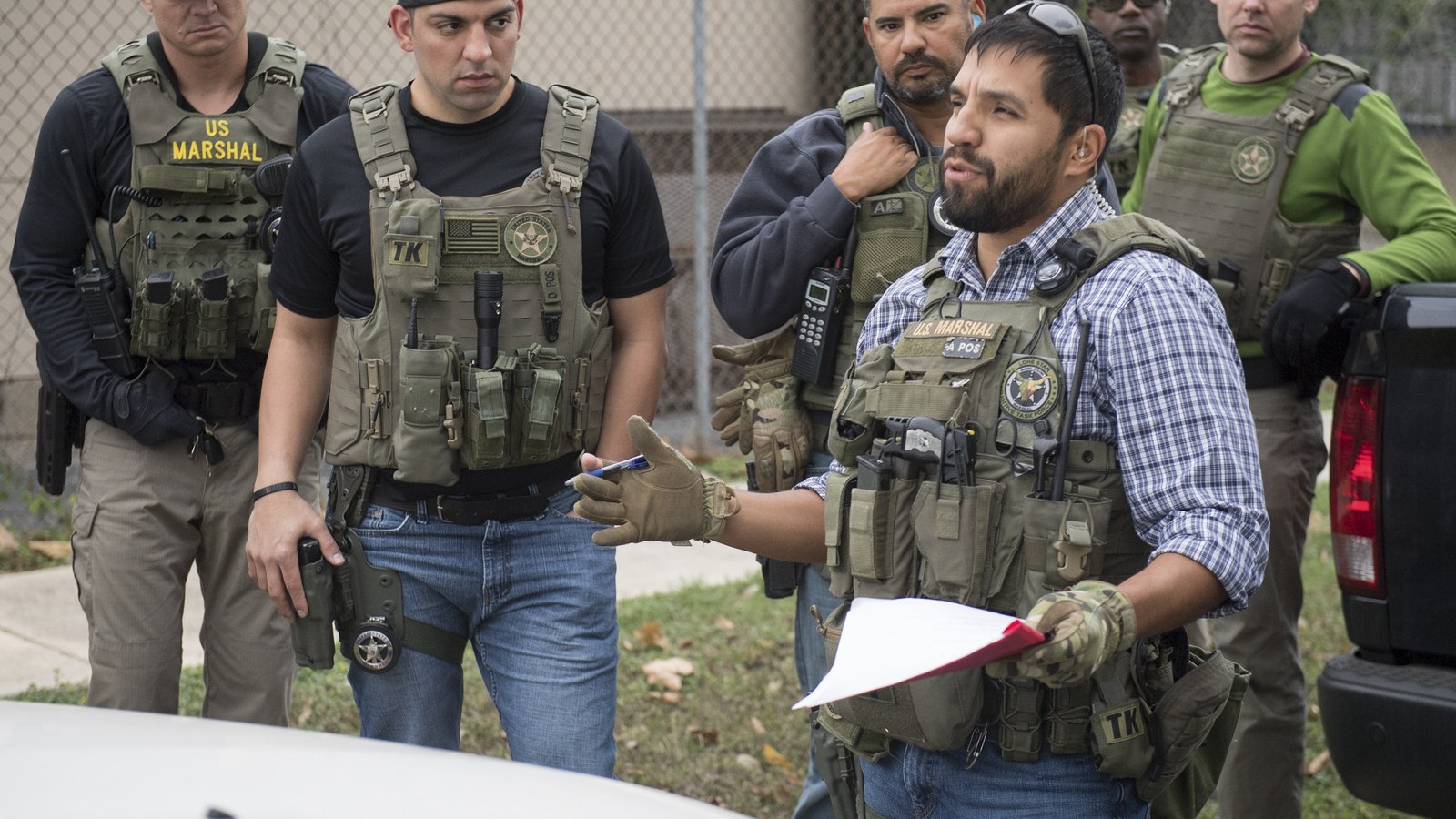
Photo: Shane T. McCoy / U.S. Marshals Service (public domain). 2017 file photo from Operation Triple Beam in San Antonio; not the November 2026 game-room raids.
If you hold rights to images used in this article and have concerns, please contact us at support@askspinner.com.
Cite This Article
Topics In This Story
Related Countries

Daniel Tan is an editor at AskSpinner News who believes industry writing can be informed, approachable and engaging. Daniel turns complex subjects into accessible articles and reports, giving readers a welcoming way into unfamiliar topics and room to build their understanding as they read.
More From This Author