
Sugar Rush by Pragmatic Play
Play Sugar Rush by Pragmatic Play In Demo Mode



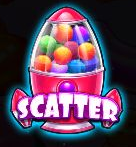 ScatterPink rocket Scatter
- Anywhere on the grid
- 3–7 Scatter trigger
- 10–30 free spins
- Same-schedule retrigger
 Paying SymbolGold gummy bear
- 5+ matching symbols
- Horizontal/vertical adjacency
- Winning-symbol tumbles
- 20× at 15+ symbols
 Paying SymbolPurple gummy bear
- 5+ matching symbols
- Horizontal/vertical adjacency
- Winning-symbol tumbles
- 25× at 15+ symbols
 Paying SymbolRed gummy bear
- 5+ matching symbols
- Horizontal/vertical adjacency
- Winning-symbol tumbles
- 30× at 15+ symbols
 Paying SymbolGreen star candy
- 5+ matching symbols
- Horizontal/vertical adjacency
- Winning-symbol tumbles
- 40× at 15+ symbols
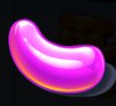 Paying SymbolPink-purple curved candy
- 5+ matching symbols
- Horizontal/vertical adjacency
- Winning-symbol tumbles
- 60× at 15+ symbols
 Paying SymbolOrange heart candy
- 5+ matching symbols
- Horizontal/vertical adjacency
- Winning-symbol tumbles
- 100× at 15+ symbols
 Paying SymbolPink round candy
- 5+ matching symbols
- Horizontal/vertical adjacency
- Winning-symbol tumbles
- 150× at 15+ symbols
Game Themes

 ThemeCandy Games
 34 Games

Sugar Rush by Pragmatic Play Expert Review


Updated:
Here you can find detailed review information about Sugar Rush by Pragmatic Play.
What I liked
✅ The stable grid makes developing multiplier positions easy to follow.
✅ One regular purchase keeps the feature menu comparatively simple.
✅ Five-symbol adjacent clusters are straightforward to understand.
What I didn’t like
❌ Candy symbols can hide developed position values until a clear-out exposes the squares.
❌ The small base BET and the separate BUY quotation require checking two areas to distinguish stake from feature price.
❌ Shrinking the landscape game into portrait made the lower controls and Help text harder to read in desktop simulations.
Sugar Rush is easy to understand at first glance: connect matching sweets, watch them disappear, and follow the next drop. Its lasting appeal is in the squares underneath. Repeated wins in the same positions build multipliers, and free spins let those positions carry their progress forward.
For learning this part of the series, the original is the clearest starting point. There is one regular bonus purchase to understand, and fewer paid choices than in the later games. The gentle artwork does not make it a gentle game financially. Our 50-spin base sample finished $0.38 ahead, while a separate $20 bonus purchase returned $1.11. Both results belong to small, non-cashable demo samples.
1 Where the original fits in the series
Pragmatic Play announced Sugar Rush on 30 June 2022. The original established the 7×7 candy grid, adjacent clusters and persistent multiplier positions that run through the later standard versions. This review covers that original game, identified as vs20sugarrush.
The distinction matters when looking through a game lobby. Sugar Rush Xmas carries the familiar structure into a festive setting. Sugar Rush 1000 raises the position-multiplier ceiling and adds a Super purchase. Sugar Rush Super Scatter adds another feature layer and special-bet choices in selected markets. A similar title or thumbnail is not enough to establish which rules you have opened.
For Philippine readers, the useful first checks are the exact game name, the provider and the rules inside the game. All figures in this review come from USD demo credits. They are not peso prices, a deposit test or a promise that a particular operator offers the same configuration.
Philippine search interest
Ahrefs estimated 1,400 monthly searches in the Philippines for “sugar rush” when checked on 7 October 2026. This is the estimated monthly average over its latest known 12 months, not a player count. The broad phrase can include non-slot searches, so it should not be read as demand for this original game alone.
2 The screen and how it feels to use
The candy landscape keeps the 49-square board at the centre of attention. Rounded sweets are easy to distinguish by shape as well as colour, while the grid gives multiplier positions a fixed place to watch. As a design choice, that stability works well: the symbols change, but the part you are following stays put.
The bottom bar separates CREDIT, BET and WIN. Read them as balance, base stake and payout respectively. A positive WIN can still leave the balance lower than before a spin or purchase. The BUY FREE SPINS control sits beside the board; its quoted price is separate from the small base BET shown below.
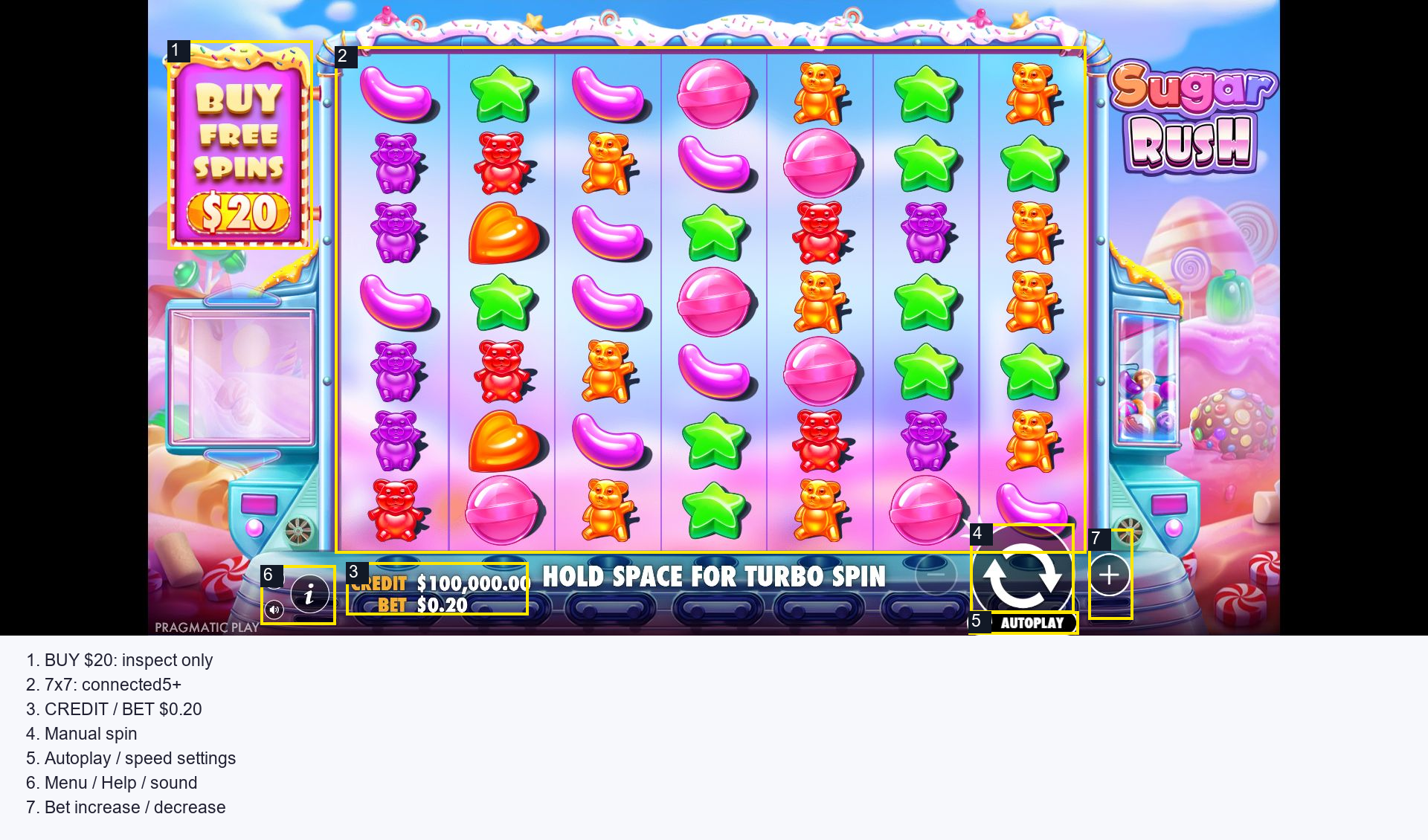
Original Sugar Rush interface, recorded 6 October 2026. The older annotation describes the purchase as inspected only; the separate 7 October purchase was completed.
Normal, Quick and Turbo controls change the presentation pace. Most of our base sample used Turbo, with three Normal spins and 47 Turbo spins. Each paid base spin was started individually. Autoplay settings were inspected, but automatic stopping behaviour was not tested. For a first look, Normal makes the sequence of a win, disappearance and new drop easier to follow.
In the saved narrow-screen simulations, portrait viewing shrank the landscape game and made the lower labels and Help text harder to read. Landscape gave those details more room. These were simulated screen sizes, not physical-phone tests, so they support a layout observation rather than a judgment about touch accuracy or real-device performance. Audio was not assessed. Availability and loading performance on Philippine networks have not been verified.
3 The basic rules that matter
A win needs at least five matching ordinary symbols connected horizontally or vertically. Diagonal contact does not join a cluster. There are no fixed paylines to trace: the shape of the connected group determines whether the board contains a win.
Winning symbols disappear and new symbols fall into the spaces. Another qualifying cluster can then pay within the same paid spin. This tumble sequence continues until no further winning cluster appears. Read the final payout after the sequence finishes; adding an intermediate win again would count it twice.
The symbol module on this page carries the individual symbols and payout details. The important distinction here is the Scatter. It triggers free spins rather than behaving like another ordinary candy cluster. The rules award 10, 12, 15, 20 or 30 free spins for 3, 4, 5, 6 or 7 Scatters respectively. Additional qualifying Scatters can add free spins during the feature.
Our 50 base spins did not trigger free spins naturally. The separate bonus purchase produced three Scatters and started ten free spins. That establishes a purchased feature entry only; it does not measure how often the feature arrives through ordinary spins.
4 Why positions matter more during free spins
The first winning removal marks the positions it used. If a marked position is used by another win, it becomes a 2× multiplier. Further qualifying use doubles that position, up to the rule limit of 128×. When a winning cluster covers several multiplier positions, their applicable multipliers are added to determine the cluster multiplier.
The reset rule gives this mechanic its character. During base play, the progress belongs to the current tumble sequence and clears when that paid spin ends. In free spins, marked positions and multipliers remain between spins. A later drop can therefore use progress built by an earlier one. The board gradually becomes more interesting to read, although a developed position still needs a qualifying winning cluster to contribute.
The purchased feature gives a concrete example. A five-symbol red-bear cluster disappeared and left marked squares. Those marks were still present as the free-spin counter moved from eight remaining to seven. Later saved images showed 2× positions, and the last-spin images showed both 2× and 4× positions.
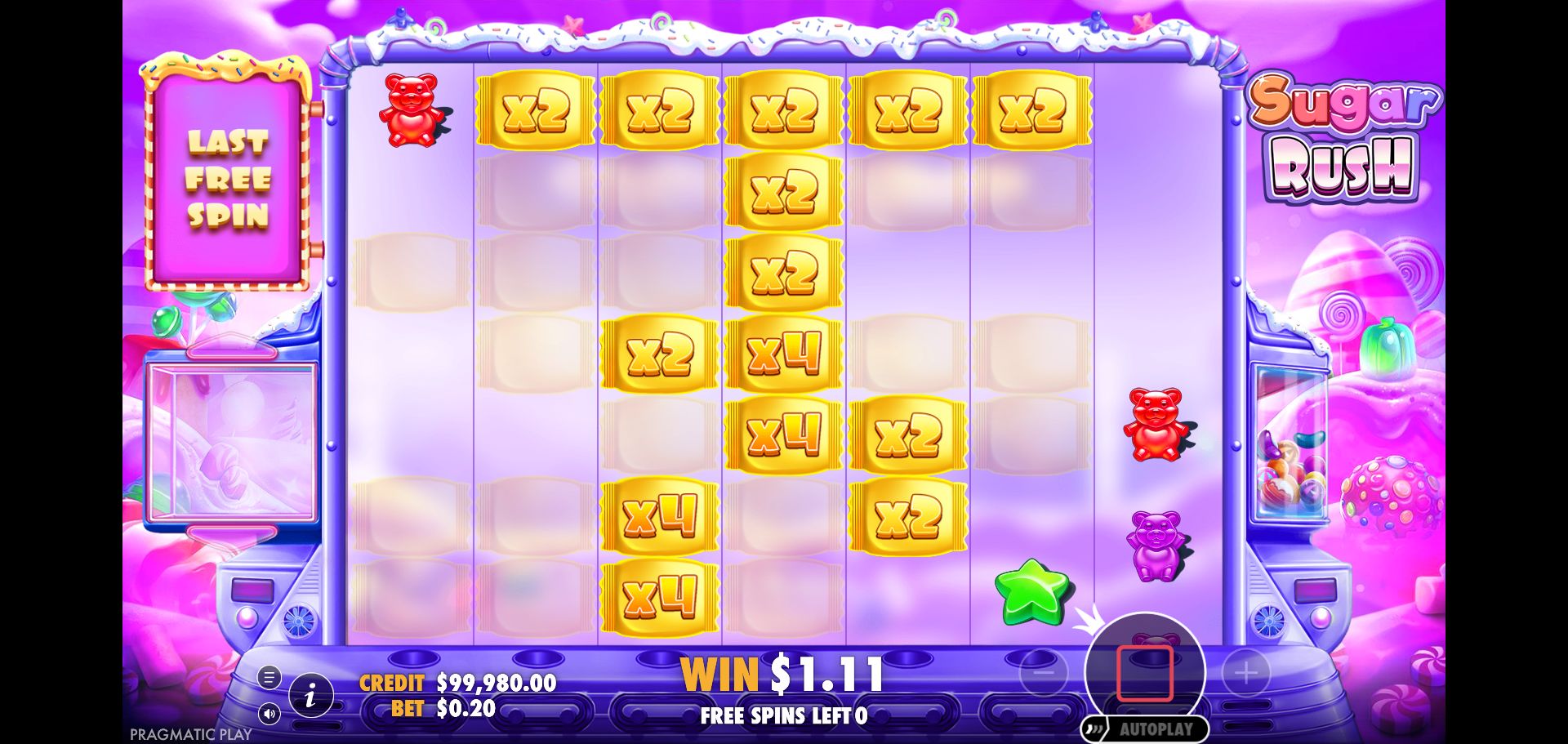
The original purchased feature, last-spin transition. Multiple 2× and 4× positions are directly visible; this image is not the complete doubling sequence.
The highest single-position multiplier directly confirmed in the reviewed images from this purchase was 4×. The image sequence has a 38.103-second gap, so it does not show every step of one square doubling from 2× to 4×. Neither the 128× position limit nor the 5,000× maximum total win was observed. Those remain rules, not outcomes from this test.
What the purchased feature actually returned
At a $0.20 base stake, the 100× purchase cost $20. The balance moved from $100,000 to $99,980 at entry. The feature finished after ten free spins with a final payout of $1.11, bringing the balance to $99,981.11. Its net result was therefore −$18.89. No retrigger was observed.
This is the clearest practical warning in the sample: a feature can finish normally, show multipliers and display a positive final WIN while returning only a small part of its purchase price. It is one outcome, not an estimate of how every bonus will behave.
5 RTP and the cost behind the buttons
The Help screen in the tested configuration lists 96.50% theoretical RTP for both base play and the regular bonus purchase, with HIGH VOLATILITY. RTP is a long-run mathematical return across very large numbers of plays. It does not allocate a return to one session or make losses due for recovery.
The displayed stake range was $0.20 to $240 in demo USD. The regular purchase was 100 times the selected base stake. At $0.20, a single $20 purchase therefore commits the same amount as 100 base spins before its outcome is known. That is a cost comparison, not a claim that the two experiences have the same distribution of results.
Mode | Theoretical RTP shown | Cost at $0.20 base stake | Result in this review |
|---|---|---|---|
Base spin | 96.50% | $0.20 per spin | 50 spins recorded |
Regular bonus purchase | 96.50% | $20 per purchase | One completed feature |
The inspected original interface and rules did not offer an Ante or EX option. Availability and displayed RTP should still be checked in the exact game you open. This review does not treat one configuration as a universal operator specification.
If you want to explore how stake size and a fixed budget affect a generic session, AskSpinner’s slot simulator is useful for that illustration. Its outputs are separate from these recorded tests and do not reproduce Sugar Rush’s undisclosed game mathematics. Choose an entertainment limit before playing, and do not increase it to recover a loss.
6 What the recorded sample shows
The base sample contains 50 fully settled spins at $0.20, recorded on 6 October 2026. A new session supplied the one completed bonus purchase on 7 October. No base spins were replayed to enlarge the sample. Free spins inside the purchase belong to that one paid feature event.
Recorded group | Paid events | Cost USD | Payout USD | Net USD | Sample return |
|---|---|---|---|---|---|
Base spins | 50 | 10.00 | 10.38 | +0.38 | 103.80% |
Regular purchase | 1 | 20.00 | 1.11 | −18.89 | 5.55% |
Financial total | 51 | 30.00 | 11.49 | −18.51 | 38.30% |
Sample return means payout divided by actual cost. The combined 38.30% is $11.49 ÷ $30.00, rather than the average of the two percentages. Because the purchase costs much more than one base spin, it contributes much more to the combined figure.
Balance changes
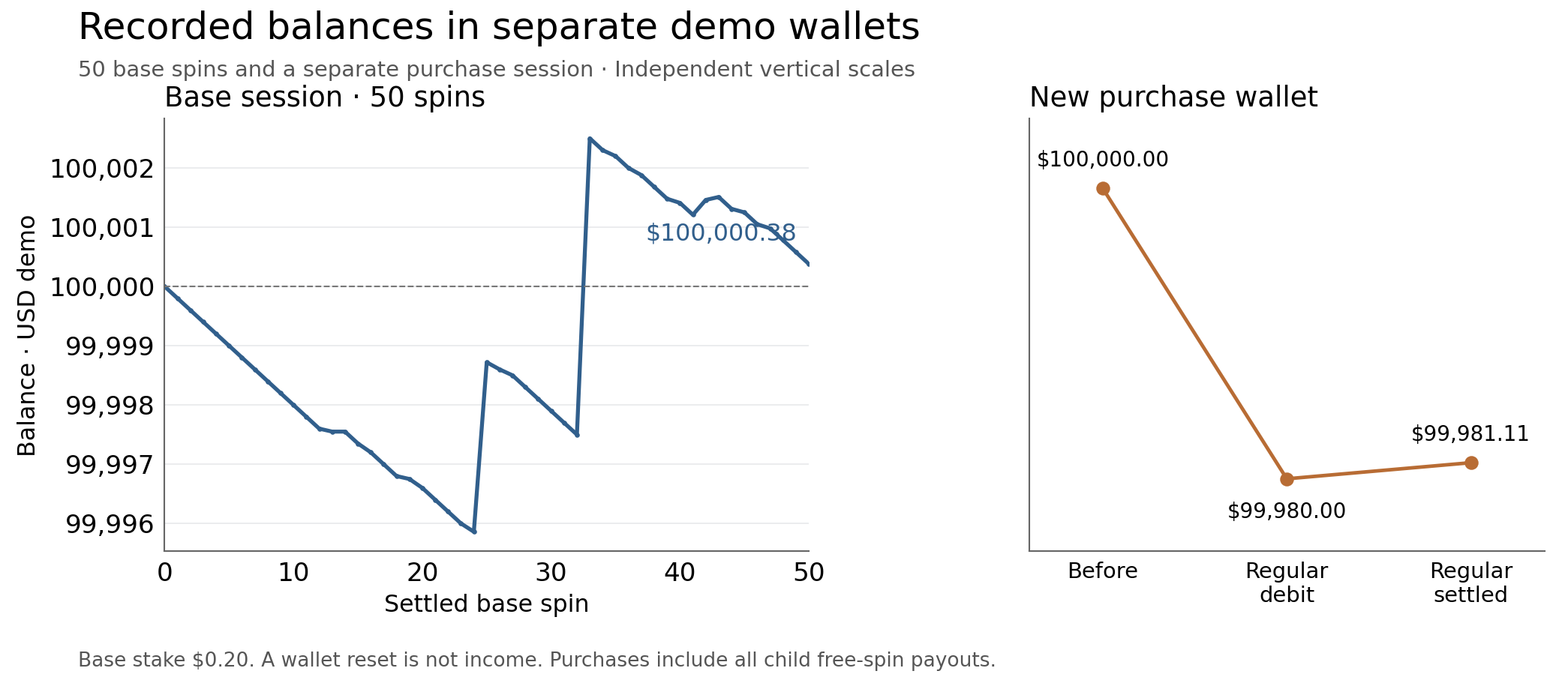
Recorded balances across 50 base spins and a separate purchase session. Wallets are not joined; the panels use independent vertical scales.
The base sample finished at $100,000.38 from a $100,000 opening balance. The purchase began with a separate $100,000 demo wallet and ended at $99,981.11. The chart keeps those sessions apart. Joining them would turn a wallet reset into a misleading apparent movement in the balance.
The return changed sharply within a short session
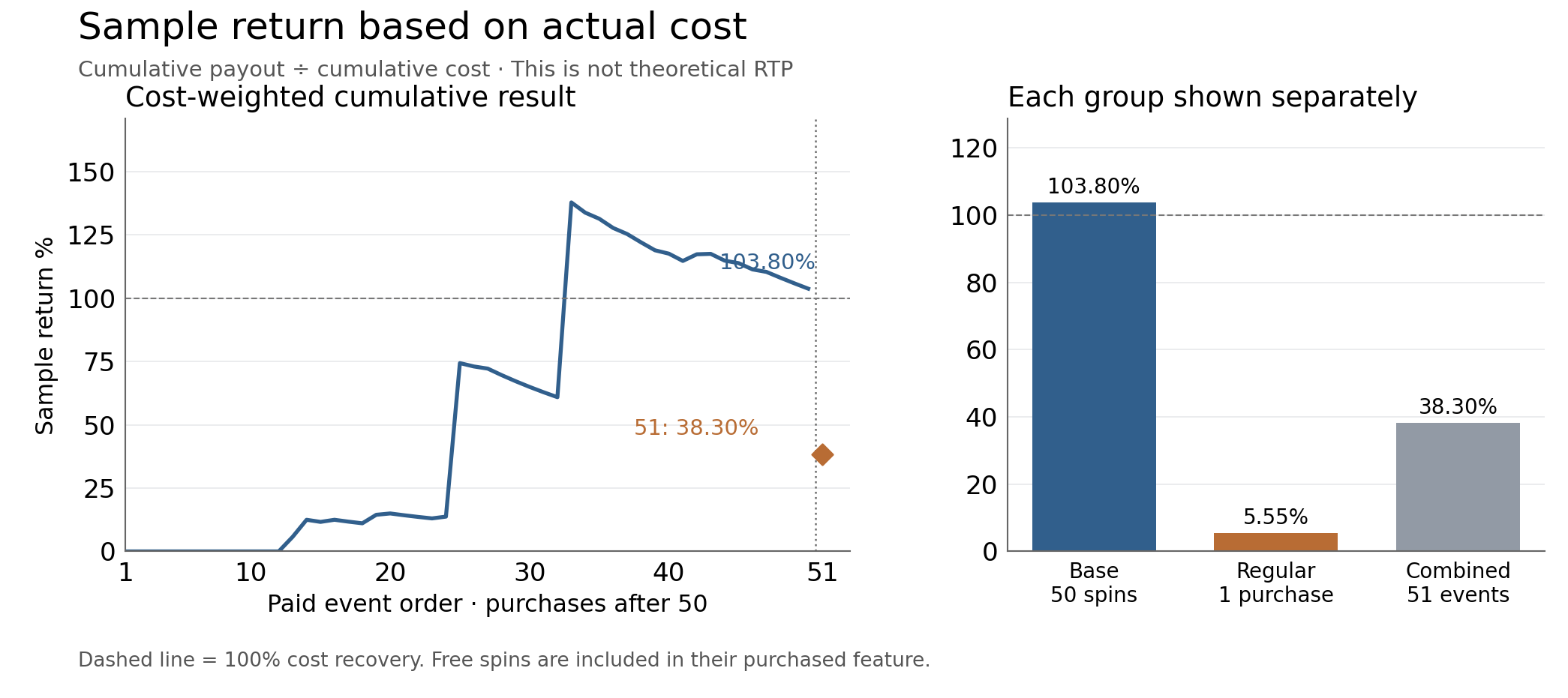
Cumulative and group sample returns, calculated from actual paid costs and final payouts. Purchase outcomes are distinct paid events, not extra ordinary spins.
The largest base payout was $5.20 on spin 33, just over half of all $10.38 paid back by the 50-spin base sample. That concentration explains why the final result of 103.80% is a poor description of how steady the session felt. A small number of outcomes can dominate a short sample.
A payout and a profitable spin are different
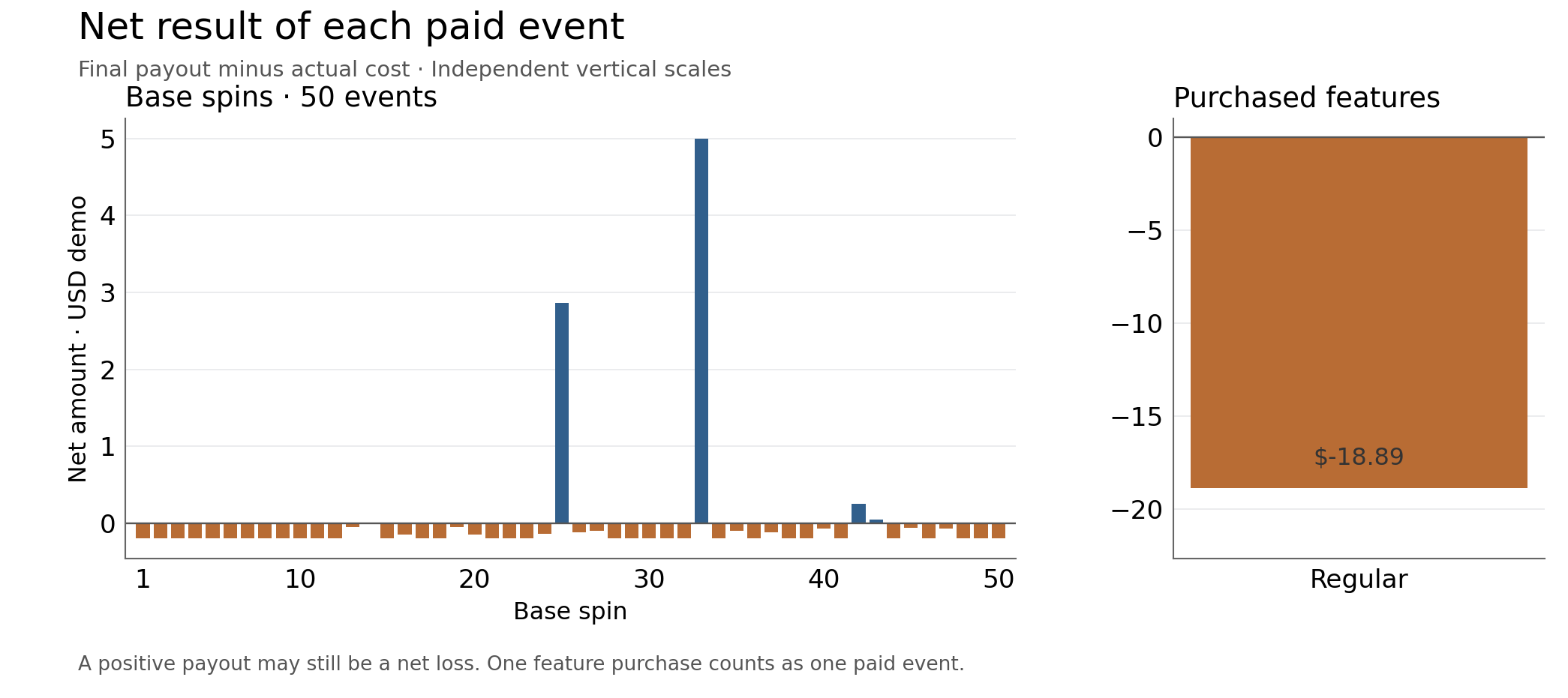
Final payout minus cost for each paid event. Base spins and purchases have different costs and independently scaled panels.
Seventeen of the 50 base spins returned something, but only four returned more than the $0.20 cost. Thirty-three had zero payout, and the longest zero-payout run was 12 spins. These describe this recorded sequence only. They are not published hit-rate estimates or measurements of long-term volatility.
The retained 13-second Normal-speed clip was assembled from 74 timestamped screenshots, averaging about 5.46 captured images per second. Repeated source images fill a 30 fps video container; there is no generated movement or audio. It includes stopped-board time and is not a continuous native screen recording or a video of the newer bonus purchase.
Taken together, the records are most useful for showing how money is counted and how uneven a short session can be. They cannot validate 96.50% RTP, estimate how often retriggers occur or rank the original above its sequels for long-term returns.
7 Strengths tradeoffs and our verdict
Compared with Sugar Rush 1000, the original has a lower single-position limit of 128× rather than 1,024×, a 5,000× rather than 25,000× maximum total win, and no Super purchase in the inspected configuration. Those are genuine rule differences. They do not establish that either game will return more to a particular player.
If you know Sweet Bonanza, the key adjustment is adjacency. Sweet Bonanza counts at least eight matching symbols anywhere, while Sugar Rush needs five connected symbols. Similar sweet-themed artwork therefore hides a meaningful difference in how you read a win.
We rate the original Sugar Rush 7.8/10 for the playing experience. The fixed grid, approachable five-symbol adjacency rule and single purchase option make it a clear introduction to the series, while retained positions give Free Spins a satisfying progression to follow. Symbols covering position values and the cramped portrait labels keep the presentation from being equally clear throughout. We place it alongside Xmas at 7.8: the seasonal artwork changes the mood, while the core interaction stays close. Choose 1000 if its expanded feature structure interests you. The score reflects the design and readability, not our sample return or the size of the maximum win.
Sugar Rush by Pragmatic Play FAQs
Answers to common questions about Sugar Rush by Pragmatic Play.
Sugar Rush by Pragmatic Play Reviews
 No Player Reviews Yet
Played Sugar Rush by Pragmatic Play? Share your experience with other players.
 Write A Review